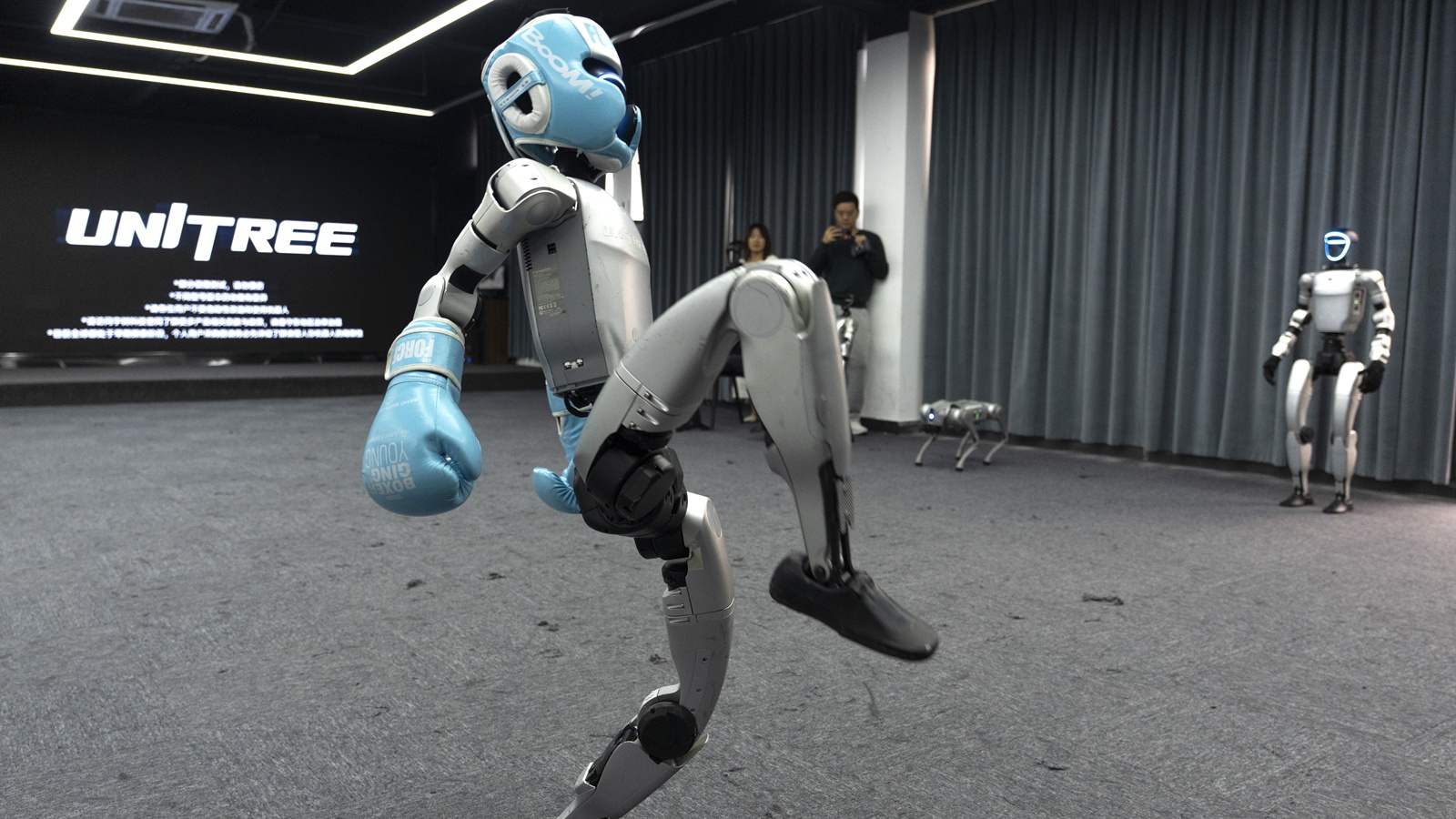
Unitree CEO suggests that the robotics industry is on the brink of a revolutionary breakthrough similar to the impact seen with ChatGPT in the AI world.
- Unitree CEO anticipates a transformative era for robotics akin to the ChatGPT revolution.
- The integration of advanced AI models with physical hardware is the primary driver.
- This shift promises to move robotics from programmed machines to autonomous agents.
The robotics industry is standing on the precipice of a monumental shift. Unitree's CEO has recently suggested that the field is approaching its 'ChatGPT moment.' This comparison draws a direct parallel between the explosive growth of Large Language Models (LLMs) in digital intelligence and the upcoming evolution of embodied intelligence in physical machines.
Just as ChatGPT democratized access to sophisticated reasoning and text generation, the next wave of robotics aims to provide machines with the ability to perceive, reason, and interact with the physical world in an unprecedentedly fluid manner. This is not merely about better motors or faster sensors, but about the 'brain' driving the machine.
Why This Matters
BozokMedia analysis shows that this convergence of AI and robotics will likely trigger a massive reallocation of capital across global industries. From autonomous logistics to personalized elderly care, the implications of truly intelligent robots are vast and could reshape the global labor economy.
The transition from programmed automation to cognitive autonomy represents the most significant leap in mechanical engineering since the Industrial Revolution.
Historically, robotics has been characterized by 'narrow AI'—machines designed to perform specific, repetitive tasks in controlled environments. While effective in automotive assembly lines, these robots lacked the adaptability required for the chaotic, unstructured environments of daily human life.
The emergence of foundation models for robotics is changing this paradigm. By training robots on massive datasets of physical interactions, companies like Unitree are enabling machines to learn through observation and trial-and-error, much like biological organisms do.
Frequently Asked Questions
1. What exactly is a 'ChatGPT moment' in robotics?
It refers to a breakthrough where AI becomes so integrated into robotic hardware that the machines become broadly capable and easy to deploy across various tasks.
2. How will this affect jobs?
While it may automate certain repetitive tasks, it is also expected to create entirely new industries centered around robot maintenance, programming, and fleet management.