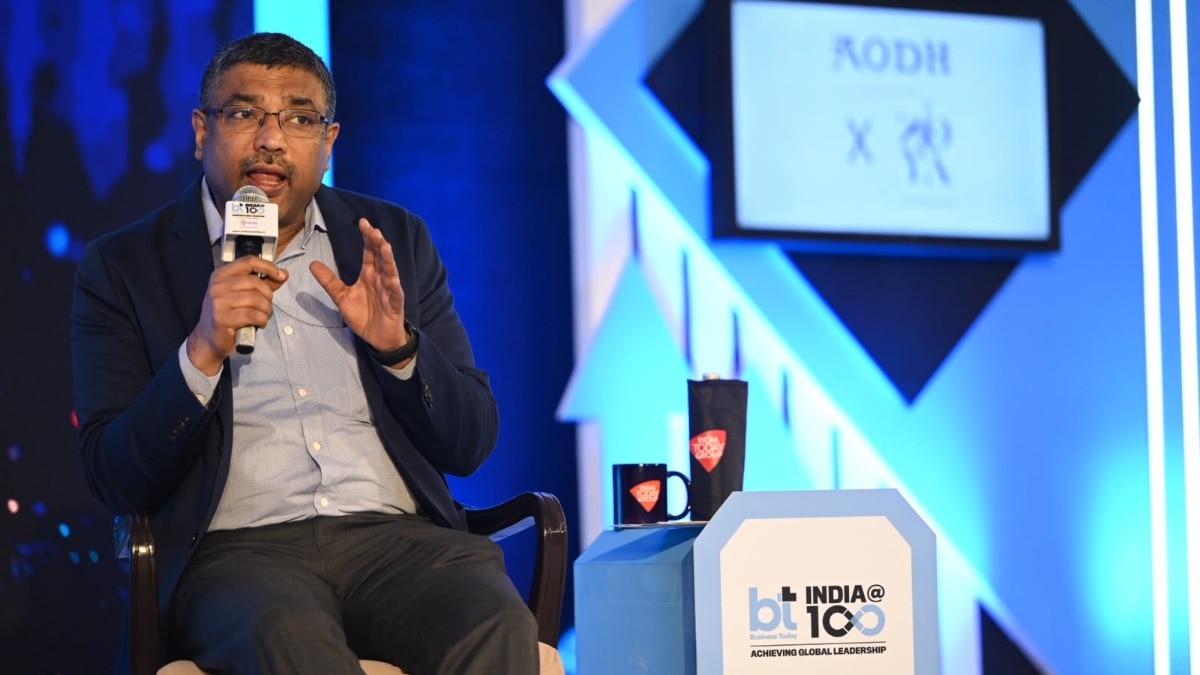
MeitY Secretary S. Krishnan clarifies that the vast majority of content takedowns are driven by platform policies rather than government orders, urging global tech giants to respect India's linguistic and cultural nuances.
- Over 99% of content removed from social media platforms is based on the companies' own community guidelines.
- Government intervention under Section 69A of the IT Act is used sparingly and only under specific legal thresholds.
- MeitY emphasizes the need for global platforms to understand India's unique cultural and linguistic diversity.
In a significant clarification regarding digital governance, S. Krishnan, Secretary at the Ministry of Electronics and Information Technology (MeitY), stated that government intervention accounts for only a tiny fraction of content takedowns on social media. Speaking at the Business Today India@100 event, he debunked the common perception that the state is the primary driver behind online content removal.
According to Krishnan, more than 99% of all takedowns occur under the internal community guidelines established by the social media companies themselves. This highlights the immense power held by platforms like Meta, X, and Google in shaping the digital discourse through their private moderation rules.
The Scope of Government Power
Addressing concerns about censorship, the Secretary explained that the government's authority to block content under Section 69A of the Information Technology Act is strictly circumscribed. This power can only be exercised on specific grounds, including national security, defense of India, public order, and maintaining friendly relations with foreign states.
"It is very, very sparingly used, with a great deal of restraint," Krishnan noted. He emphasized that an official's personal objection is insufficient to trigger a block; the content must meet a rigorous legal threshold established by law.
Why This Matters
BozokMedia analysis shows that this distinction is crucial for understanding the balance between state sovereignty and corporate autonomy. As India becomes a dominant digital market, the friction between global algorithms and local sensitivities is expected to intensify.
Global platforms cannot rely solely on visual assessment; they must decode the deep-seated cultural and linguistic nuances of the regions they serve.
A major point of contention raised by the Ministry is the failure of global algorithms to recognize local context. Krishnan warned that platforms often miss subtle forms of violence or sexual abuse because they lack the cultural lens required to interpret certain acts that may not appear overtly 'obscene' to a Western-centric algorithm but are deeply harmful in an Indian context.
Historical Background
The evolution of India's digital regulatory framework, centered around the Information Technology Act, 2000, has shifted from simple e-commerce facilitation to complex content regulation. The introduction of intermediary guidelines has placed more responsibility on platforms to act swiftly to prevent legal repercussions under Section 79.
Frequently Asked Questions
1. Can the Indian government block any social media post at will?
No. Blocking is only permitted under Section 69A for specific reasons like national security or public order.
2. What happens if a platform ignores a government notice?
Platforms may lose their 'safe harbour' protection and could face criminal or legal consequences for failing to comply with applicable laws.