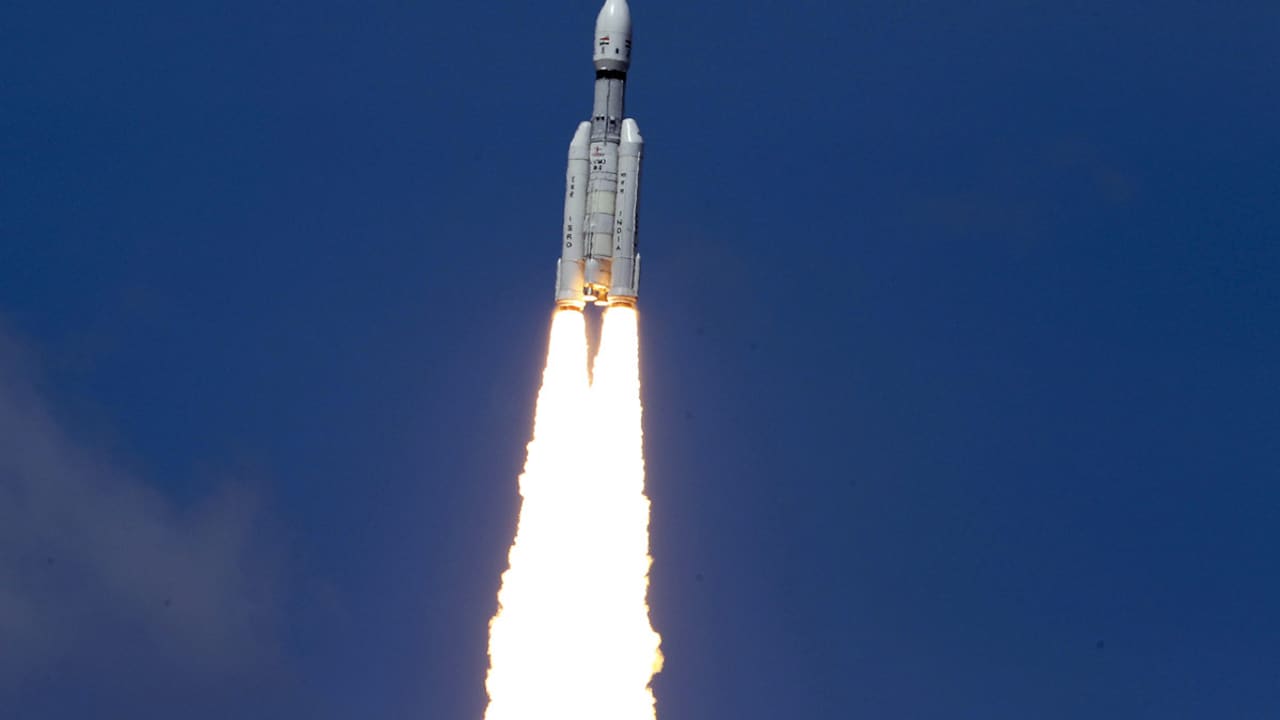
A new study from Cambridge reveals that India's rocket launch costs per kilogram are the highest among major space-faring nations. The findings come at a critical juncture as ISRO prepares for its first major mission of 2025.
- India's launch cost stands at $13,302 per kg, the highest globally.
- The cost is significantly higher than the US ($3,225) and China ($5,809).
- The findings challenge the long-standing perception of ISRO as a low-cost leader.
A groundbreaking study conducted by Cambridge University has sent ripples through the global aerospace community. The report highlights a startling economic disparity in space exploration: India's rocket launch costs are currently the most expensive among the world's leading space powers. While the global average for launching mass into orbit in 2025 is $3,868 per kilogram, India has recorded a staggering $13,302 per kilogram.
This data provides a stark contrast to other major players. The United States maintains a highly efficient average of $3,225 per kg, while China and Japan follow at $5,809 and $5,287 respectively. Even Europe, with its high-end technological requirements, remains more cost-effective at $9,897 per kg compared to the Indian figures.
Why This Matters
BozokMedia analysis shows that the commercial viability of a space program is directly tied to its cost-per-kilogram efficiency. For India to capture a significant share of the burgeoning commercial satellite launch market, bridging this massive cost gap is not just an option, but a necessity for long-term sustainability.
The economic competitiveness of space programs is shifting from mere technical capability to extreme cost optimization.
Historically, the Indian Space Research Organisation (ISRO) has built its global reputation on providing highly affordable access to space. However, this study suggests that recent mission profiles or specific heavy-lift launch configurations may be driving up the per-kilogram price point significantly.
| Region/Country | Launch Cost (per kg USD) |
|---|---|
| India | $13,302 |
| Europe | $9,897 |
| Russia | $6,682 |
| China | $5,809 |
| Japan | $5,287 |
| Global Average | $3,868 |
| USA | $3,225 |
As ISRO awaits its first successful rocket mission of the year, the pressure is mounting to demonstrate not just orbital precision, but also economic prudence. The industry will be watching closely to see if upcoming launches can help recalibrate these economic metrics.
Frequently Asked Questions
1. Why is the cost per kilogram an important metric?
It determines how much a satellite operator must pay to put their payload into orbit, directly affecting the market competitiveness of a launch provider.
2. Does this mean ISRO's missions are failing?
No, the study focuses on the economic cost of the launch process itself, not the technical success rate of the rockets.