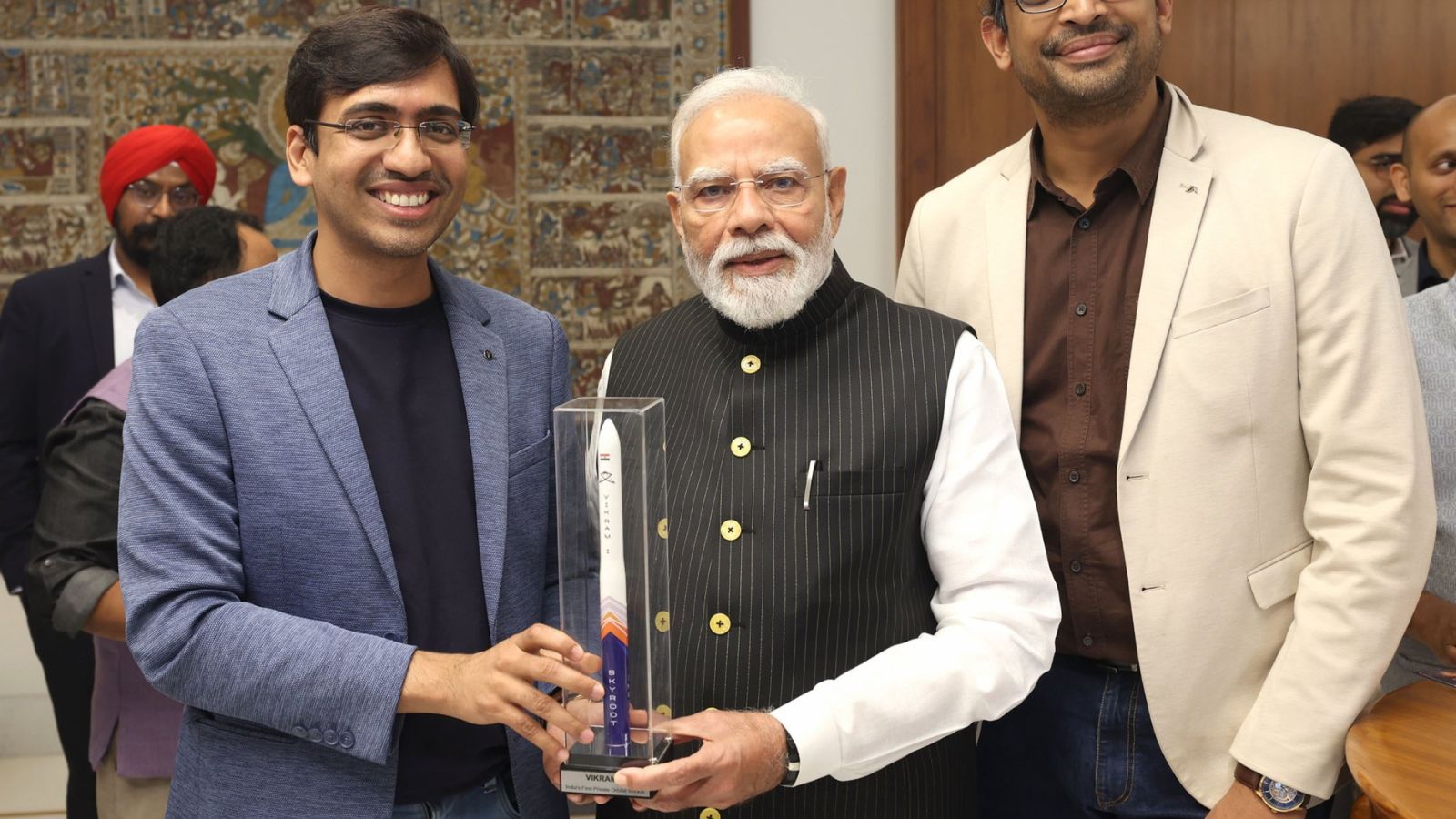
On the eve of National Space Day, PM Narendra Modi interacted with 20 space startup leaders, emphasizing the need to build a world-class ecosystem to attract global talent.
- PM Modi called on space entrepreneurs to build an ecosystem capable of attracting top global talent to India.
- India's competitive edge is identified as cost-efficiency, deep talent pool, and high risk tolerance.
- Skyroot Aerospace aims to scale to monthly launches and eventually multiple launches per day.
- The government assured policy continuity and unwavering support for private space players.
New Delhi: Ahead of National Space Day (August 23), which commemorates the historic lunar landing of Chandrayaan-3, Prime Minister Narendra Modi held a high-level interaction with the CEOs of 20 space startups. The meeting focused on transforming India into a premier global space hub through private innovation.
During the session, the Prime Minister urged young entrepreneurs to create a robust ecosystem that doesn't just serve India but draws the world's best minds to its shores. "I believe that we can draw the entire talent pool because of you, and that will become our strength," PM Modi stated, highlighting that India's unique advantages lie in its ability to innovate cost-effectively while maintaining a high tolerance for risk.
Why This Matters
BozokMedia analysis shows that the democratization of space through private players is a paradigm shift for India. By moving from a government-led model to a collaborative ecosystem involving startups like Skyroot Aerospace, India is positioning itself to capture a significant share of the rapidly expanding global space economy.
"India’s competitive edge lies in its cost-efficiency, deep talent pool, and high risk tolerance." — Prime Minister Narendra Modi
The interaction highlighted the incredible breadth of innovation currently underway in the Indian private sector. Founders presented progress on diverse projects, ranging from satellite engines and ground-station networks to advanced space-debris-removal robotics and orbital docking capabilities. Notably, some startups are even exploring pharmaceutical manufacturing within microgravity environments.
Pawan Chandana, co-founder of Skyroot Aerospace—the first private Indian company to conduct an orbital launch—shared the company's aggressive roadmap. Chandana noted that with three existing factories, they aim to achieve one launch per month by mid-next year, with a long-term vision of scaling to multiple launches daily. The company has already secured several international launch contracts.
Startup leaders expressed gratitude for the policy shifts initiated in 2020 that opened the sector to private participation. Responding to calls for stability, PM Modi assured investors of unwavering support and policy consistency, stating that the government intends to provide a reliable environment where investors can act with confidence.
Historical Background
The Indian space journey has evolved from the humble beginnings of transporting rocket parts on bicycles in the 1960s to becoming a global leader in cost-effective lunar and Mars missions. The recent opening of the space sector to private entities marks the most significant chapter in this journey, transitioning India from a space-faring nation to a space-manufacturing powerhouse.
Frequently Asked Questions
1. What is the significance of National Space Day?
National Space Day is celebrated on August 23 to honor the successful landing of Chandrayaan-3 on the Moon.
2. How is the Indian government supporting space startups?
The government is providing a supportive policy framework, ensuring regulatory continuity, and encouraging private participation in space exploration and manufacturing.