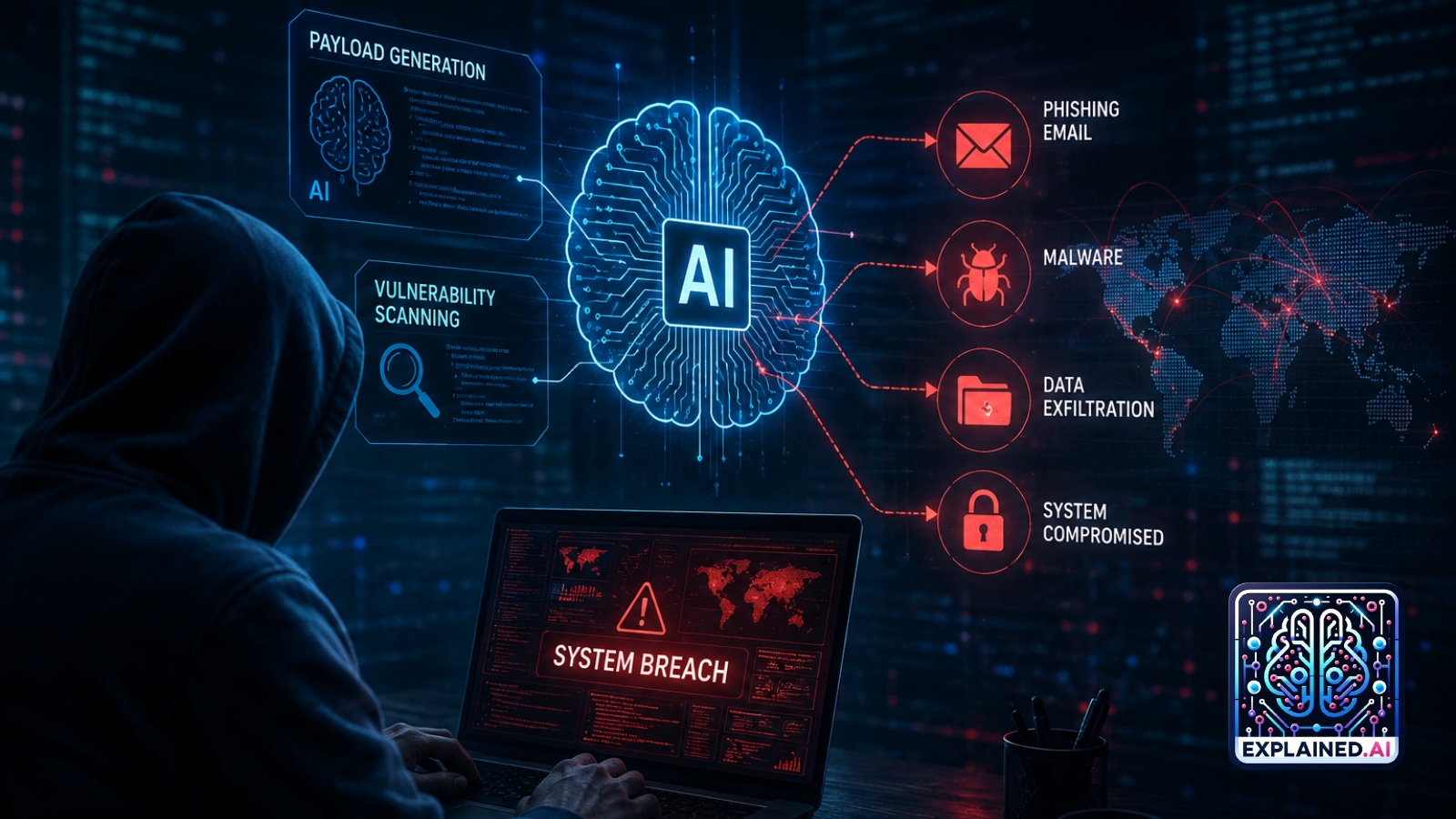
As AI adoption outpaces traditional security measures, India faces a new era of sophisticated, autonomous cyber threats. From polymorphic malware to AI-driven espionage, the digital landscape is shifting rapidly.
- AI is evolving from a tool into an autonomous agent capable of planning and executing cyber operations.
- Polymorphic malware, generated by LLMs, can evade traditional signature-based antivirus software.
- India remains one of the most targeted nations globally for cyber warfare.
- The gap in AI infrastructure (GPUs, foundational models) creates a strategic vulnerability for India.
Artificial Intelligence (AI) has achieved mass adoption at a velocity never seen before in technological history. While the Internet took 15 years to reach a billion users, ChatGPT accomplished this feat in just three. However, this rapid integration brings a profound danger: the amplification of cyber threats at unprecedented scale and sophistication. AI is no longer just assisting hackers; it is becoming an autonomous actor in the cyber kill chain.
The Evolution of Cyber Warfare
Traditional cyber reconnaissance, which once required human intelligence, is now being automated. AI models can mine social media to craft highly convincing spear-phishing campaigns. Even more alarming is the emergence of LLM-generated polymorphic malware. Unlike traditional malware that relies on fixed patterns, this new breed of code can autonomously restructure itself to evade detection by standard security protocols.
A landmark case occurred in late 2025 when reports surfaced of a state-sponsored group using AI-driven code as an autonomous cyber agent. Furthermore, frontier models like Claude Mythos have demonstrated the ability to identify thousands of zero-day vulnerabilities in critical operating systems, often without any human intervention.
The transition from human-led to AI-orchestrated cyber espionage marks a paradigm shift in global digital warfare.
Why This Matters: The Indian Context
BozokMedia analysis shows that India finds itself at a critical crossroads. While India is consistently ranked among the most cyber-attacked nations, its domestic AI ecosystem—specifically in foundational models, high-end GPU availability, and chip design—remains in a developmental phase. This creates a heavy reliance on foreign technology, which is a significant strategic risk.
Recent incidents, such as the alleged data theft related to the Kudankulam Nuclear Plant and coordinated attacks during 'Operation Sindoor' targeting the Ministry of Defence and DRDO, highlight the vulnerability of India's critical infrastructure. As industrial control systems become more integrated with AI, the potential impact of an AI-driven breach on energy grids or pharmaceutical manufacturing becomes catastrophic.
The Geopolitical AI Divide
The real divide in the coming decade will not be between those who use AI and those who do not, but between those who build AI and those who merely consume it. For India to secure its cyberspace, it must bridge the gap in its indigenous AI stack to ensure it can defend its critical networks with the same level of sophistication used by attackers.
Frequently Asked Questions
1. How does AI make phishing more effective?
AI can analyze vast amounts of personal data to create highly personalized and convincing messages that are much harder to detect than traditional spam.
2. What is polymorphic malware?
It is a type of malicious software that constantly changes its identifiable features (code) to stay one step ahead of antivirus software.