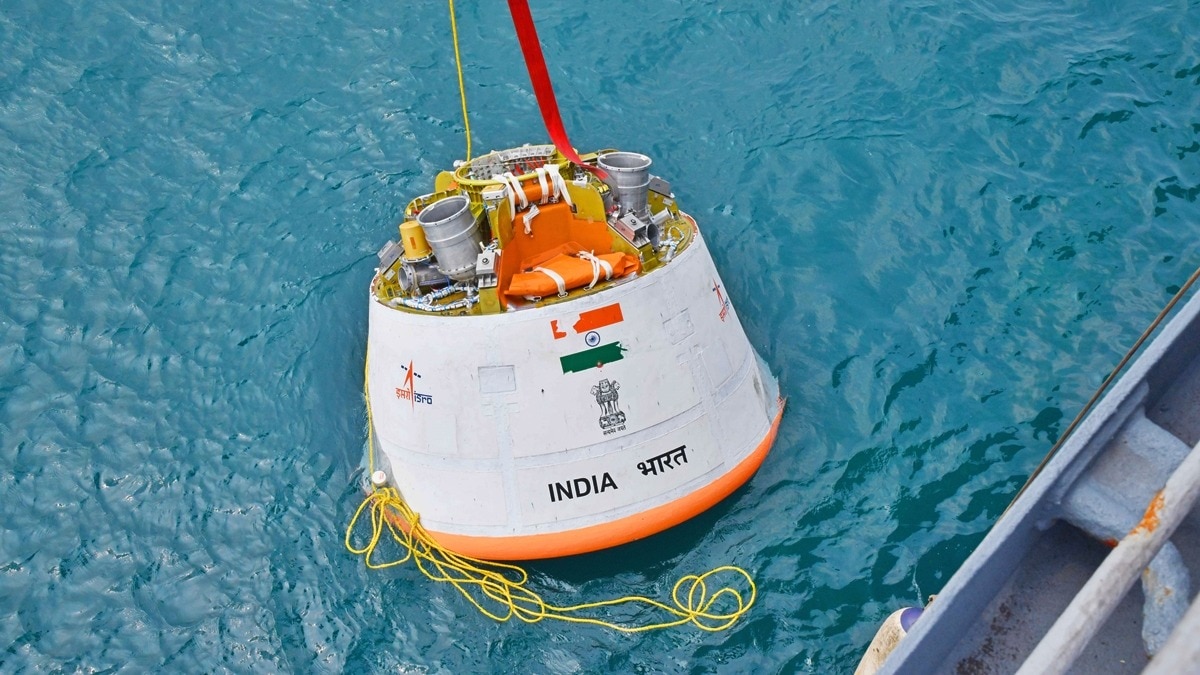
In a landmark achievement, ISRO's GSLV-F17 has successfully deployed India's heaviest satellite, EOS-05, into its intended geostationary orbit, significantly boosting India's strategic imaging capabilities.
- GSLV-F17 successfully deployed the massive EOS-05 satellite.
- The mission marks a milestone in India's geostationary orbit capabilities.
- EOS-05 will enhance strategic imaging, defense, and disaster management.
The Indian Space Research Organisation (ISRO) has reached a new pinnacle in space exploration. The GSLV-F17 launch vehicle has successfully carried out the mission to place EOS-05, India's heaviest satellite to date, into its designated orbit. This successful deployment marks a significant leap forward for the nation's space infrastructure.
According to top officials, the EOS-05 satellite is designed to operate from the geostationary orbit, providing continuous and high-resolution imaging capabilities. This capability is crucial for long-term monitoring of environmental changes, maritime surveillance, and national security interests.
Why This Matters
BozokMedia analysis shows that the successful launch of heavy-class satellites like EOS-05 reduces India's dependency on foreign launch services for high-value assets. By mastering the GSLV technology, India is positioning itself as a reliable provider in the global commercial satellite launch market, specifically for heavy-payload missions.
The successful deployment of EOS-05 solidifies India's position as a premier space power capable of managing complex, heavy-weight orbital missions.
Historically, the development of the Geosynchronous Satellite Launch Vehicle (GSLV) has been a cornerstone of ISRO's strategy to achieve autonomy in heavy-lift capabilities. The integration of advanced cryogenic engines has allowed India to move beyond Low Earth Orbit (LEO) missions into the more demanding geostationary realms.
Comparison: Previous Missions vs. EOS-05
| Feature | Standard Satellites | EOS-05 |
|---|---|---|
| Payload Weight | Light to Medium | Heavy Class |
| Orbit Type | LEO/SSO | Geostationary (GEO) |
| Primary Utility | Communication/Weather | Strategic Imaging/Surveillance |
Frequently Asked Questions
Question 1: What makes EOS-05 different from previous satellites?
Answer: Its massive weight and its ability to provide high-resolution strategic imaging from a geostationary orbit.
Question 2: What is the role of GSLV-F17?
Answer: It is the launch vehicle specifically tasked with carrying heavy payloads to higher orbits like the geostationary orbit.