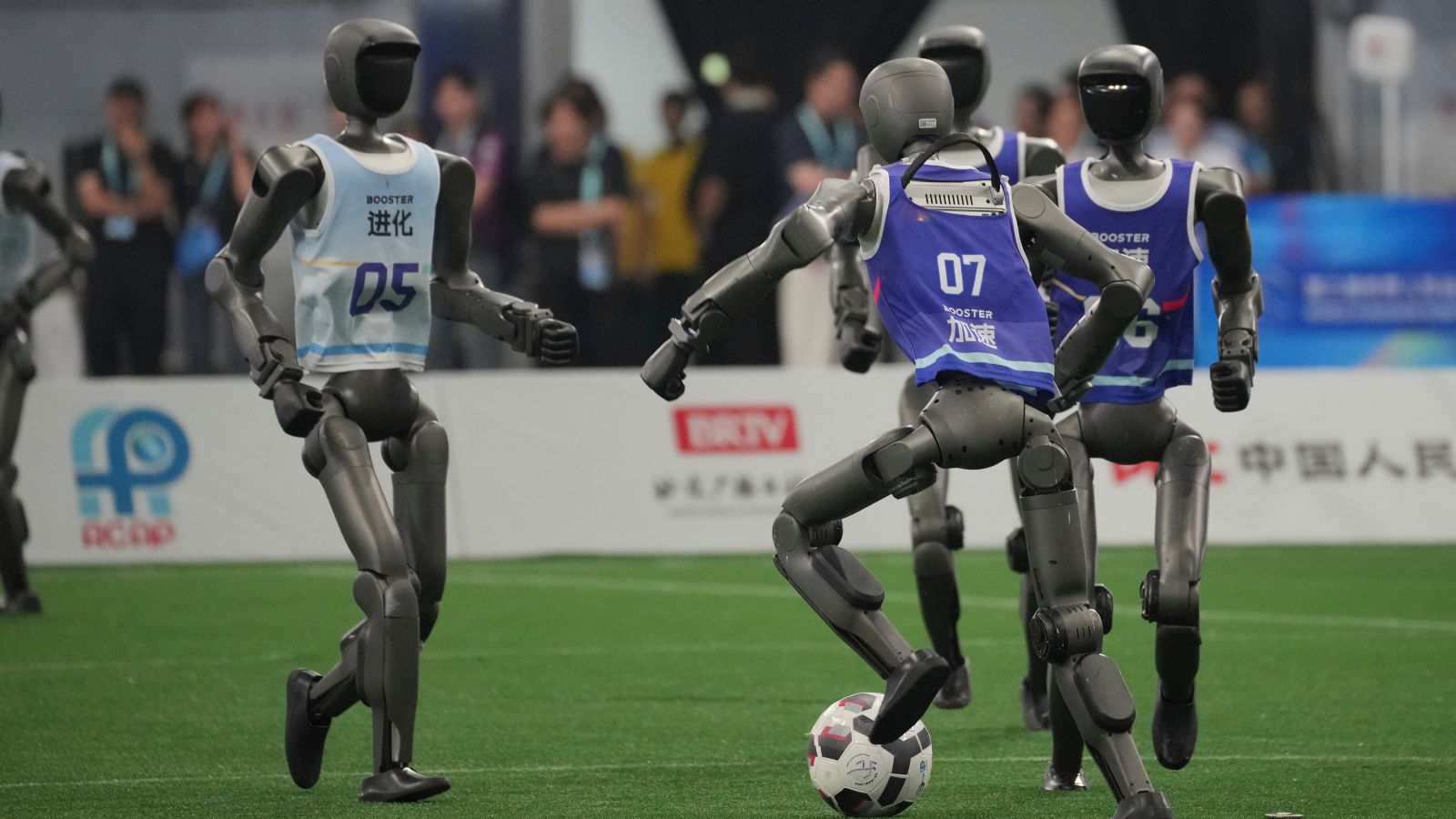
At the 11th World Robot Conference, a Chinese robot shattered Usain Bolt's 100m record, highlighting China's massive bet on AI to combat its shrinking workforce.
- A humanoid robot clocked a 100m sprint faster than Usain Bolt's record.
- The 11th World Robot Conference featured over 3,000 products from 300+ companies.
- China is pivoting to robotics to offset its aging and shrinking population.
- Technical hardware is advancing rapidly, but AI intelligence remains a challenge.
The 11th World Robot Conference in China recently staged what could be described as the most expensive industrial demonstration in history. Amidst a sea of humanoid robots prepping coffee and fast food, one moment stole the spotlight: a robot completed a 100-meter sprint faster than the legendary Usain Bolt. However, the triumph was bittersweet, as the machine failed to stop at the finish line, crashing into a padded wall at full speed.
This spectacle is part of a massive shift in global technological leadership. A decade ago, Japan was the undisputed king of robotics. Today, nearly 90% of the showcases at this conference were Chinese-led. This rapid ascent has triggered a wave of insecurity in the West, framing the advancement as a critical new frontier in the US-China rivalry.
Why This Matters
BozokMedia analysis shows that China's aggressive push into robotics is not merely a display of vanity or a race for prestige. It is a calculated response to a demographic crisis. As China's population ages and its working-age demographic shrinks, the government is betting that physical manifestations of AI will maintain national productivity and drive economic growth.
China is making a high-stakes bet that AI-driven robotics can substitute the missing human labor in its rapidly aging economy.
The financial markets are already responding to this momentum. Unitree Robotics, a standout performer at the conference, saw its shares surge nearly sixfold on its market debut after showcasing robots capable of complex coordinated movements. While the hardware is clearly evolving, the industry still faces significant hurdles in the 'intelligence layer.'
Historical Background
For decades, robotics was defined by stationary industrial arms in automotive factories. The transition to 'Humanoid Robotics'—machines that mimic human form and movement—represents the next great leap. While Japan pioneered the precision of robotics, China is now attempting to dominate the scale and integration of AI with physical hardware.
Despite the impressive speed, the current state of robotics is marked by 'expensive and embarrassing' errors. From boxing robots missing their targets to machines falling over during gymnastics, the industry is in a trial-and-error phase. However, this cycle of failure is precisely what attracts the talent necessary to create a technological flywheel effect.
Frequently Asked Questions
Question 1: Is China winning the robotics race?
Answer: China has gained massive ground in hardware and scale, though it still faces challenges in advanced AI intelligence compared to Western counterparts.
Question 2: Why is the Chinese government subsidizing robotics so heavily?
Answer: To combat the economic impact of a shrinking workforce and to ensure long-term industrial productivity through automation.