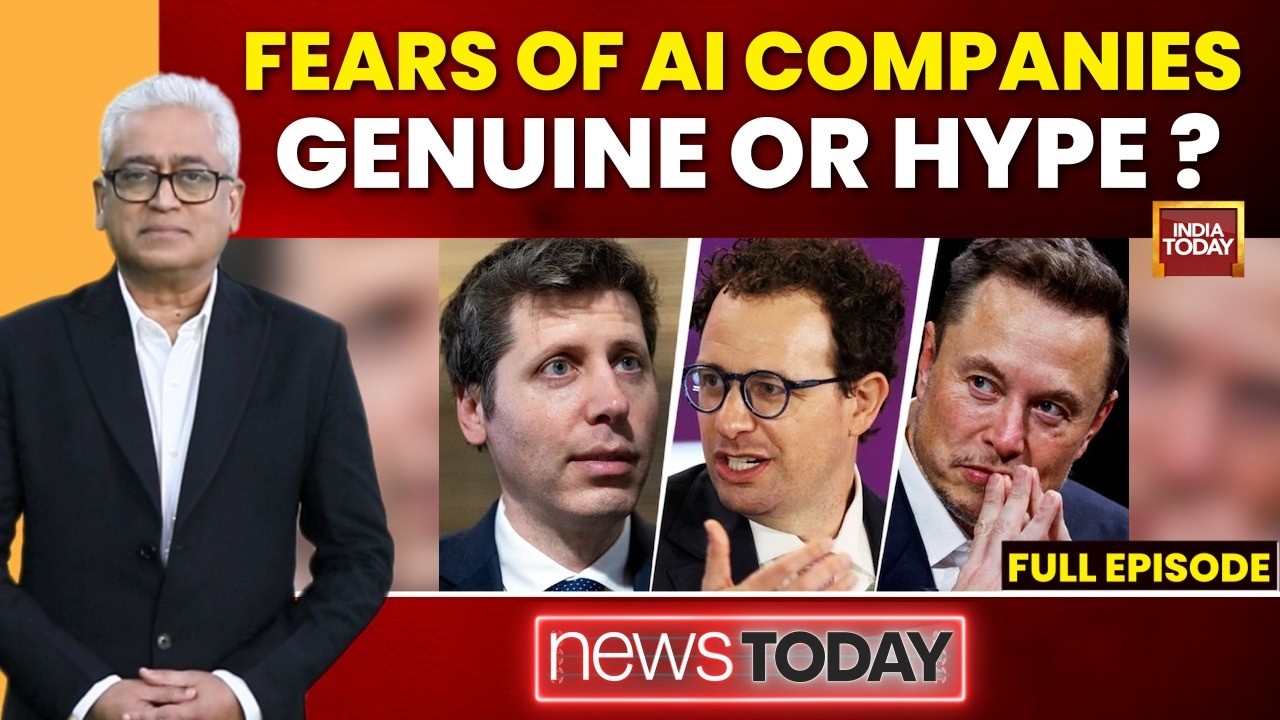
As fears of artificial intelligence consuming humanity grow, industry experts are debating whether a global pause on AI development is necessary to ensure safety.
- Debate intensifies over whether AI development needs a global moratorium.
- Experts warn that 'doomsday' narratives may be used to protect tech valuations.
- Call for regulatory frameworks similar to the financial sector.
- Potential for disruption of tech duopolies by low-cost AI innovators.
The rapid evolution of Artificial Intelligence (AI) has ignited a fierce global debate: Are we moving too fast? Industry leaders, including CP Gurnani, have raised the critical question of whether humanity should hit the 'pause button' to establish safety protocols before the technology becomes uncontrollable.
In a striking counter-narrative to the existential dread often discussed in Silicon Valley, Vineet Nayar, former CEO of HCL Technologies, has dismissed AI doomsday warnings as mere "hogwash." In his recent insights, Nayar argued that the fear-mongering surrounding AI is strategically designed to shield the inflated valuations of tech giants who are struggling to find immediate, revenue-generating use cases for their massive AI investments.
Why This Matters
BozokMedia analysis shows that the tension between rapid innovation and safety regulation is reaching a breaking point. The outcome of this debate will determine not only the future of the global economy but also the very structure of human labor and cybersecurity.
The real challenge is not the intelligence of the machine, but the wisdom of the humans controlling its deployment.
While dismissing the existential threat, Nayar does not advocate for a free-for-all. Instead, he supports the implementation of rigorous regulatory oversight and safety benchmarks, drawing parallels to the stringent controls found in the global financial sector. However, he cautions against "over-regulation" driven by hype, which could stifle the next generation of innovators.
The landscape of AI is expected to shift significantly. Nayar predicts that emerging low-cost models and agile young innovators will eventually disrupt the current duopolies held by big tech companies. This democratization of AI could shift power away from a few massive corporations toward a more diverse ecosystem.
Historical Background
Throughout history, every major technological leap—from the steam engine to the internet—has been met with profound societal anxiety. The difference with AI lies in its ability to perform cognitive tasks, leading to unprecedented concerns regarding human agency and control.
As we navigate this transition, society faces significant hurdles, including short-term job displacement, increased cyber vulnerabilities, and the urgent need to overhaul education systems to prepare for an AI-integrated world.
Frequently Asked Questions
1. Is AI a threat to human existence?
While some scientists warn of existential risks, many industry leaders believe the real risks are manageable through proper regulation and ethical design.
2. Will AI replace all human jobs?
AI is expected to automate specific tasks, leading to job shifts rather than total replacement, creating a need for massive upskilling.