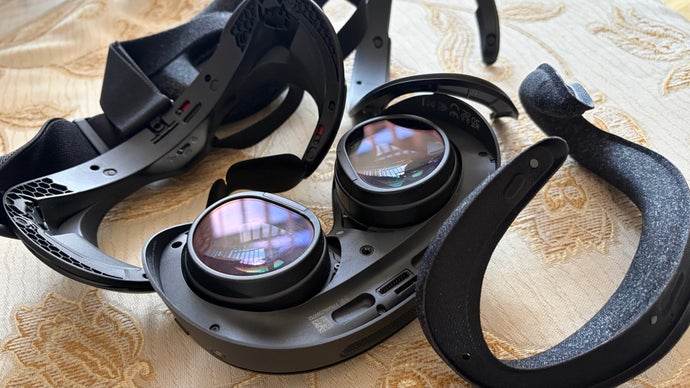
Valve's much-anticipated Steam Frame VR headset has arrived, boasting massive spec upgrades and a lightweight design. While it excels in PC-to-VR streaming, its standalone capabilities and premium pricing raise important questions.
- Steam Frame weighs only 440g, a significant reduction from the 800g Index.
- Features upgraded pancake lenses and 2160x2160 resolution per eye.
- Powered by the potent Qualcomm Snapdragon 8 Gen 3 chipset.
- Offers both standalone functionality and PC-to-VR streaming capabilities.
The wait is over: the Steam Frame has arrived. As Valve's second major foray into the VR space since the 2019 Index, this headset represents a monumental leap in hardware evolution. It is a fascinating piece of machinery—lightweight, incredibly comfortable, and designed with a focus on high-fidelity PC-to-VR streaming. However, as a standalone device, it feels like it is still finding its footing in the consumer market.
Hardware Evolution and Specs
Comparing the Steam Frame to its predecessor, the Index, the improvements are staggering. Valve has managed to nearly halve the weight, bringing it down from 800g to a mere 440g. The visual experience has also been overhauled; the old Fresnel lenses have been replaced by modern pancake lenses, which allow for a thinner profile and much higher clarity. The resolution has also seen a massive boost to 2160x2160 per eye, running at refresh rates between 72Hz and 144Hz.
BozokMedia analysis shows that while the Steam Frame isn't a radical departure from the Meta Quest 3, it holds a distinct edge in raw power. Equipped with the Qualcomm Snapdragon 8 Gen 3, it offers roughly 30% more performance than the Quest 3's XR2 Gen 2. Furthermore, with 16GB of internal memory, it doubles the capacity of its primary competitor.
The Steam Frame is a masterclass in ergonomic engineering, though its true test lies in whether its standalone software can match its elite hardware.
The Price of Premium Performance
High-end specs come with a high-end price tag. The Steam Frame starts at £889 for the 256GB model, which is significantly higher than the Meta Quest 3. This price gap is largely due to Valve's decision not to subsidize hardware, unlike Meta's aggressive pricing strategy. For those seeking the 1TB version, the price climbs to £1,089.
| Feature | Steam Frame | Meta Quest 3 |
|---|---|---|
| Weight | 440g | 515g |
| Processor | Snapdragon 8 Gen 3 | Snapdragon XR2 Gen 2 |
| Memory | 16GB | 8GB |
| Resolution | 2160x2160 | 2064x2208 |
To ensure a smooth experience, Valve has introduced the Steam Frame Verification system. This ensures that games marked as 'Great on Frame'—including both VR and traditional flatscreen titles—run optimally in standalone mode. Currently, about 130 games are expected to be verified at launch.
Why This Matters
Valve is playing a long game. By enabling high-quality flatscreen gaming via the Proton compatibility layer, they are expanding the utility of the headset beyond just VR enthusiasts, making it a versatile tool for any PC gamer.
Frequently Asked Questions
1. Does the Steam Frame require a PC to work?
No, it can function as a standalone device, but it is optimized for streaming high-end games from a PC.
2. How does it compare to the Meta Quest 3?
It is more powerful and lighter, but significantly more expensive due to the lack of hardware subsidies.