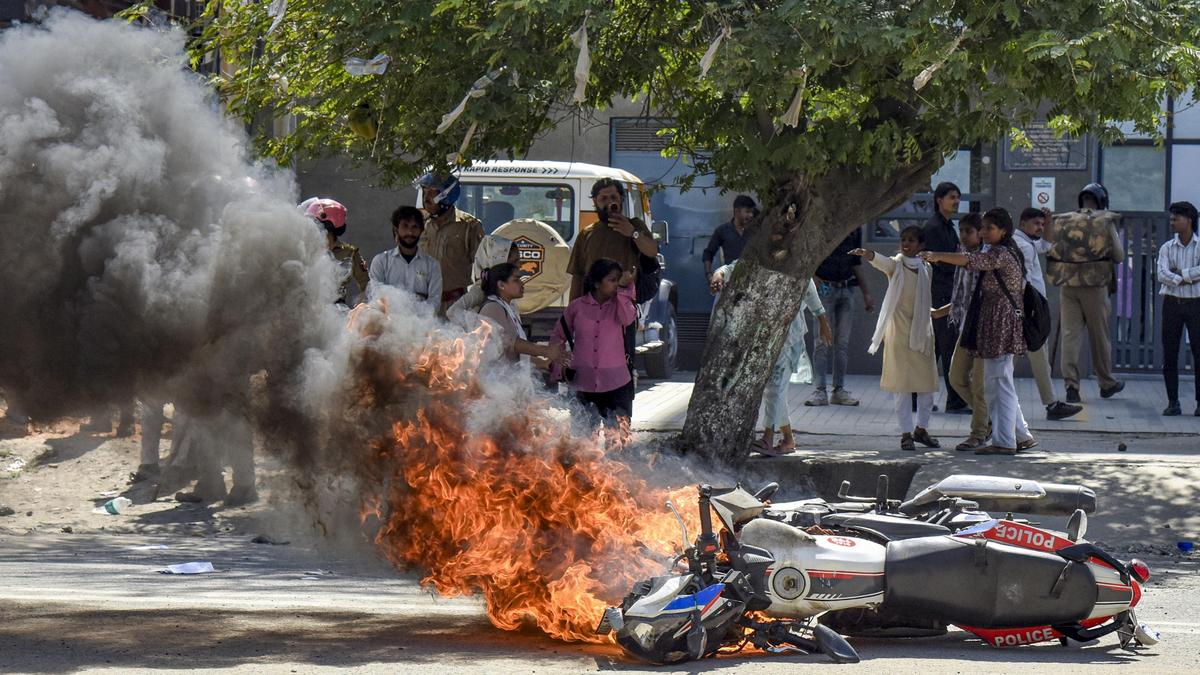
Four months after the April protests in Noida, workers arrested during the demonstrations are struggling with massive legal debts and an inability to find new employment.
- Workers arrested during the Noida protests are facing extreme financial hardship due to legal costs.
- Expenses for bail, documentation, and court appearances have reached lakhs of rupees for some families.
- Many workers have lost their jobs and are struggling to reintegrate into the workforce.
- Legal battles are being funded through personal loans and crowdfunding.
Four months after the significant protests in Noida on April 13, the aftermath has left many workers and activists in a state of financial devastation. What began as a movement for better wages and improved working conditions has transformed into a grueling struggle for survival against mounting legal debts and unemployment.
The financial burden of securing bail, procuring essential legal documents, and pursuing ongoing court cases has drained the life savings of many families. Costs involving drafting applications, notarization, certified copies, and repeated travel to the Surajpur Court and the Allahabad High Court have escalated significantly. In some instances, the expenditure has exceeded several lakhs of rupees.
Why This Matters
BozokMedia analysis shows that the criminalization of labor disputes shifts the burden from systemic reform to individual punishment. When labor unrest is treated primarily as a 'law and order' issue, the resulting legal machinery often serves to penalize the economically vulnerable rather than addressing the root cause of the dispute.
The cost of seeking justice has become a barrier that effectively silences the voices of the working class.
The impact extends beyond mere legal fees. For many, the arrest has led to immediate termination of employment. Manjeet (name changed), a 25-year-old trainee supervisor, expressed the psychological and professional toll, noting that he lacks the confidence to apply for new roles after his arrest and subsequent job loss.
Families are also bearing the brunt of these costs. One e-rickshaw driver's family reported spending over ₹2.5 lakh to cover bail, legal fees, room rent, and even the EMI for the vehicle. For activists facing multiple FIRs, the situation is even more dire, with some families relying on crowdfunding and loans to keep their legal battles alive.
Historical Background
Industrial unrest in the National Capital Region (NCR) has historically been a flashpoint for labor rights discussions. The tension between rapid industrial growth and the protection of worker rights continues to create friction between manufacturing units and the workforce.
Frequently Asked Questions
Question 1: What are the main expenses incurred by the workers?
Answer: The main expenses include bail amounts, lawyer fees, court documentation, travel, and loss of daily wages.
Question 2: How are families managing these high costs?
Answer: Many families are resorting to taking loans or using crowdfunding from friends and community members.