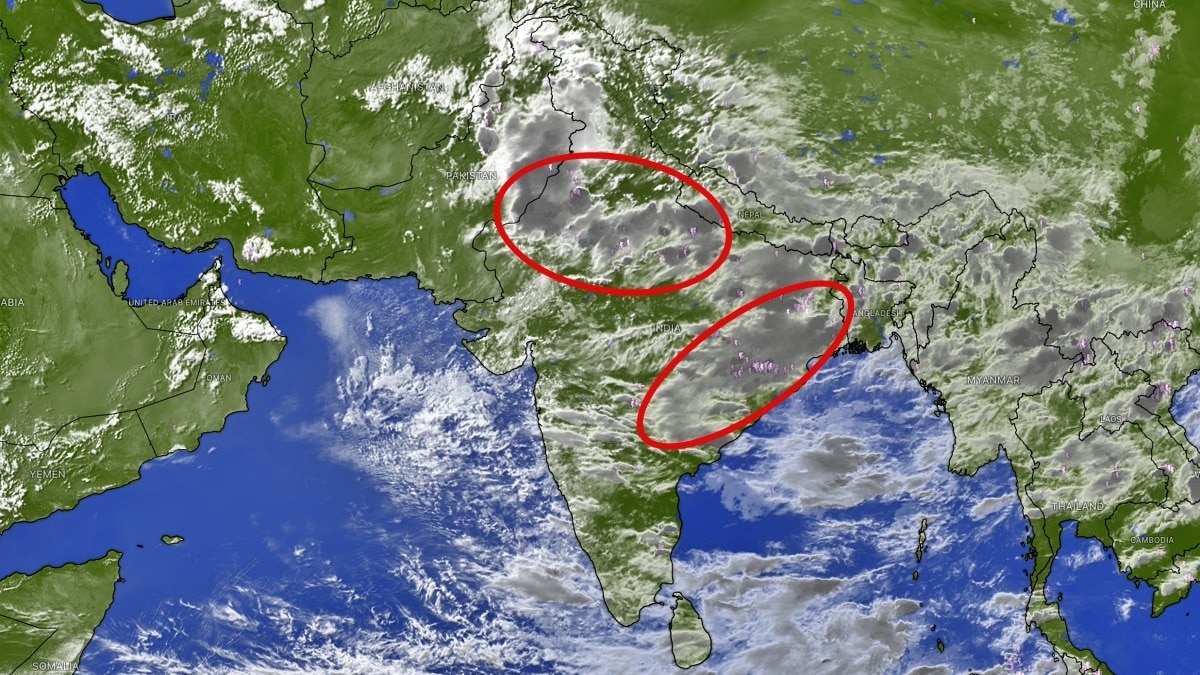
Favorable conditions in the Indian Ocean and Bay of Bengal are set to drive an active monsoon phase across India for the next fortnight. Scientists are monitoring key climate drivers to offset El Nino's impact.
Key Takeaways
- Active southwest monsoon phase expected for the next two weeks.
- Indian Ocean Dipole (IOD) in neutral phase, but conditions are shifting.
- Madden-Julian Oscillation (MJO) supporting cloud formation over the Bay of Bengal.
India is poised to experience a highly active phase of the southwest monsoon over the next fortnight. Weather systems over the Indian Ocean and the Bay of Bengal are becoming increasingly favorable for widespread rainfall. Meteorologists are closely monitoring the interplay between the neutral Indian Ocean Dipole (IOD), El Nino, and the Madden-Julian Oscillation (MJO) to predict the trajectory of the 2026 season.
According to recent climate analysis, the IOD is currently in a neutral phase, meaning the ocean has not yet transitioned into a specific temperature pattern that dictates heavy monsoon shifts. However, thunderstorm activity over the eastern tropical Indian Ocean remains robust, signaling a highly energetic atmosphere. The combination of tropical westerly winds and influence from the western Pacific is currently shaping these maritime conditions.
Why This Matters
BozokMedia analysis shows that the relatively compact size of the Indian Ocean allows for rapid shifts in weather patterns. If El Nino intensifies, it could trigger a transition to a positive IOD. A positive IOD is a critical climate mechanism that often acts as a buffer, offsetting the adverse, drought-inducing effects of El Nino on the Indian subcontinent.
The evolving ocean-atmosphere dynamics could be the deciding factor for the remainder of the 2026 monsoon season.
Furthermore, sea surface temperatures around Indonesia and Java are cooling due to seasonal upwelling. This cooling process is intrinsically linked to rainfall patterns in the Indo-Pacific region. Simultaneously, the MJO is moving into a phase that promotes significant cloud formation over the southern Bay of Bengal, fueling rain-bearing systems over northern and eastern India.
Historical Background
Historically, the relationship between the Indian Ocean Dipole and El Nino has been a cornerstone of monsoon predictability. While El Nino typically brings drier conditions to South Asia, a strong positive IOD has historically provided the necessary moisture to ensure adequate rainfall, stabilizing the agricultural cycle.
Frequently Asked Questions
1. How does El Nino affect the Indian Monsoon?
El Nino generally suppresses monsoon rainfall, but its impact can be mitigated by a positive Indian Ocean Dipole.
2. What is the MJO and why is it important?
The Madden-Julian Oscillation (MJO) is a large-scale tropical weather pattern that influences cloud formation and rainfall intensity across the globe.