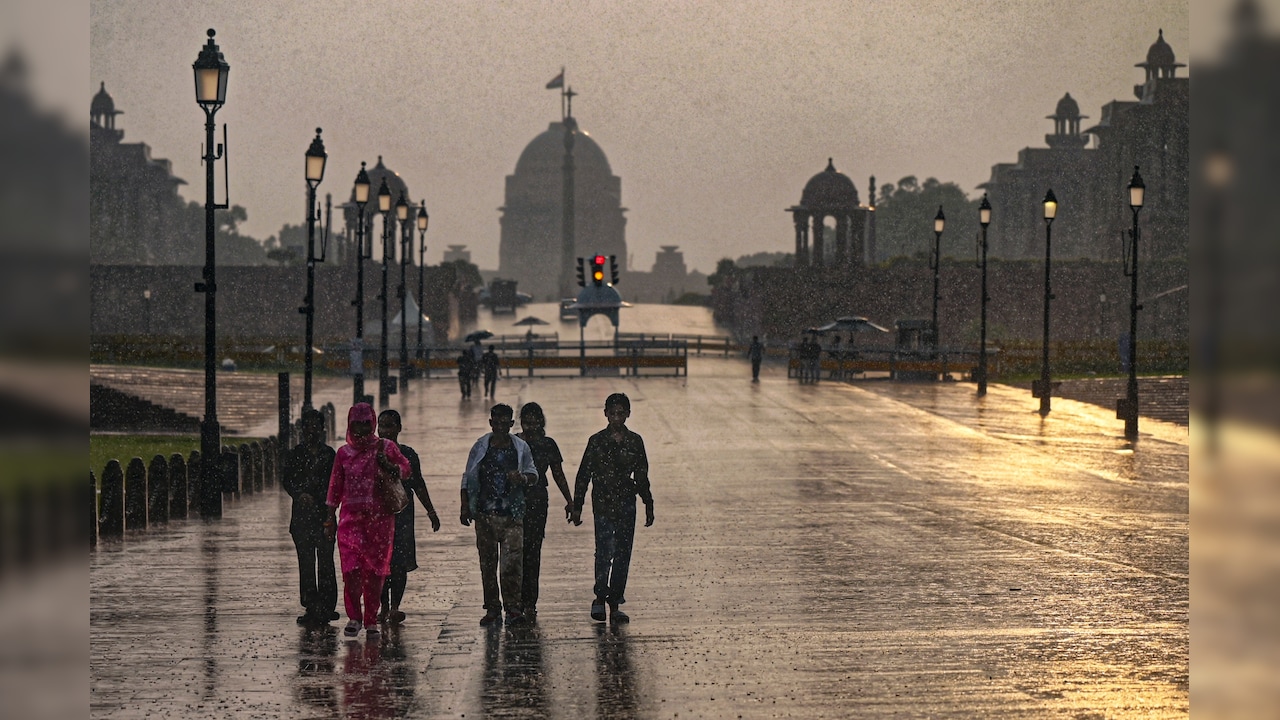
Heavy rainfall has triggered severe waterlogging across Delhi, marking the wettest August day in the last two years with rainfall exceeding 100mm in several areas.
- Delhi recorded its wettest August day in two years.
- Rainfall exceeded 100mm in Ayanagar and the Ridge area.
- Severe waterlogging has disrupted traffic and daily life across the capital.
The national capital, Delhi, is grappling with intense monsoon fury as it recorded its wettest August day in the last two years. The torrential downpour has led to widespread waterlogging across several key parts of the city, bringing daily life to a standstill and causing significant disruptions to commuters.
According to meteorological data, rainfall intensity varied across different stations. Ayanagar recorded the highest cumulative rainfall at 101.9 mm, closely followed by the Ridge area at 100.4 mm. Safdarjung reported 99.1 mm of rain by 8:30 am, while Lodi Road saw 98.3 mm. Even in Palam, the rainfall was substantial at 68.0 mm.
Why This Matters
BozokMedia analysis shows that the recurring pattern of urban flooding in Delhi highlights a critical failure in the city's drainage infrastructure. Despite various municipal efforts, the rapid urbanization and the increase in paved surfaces prevent natural absorption, turning heavy rainfall into immediate street flooding.
The increasing frequency of extreme rainfall events is a direct consequence of shifting monsoon patterns and inadequate urban planning.
The accumulation of water on major arterial roads has resulted in massive traffic snarls, leaving office-goers and school buses stranded for hours. The situation in low-lying areas remains particularly concerning as water continues to enter residential pockets.
Historical Background
Historically, Delhi's monsoon has been relatively predictable. However, recent climate trends indicate a shift toward 'short-duration, high-intensity' rainfall events. This year's August peak is a stark reminder of how the city's infrastructure is struggling to keep pace with the changing climatic reality.
Frequently Asked Questions
Question 1: Which areas in Delhi were most affected by rainfall?
Answer: Ayanagar, the Ridge, and Safdarjung recorded the highest rainfall, leading to significant waterlogging.
Question 2: How does this compare to previous years?
Answer: This marks the wettest August day for the city in the last two years.