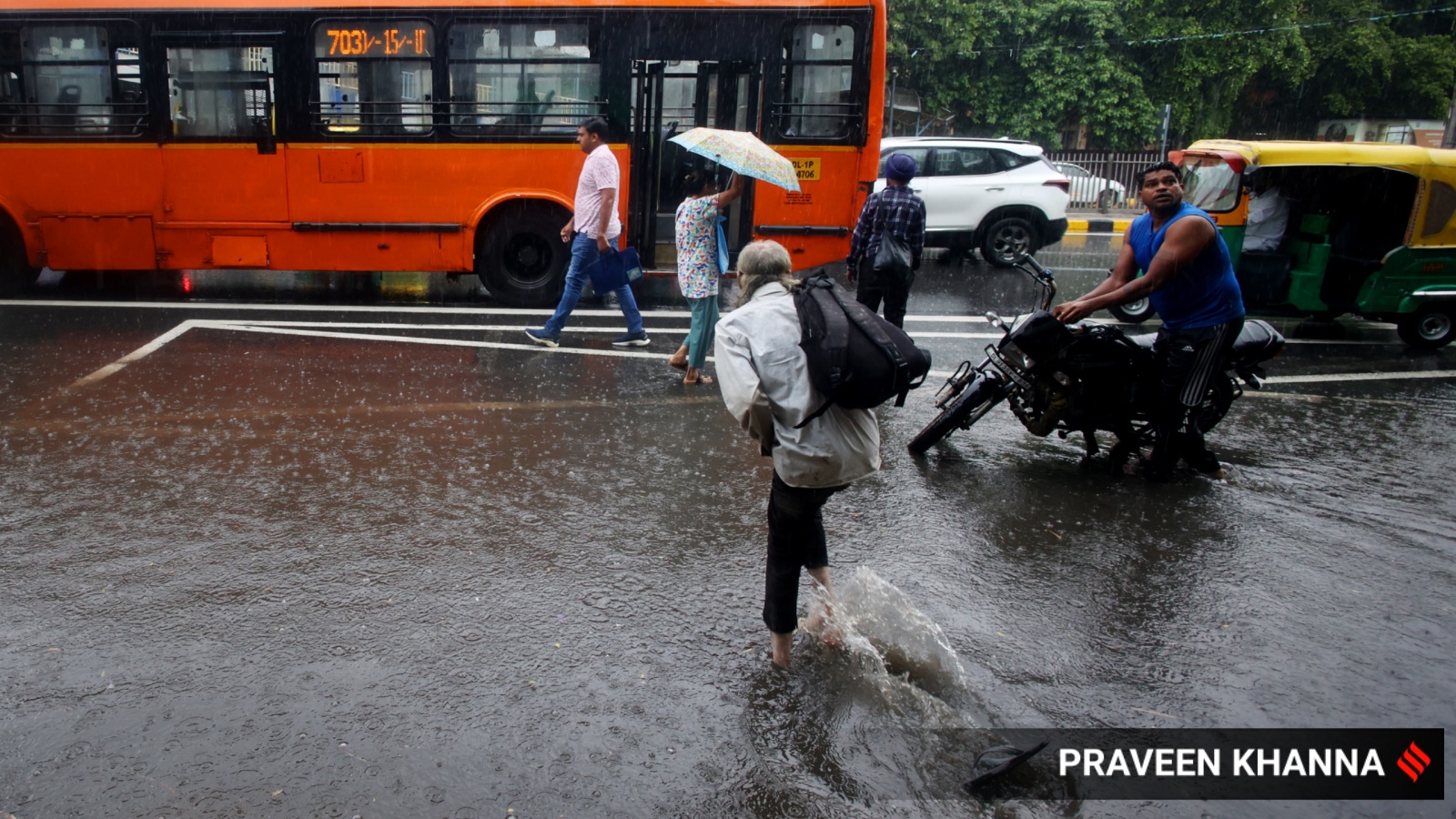
Torrential rains in the early hours of Tuesday have paralyzed several parts of Delhi. With rainfall exceeding 100mm in multiple areas, the capital faces severe waterlogging and significant temperature drops.
- Ayanagar recorded the highest rainfall at 101.9 mm.
- Major areas including ITO, Connaught Place, and Lutyens' Delhi face severe waterlogging.
- Temperatures dropped significantly across all IMD stations.
- Air Quality Index (AQI) improved to a 'satisfactory' level.
New Delhi: The early hours of Tuesday, August 25, 2026, brought intense rainfall to the national capital, leaving several parts of Delhi submerged and causing massive traffic congestion. According to the India Meteorological Department (IMD), many regions recorded rainfall of 100 mm or more in the 24-hour period ending at 8:30 a.m.
The rainfall distribution was widespread, with Ayanagar topping the charts at 101.9 mm. The Ridge followed closely with 100.4 mm, while Safdarjung and Lodi Road recorded 99.1 mm and 98.3 mm, respectively. In Palam, the rainfall was recorded at 68 mm by Tuesday morning. This sudden deluge has turned major thoroughfares into rivers, hampering the morning commute for thousands of residents.
Why This Matters
BozokMedia analysis shows that the recurring pattern of waterlogging in Delhi's central business districts and residential hubs highlights a critical failure in urban drainage management. As extreme weather events become more frequent, the city's ability to manage high-intensity rainfall is being tested to its limits.
The intensity of the rainfall combined with existing drainage bottlenecks is the primary cause of the current urban inundation.
Severe waterlogging was reported in high-profile areas such as Ashoka Road in Lutyens' Delhi, Raisina Road, and around Connaught Place. Commuters faced immense difficulties near the Supreme Court and AIIMS, where vehicles were seen being manually pushed through deep water. Other affected zones included ITO, Moti Bagh, Kamla Nagar, and Karol Bagh.
Historical Background
Delhi's urban landscape has undergone massive transformation, replacing natural catchment areas with concrete structures. Historically, the city's drainage relied on natural slopes and seasonal water bodies, many of which have been encroached upon, leading to the current vulnerability during monsoon surges.
| Location | Rainfall (mm) | Min Temp (°C) |
|---|---|---|
| Ayanagar | 101.9 | 23.8 |
| The Ridge | 100.4 | 20.8 |
| Safdarjung | 99.1 | 23.5 |
| Palam | 68.0 | 21.8 |
Frequently Asked Questions
1. Which area in Delhi received the maximum rainfall?
Ayanagar recorded the highest rainfall at 101.9 mm.
2. How has the rain affected Delhi's temperature?
The rain brought down temperatures across the city, with all IMD stations recording temperatures below the seasonal normal.