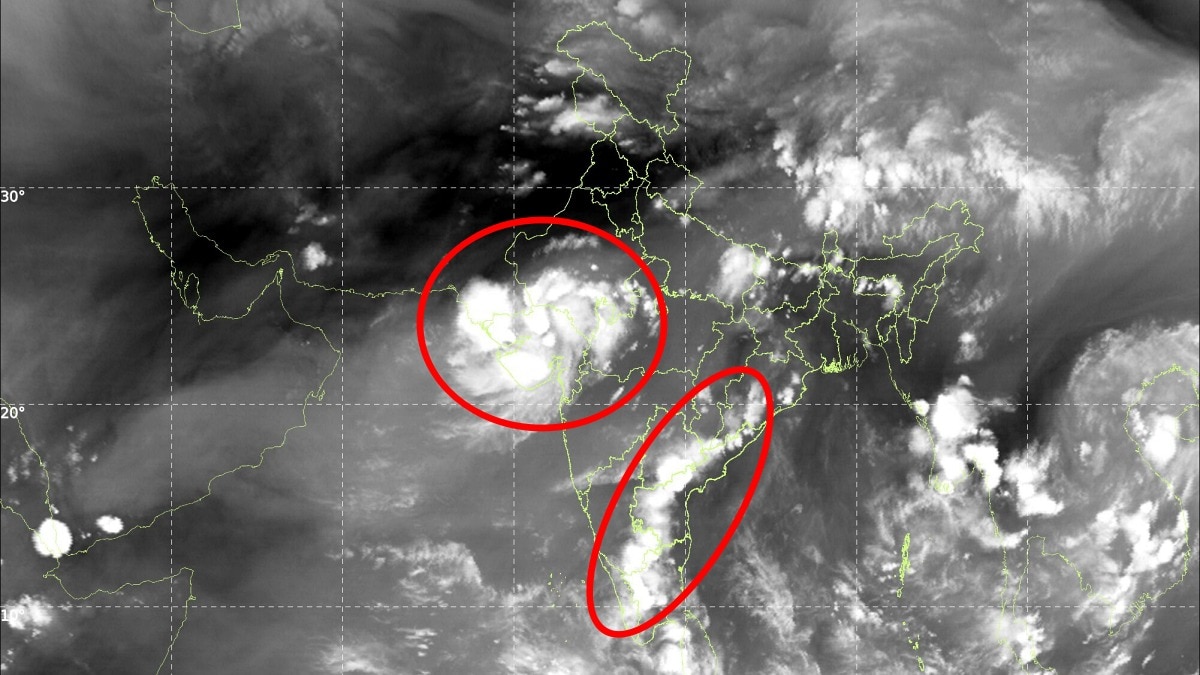
India is facing a volatile weather pattern as two distinct monsoon systems simultaneously impact the subcontinent. Satellite imagery has captured the intense 'weather whiplash' causing rapid fluctuations in precipitation.
- Two powerful monsoon systems are active simultaneously across India.
- Satellite imagery reveals extreme 'weather whiplash' patterns.
- Increased risk of flash floods and heavy rainfall in multiple regions.
India is currently grappling with a highly unstable meteorological phenomenon as two separate monsoon systems converge over the subcontinent. This rare and intense interaction has led to what meteorologists describe as 'weather whiplash'—a rapid and violent shift in weather conditions. Satellite imagery has provided startling visual evidence of these systems moving in tandem, creating a complex pattern of precipitation.
The interaction of these two systems is creating a tug-of-war in the atmosphere. While one system draws moisture from the Arabian Sea, the other is being driven by dynamics in the Bay of Bengal, leading to unpredictable rainfall distributions. This dual-system impact means that some regions are experiencing deluge-level rainfall, while others face sudden, unexpected dry spells.
Why This Matters
BozokMedia analysis shows that this atmospheric instability is a hallmark of a changing climate. The convergence of multiple systems increases the intensity of localized extreme weather events, making traditional monsoon forecasting more difficult. For a country heavily dependent on monsoon for agriculture, this unpredictability poses a significant socio-economic risk.
The convergence of dual monsoon systems signals a shift toward more extreme and erratic weather patterns across the Indian subcontinent.
The current situation highlights the growing vulnerability of urban and rural infrastructures to rapid weather shifts. As these systems move, the potential for flash flooding in hilly terrains and waterlogging in metropolitan cities remains critically high.
Historical Background
Traditionally, the Indian monsoon has followed a somewhat predictable seasonal progression. However, longitudinal data suggests that the 'whiplash' effect—the rapid swing between extreme wet and extreme dry conditions—has become more frequent over the last two decades, largely attributed to rising sea surface temperatures and atmospheric warming.
Frequently Asked Questions
Question 1: What exactly is 'weather whiplash'?
Answer: It refers to sudden, extreme shifts in weather patterns, such as moving from intense heat to torrential rain within a very short period.
Question 2: How does this affect the monsoon season?
Answer: It makes the monsoon more erratic, causing heavy rainfall in short bursts rather than steady, distributed rain throughout the season.