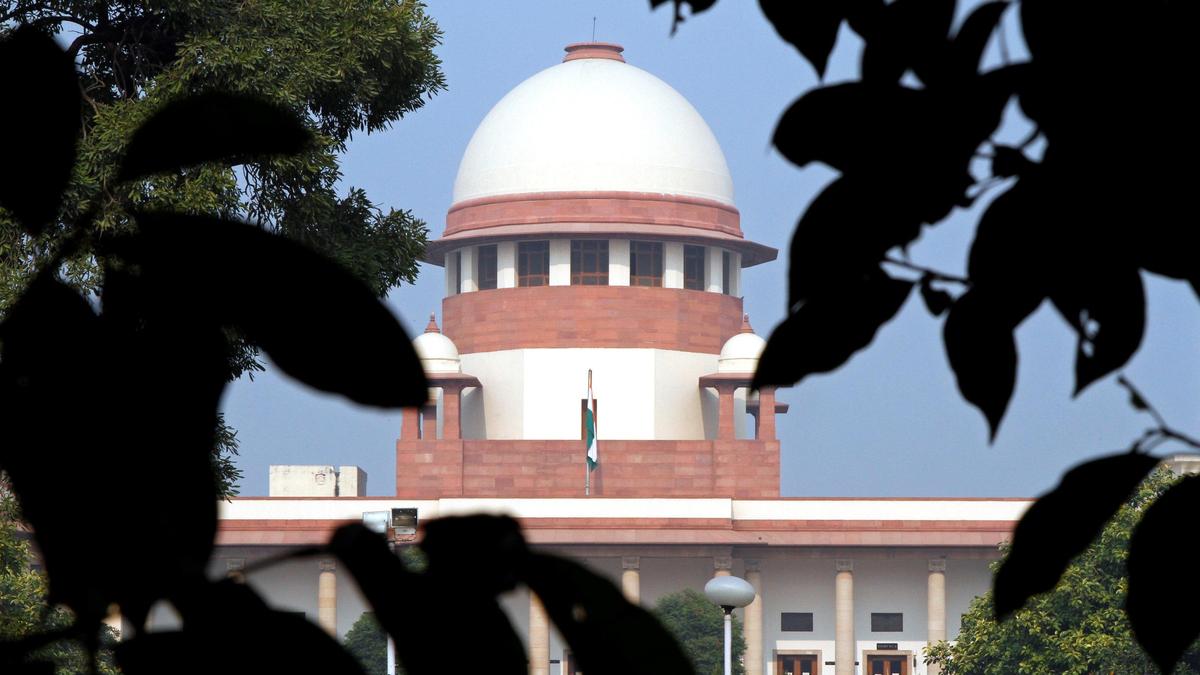
The Supreme Court has ruled that states cannot use financial constraints as an excuse to prevent increasing the retirement age of judicial officers, directing them to decide within two weeks.
Key Takeaways
- The Supreme Court dismissed the 'financial burden' argument used by states against raising retirement age.
- A Bench directed all State governments to revisit the issue within two weeks.
- Retaining experienced judges is argued to be more cost-effective than filling new vacancies.
- The decision aims to provide uniform superannuation ages across the district judiciary.
New Delhi: In a significant move toward judicial reform, the Supreme Court of India on Wednesday observed that State governments cannot cite financial burden as a reason to oppose the enhancement of the retirement age for judicial officers. The Bench emphasized that retaining seasoned legal minds may actually impose a lesser financial liability on the state compared to the costs associated with retiring them and recruiting new personnel.
The Court's Mandate
A Bench comprising Chief Justice Surya Kant, Justice Joymalya Bagchi, and Justice V. Mohana stated that the concerns regarding financial strain raised by various states are "misconceived." The Court has instructed all State governments and Union Territories to consult with their respective High Courts and arrive at a pragmatic decision within a strict two-week deadline.
The continuation of experienced and seasoned judicial officers would entail a lesser financial liability than what the State would incur upon their retirement.
Why This Matters
BozokMedia analysis shows that this ruling addresses a long-standing disparity in the Indian judicial hierarchy. While Supreme Court judges retire at 65 and High Court judges at 62, district-level judicial officers often retire at 60. This gap leads to a loss of institutional memory and expertise at the grassroots level of the legal system. By pushing for a uniform increase, the Court is aiming to stabilize the lower judiciary.
Historical Context
The debate over judicial superannuation dates back to 2002, when the Supreme Court declined the recommendations of the Justice K. Jagannatha Shetty Commission, which proposed raising the retirement age of district judges to 62. However, recent trends show progress; for instance, in November 2025, a bench had already raised the retirement age for judicial officers in Madhya Pradesh from 60 to 61 years, following a similar precedent in Telangana.
Frequently Asked Questions
1. What is the specific directive given to the States?
The Supreme Court has directed States and Union Territories to revisit the issue of increasing the superannuation age of judicial officers in consultation with their High Courts and make a decision within two weeks.
2. Will the benefit apply retroactively?
Yes, the Court stated that if a State decides to enhance the retirement age, the benefit must also be extended to judicial officers who retired during the intervening period.