The Supreme Court has dismissed a PIL challenging the constitutional validity of hanging, ruling that no conclusive scientific evidence supports more 'humane' alternatives like lethal injection.
- The Supreme Court upheld hanging as a valid method of executing death sentences.
- The Court found no unimpeachable scientific evidence to favor lethal injection over hanging.
- The decision relies on the principle of 'Stare Decisis' and previous larger-bench judgments.
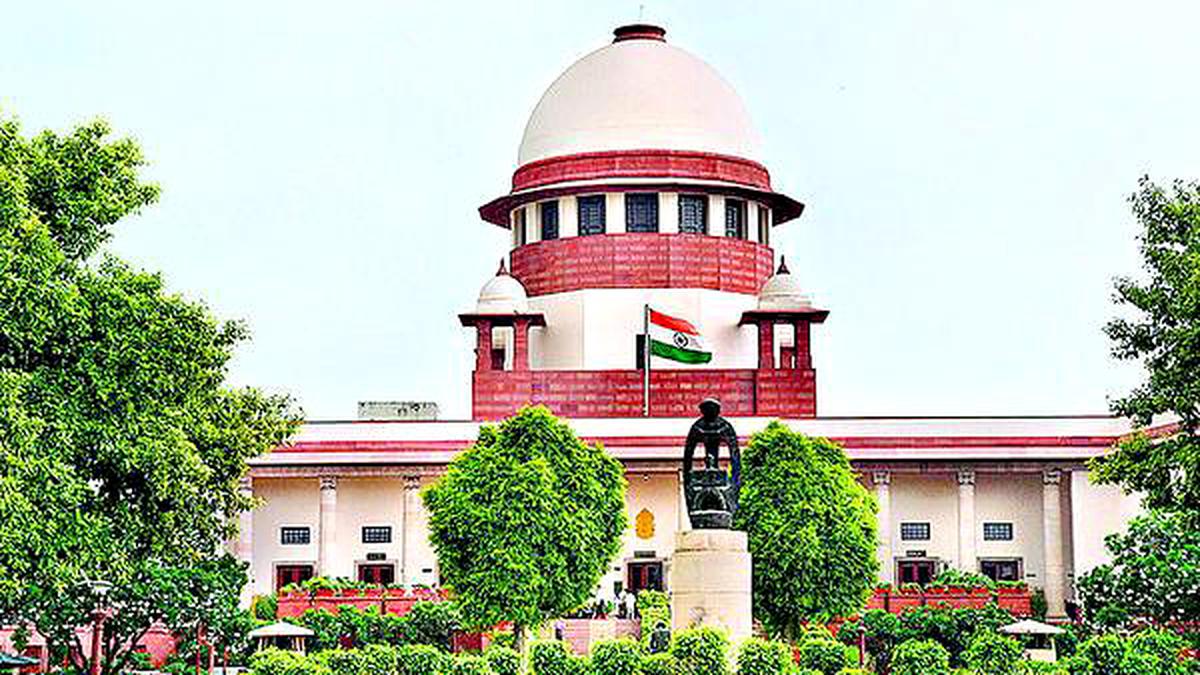
In a significant ruling, the Supreme Court of India has dismissed a Public Interest Litigation (PIL) that challenged the constitutional validity of hanging as the sole method of execution. A bench comprising Justice Vikram Nath and Justice Sandeep Mehta ruled that the existing legal framework remains constitutionally sound.
The petition, which had been pending since 2017, argued that prescribing only hanging violates the right to dignity under Article 21 of the Constitution. The petitioner contended that alternative methods, such as lethal injection, are more scientific, humane, and painless, conforming to the requirement of a 'just, fair, and reasonable' procedure.
Why This Matters
BozokMedia analysis shows that this judgment reinforces the doctrine of judicial precedent in India. By refusing to deviate from established law without overwhelming scientific proof, the Court has prioritized legal certainty over speculative humanitarian shifts.
The judiciary remains cautious about altering execution methods unless empirical scientific data proves existing methods are unconstitutionally cruel.
A central pillar of this judgment is the legal principle of 'Stare Decisis'—the doctrine that courts should adhere to previous decisions. The Court noted that the validity of hanging was already settled in the landmark Deena v. Union of India (1983) case by a three-judge bench, a decision later affirmed by a larger Constitution Bench in Shashi Nayar v. Union of India (1992).
The Court observed that while the Law Commission of India has, in its 35th (1967) and 187th (2003) reports, expressed concerns regarding the mental agony and physical suffering associated with hanging, there was a lack of conclusive evidence to prove that alternatives like electrocution or lethal injection offer a demonstrable advantage in terms of humaneness.
| Method | Legal Status in India | Petitioner's Argument | |
|---|---|---|---|
| Hanging | Constitutionally Valid | Standard/Established | Described as lacking dignity |
| Lethal Injection | Not prescribed | More Humane | Lacks unimpeachable scientific proof |
Frequently Asked Questions
1. Did the Supreme Court abolish the death penalty?
No, the Court only addressed the method of execution, not the existence of the death penalty itself.
2. What is the significance of the Deena case?
The Deena case established that hanging is a quick and decent method of execution when properly administered.