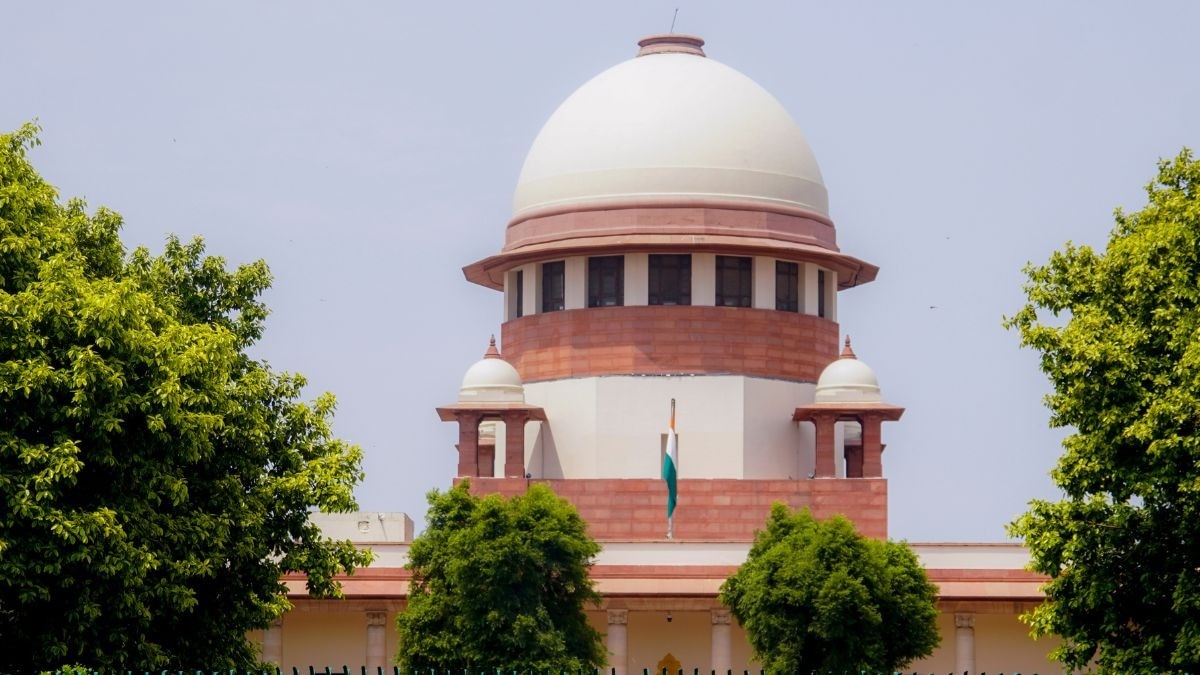
The Supreme Court has formed a new three-judge bench to hear review petitions against its 2022 judgment on the PMLA. The bench will scrutinize critical issues regarding ECIR disclosure and the burden of proof under Section 24.
- A new three-judge bench has been formed to review the 2022 PMLA verdict.
- The bench is headed by Chief Justice of India Surya Kant.
- Key issues include the mandatory supply of ECIR and the burden of proof under Section 24.
The Supreme Court of India has reconstituted its bench to preside over pending review petitions challenging the landmark 2022 judgment regarding the Prevention of Money Laundering Act (PMLA). This move marks a significant moment in the ongoing legal debate over the powers of investigative agencies versus individual rights.
The newly formed bench consists of CJI Surya Kant, Justice Joymalya Bagchi, and Justice V. Mohana. The decision to reconstitute the bench came after the Chief Justice noted that continuing with the previous bench would necessitate the restructuring of several existing benches, a move agreed upon by all parties involved.
Why This Matters
BozokMedia analysis shows that the outcome of these review petitions could fundamentally alter how money laundering investigations are conducted in India. The tension lies in whether the Enforcement Directorate's (ED) procedural autonomy outweighs the constitutional right of an accused to be informed of the charges through the ECIR.
The review focuses on two critical legal pillars:
- The ECIR Dilemma: Whether the Enforcement Case Information Report (ECIR), an internal document of the ED, must be shared with the accused to ensure a fair trial.
- Section 24 and the Burden of Proof: The controversial provision that shifts the burden of proving innocence onto the accused rather than the prosecution.
The scrutiny of Section 24 is pivotal, as it challenges the fundamental legal principle of 'innocent until proven guilty'.
Historical Background
On July 27, 2022, a three-judge bench led by then-Justice AM Khanwilkar upheld the constitutional validity of several PMLA provisions. The verdict significantly empowered the Enforcement Directorate (ED) with extensive rights to arrest, search, and seize assets. The current review petitions seek to narrow or clarify the scope of these powers without overturning the entire legislative framework.
Frequently Asked Questions
Question 1: Who is leading the new Supreme Court bench?
Answer: The new bench is headed by the Chief Justice of India, Surya Kant.
Question 2: What are the two main issues being reviewed?
Answer: The issues are the disclosure of the ECIR to the accused and the burden of proof under Section 24 of the PMLA.