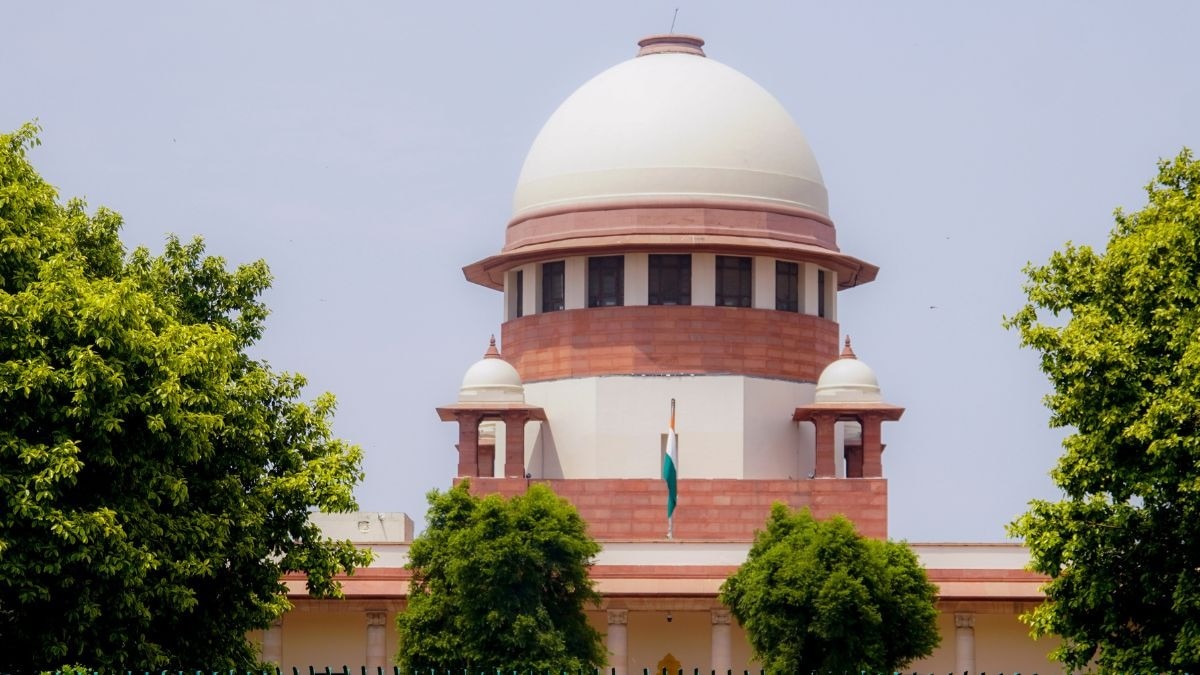
In a landmark move to protect the riverine ecosystem, the Supreme Court has imposed an interim ban on all construction within 100 meters of Rajasthan's Jojari river and restricted hazardous industries within 500 meters.
- Immediate ban on all construction and development within 100 meters of the Jojari river edge.
- Hazardous industries prohibited within 500 meters of the flood line or present flow path.
- Order serves as an interim safeguard until scientific demarcation of flood lines is complete.
- The ruling stems from a suo motu case regarding severe ecological degradation.
The Supreme Court of India has issued a decisive interim order barring any construction or development activity within 100 meters of the edge of Rajasthan's Jojari river. A bench comprising Justices Vikram Nath and Sandeep Mehta emphasized that this protection is essential to safeguard the fragile riverine ecosystem while a scientific process to determine the high flood line and ecological buffer zones is underway.
Beyond construction, the apex court has also targeted industrial pollution. The court directed that no hazardous industry or activity capable of causing contamination or ecological damage shall be permitted within 500 meters on either side of the existing flood line or the river's present flow path. This measure aims to prevent further degradation of the water bodies that are vital to the region's ecology.
Why This Matters
BozokMedia analysis shows that this judicial intervention is a critical response to the rapid industrialization and unplanned urban sprawl in Rajasthan. The Jojari, Bandi, and Luni rivers are lifelines for the local geography, yet they have faced extreme contamination. By establishing these interim buffer zones, the court is prioritizing long-term environmental stability over short-term commercial interests, setting a precedent for riverine conservation across India.
The imposition of measurable protection zones is a vital step in preventing irreversible damage to riverine ecosystems during scientific assessments.
The matter was taken up as a suo motu case concerning the alarming levels of contamination in the Jojari river. The bench noted the widespread destruction of the riverine ecosystem and had previously flagged similar pollution issues in the Bandi and Luni rivers of the state.
Historical Background
The Jojari river flows through Jodhpur, while the Bandi river flows through Pali. Both rivers eventually converge with the Luni river near Balotra. Over the years, these rivers have become dumping grounds for untreated industrial effluents and urban waste. On August 7, the Supreme Court had already directed the Rajasthan government to form an Integrated Coordination Group, led by the Chief Secretary, to tackle the contamination in these three critical river systems.
Frequently Asked Questions
1. What is the distance limit for construction near the Jojari river?
The Supreme Court has banned all construction and development within 100 meters of the river's edge.
2. When will the next hearing take place?
The matter has been scheduled for a follow-up hearing on September 22.