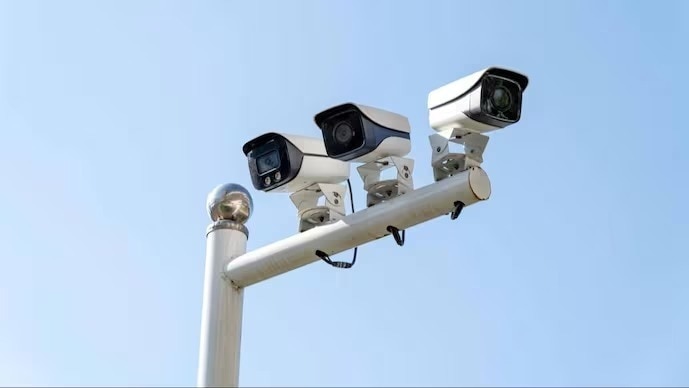
The Allahabad High Court has ruled that sensitive CCTV footage cannot be directly disclosed under the RTI Act, emphasizing that applicants must seek preservation through competent judicial forums.
- Sensitive CCTV footage is exempt from direct disclosure under RTI if it contains sensitive data.
- Section 8(1)(g) of the RTI Act can be invoked to protect such information.
- Applicants must approach a competent court or commission to seek preservation and production of recordings.
The Allahabad High Court has delivered a landmark ruling stating that sensitive CCTV footage sought under the Right to Information (RTI) Act cannot be handed over directly to an applicant. The court emphasized that if the footage contains information that falls under legal exemptions, it must be protected from public disclosure.
Legal Nuances and Section 8(1)(g)
The Lucknow bench clarified that such footage may be protected under Section 8(1)(g) of the RTI Act, which allows for the withholding of information that could endanger the safety or life of any person. During the proceedings, the State Information Commission informed the court that the specific footage in question contained sensitive data that could not be disclosed directly to the petitioner.
Case Background: The Shobhit Kashyap Petition
The ruling came while disposing of a writ petition filed by Shobhit Kashyap. In March 2025, Kashyap had filed an RTI application seeking various pieces of information, including complete CCTV footage. He had also sought the imposition of a maximum penalty of ₹25,000 on the concerned official and compensation for alleged harassment. Kashyap argued, citing Supreme Court precedents, that the preservation of CCTV footage is a fundamental right of a citizen.
The Judicial Distinction
A bench comprising Justices Shekhar B Saraf and Abhdesh Kumar Chaudhary noted a critical distinction between seeking information via RTI and seeking judicial production. While the court acknowledged that citizens have the right to seek preservation, it observed that Kashyap had attempted to bypass the judicial route by seeking the footage solely through the RTI mechanism.
Why This Matters
BozokMedia analysis shows that this judgment establishes a vital boundary between transparency and privacy. By distinguishing between 'disclosure' and 'judicial production,' the court has provided a roadmap for how sensitive evidence should be handled in a democratic setup without compromising individual security.
The court has effectively balanced the citizen's right to information with the state's duty to protect sensitive and private data.
Frequently Asked Questions
1. Can I get sensitive CCTV footage through an RTI application?
Not directly, if the information is deemed sensitive under Section 8(1)(g) of the RTI Act.
2. What is the legal way to obtain such footage?
You must file a complaint before a competent court or commission, which can then order the footage to be preserved and produced.