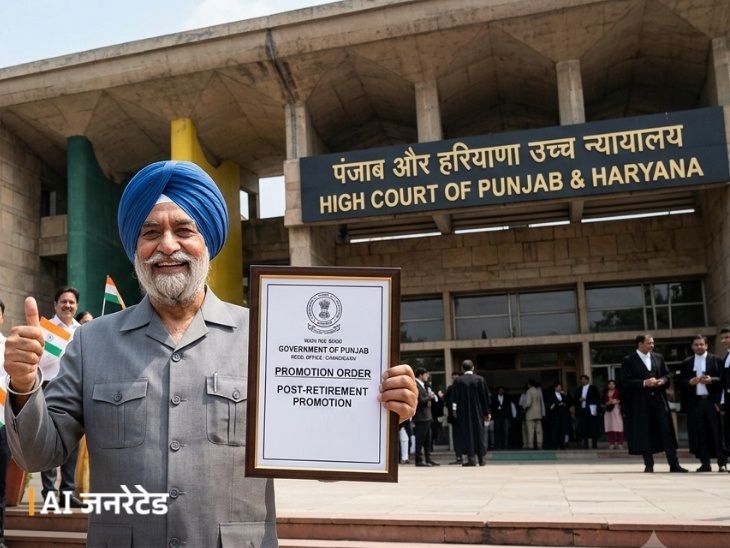
The Punjab and Haryana High Court has ordered the Punjab government to grant seniority and promotion benefits to employees who fought a legal battle for 25 years. The court ruled that surplus employees can be prioritized for adjustment, but they cannot bypass merit-based seniority.
- The High Court ruled in favor of employees after a legal struggle spanning 25 years.
- The court clarified that surplus employee adjustment cannot override merit-based seniority rules.
- The government has been ordered to pay all arrears, including pension adjustments, within 2 months.
In a landmark judgment, the Punjab and Haryana High Court has directed the Punjab government to provide seniority and promotion benefits to employees who spent their entire careers fighting a legal battle. The case pertains to a recruitment process at the Punjab State Planning Board in 1991, where administrative errors led to junior employees being promoted over highly meritorious candidates.
The controversy traces back to an advertisement issued on April 16, 1991, for Technical Assistant positions. According to departmental rules, seniority was to be determined based on the merit list derived from exam scores. However, following government directives, 'surplus' employees from the Industries Department were to be adjusted first. Due to a departmental oversight, the petitioners, including Naib Singh, were not included in the surplus list in time, while juniors with lower marks were prioritized.
Why This Matters
BozokMedia analysis shows that this case highlights the systemic flaws in how 'surplus' staff adjustments are handled within government departments. When administrative convenience is allowed to supersede meritocratic principles, it creates a ripple effect of injustice. This ruling serves as a critical precedent, ensuring that while adjustment policies exist, they cannot legally dismantle the fundamental hierarchy of merit.
Prioritizing surplus status over merit during administrative adjustments is a violation of service rules and fundamental fairness.
In November 1999, the injustice became apparent when junior employees with lower scores were promoted to the position of Research Officer, while the petitioners remained sidelined. Despite their higher merit, the 2000 seniority list placed them below their juniors. The government defended this by claiming surplus status granted them seniority, a claim the petitioners challenged in court in 2001.
The litigation dragged on for nearly a quarter of a century. By the time the court reached its final decision, all the primary petitioners had already retired from service. The legal battle became a fight not just for promotion, but for the restoration of dignity and rightful financial dues.
Delivering the verdict on September 3, 2026, the High Court quashed the seniority list of August 11, 2000, and the promotion orders of November 25, 1999. The court mandated that the government must recalculate pension and retirement benefits and clear all arrears within a strict two-month deadline.
Frequently Asked Questions
Q1: What was the core issue in this case?
A: The core issue was that junior employees were promoted ahead of senior, higher-scoring employees simply because they were categorized as 'surplus' staff.
Q2: What relief has the court provided to the petitioners?
A: The court ordered the government to grant them seniority from 1999, provide promotion benefits, and pay all pension and financial arrears within 2 months.