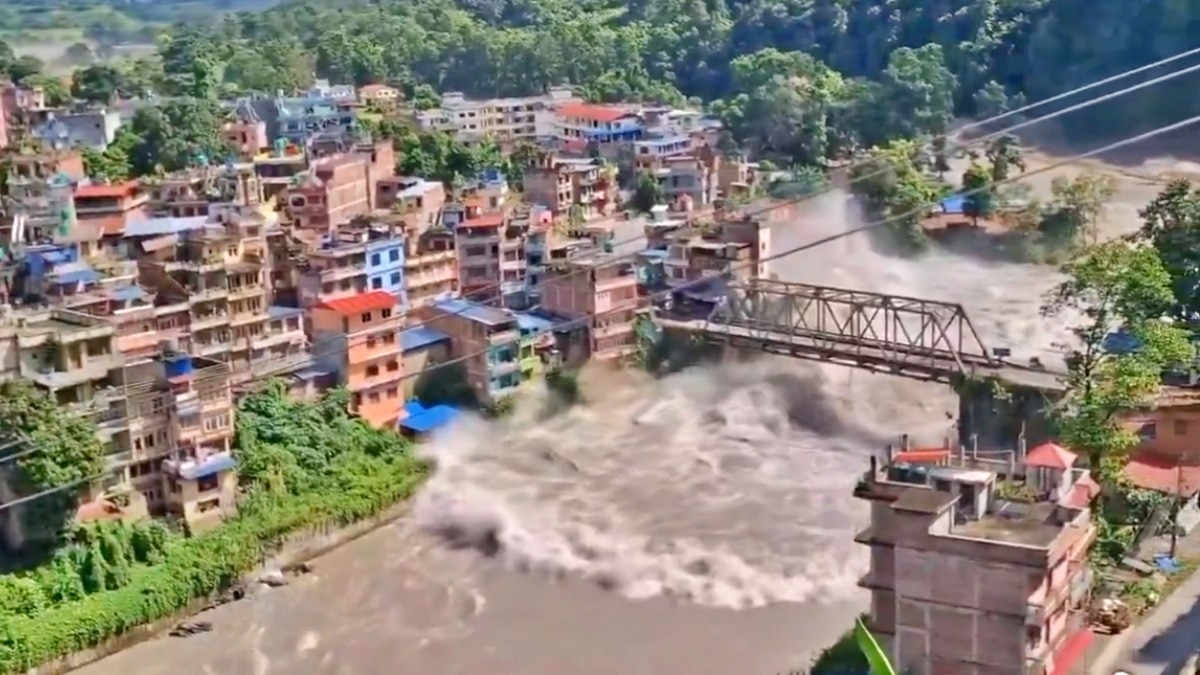
As extreme rainfall events become more frequent, researchers at ACARR warn that Kerala needs a fundamental shift in its disaster management to combat mesoscale cloudbursts.
Key Takeaways
- Kerala is emerging as a hotspot for 'mesoscale mini cloudbursts'.
- Rising Arabian Sea temperatures are fueling more intense monsoon patterns.
- Experts demand a shift from centralized to decentralized, people-centric disaster management.
- Rapid runoff and flash floods are increasing due to land degradation and deforestation.
Kochi: Researchers at the Advanced Centre for Atmospheric Radar Research (ACARR) at Cochin University of Science and Technology have issued a critical warning regarding Kerala's changing climate. They suggest that the state's current disaster management framework must be overhauled to address the increasing frequency of extreme rainfall events.
The core of the concern lies in 'mesoscale cloudbursts'—highly localized, intense downpours that can exceed 100 mm of rain in a single hour over a small area. S. Abhilash, Director of ACARR, noted that these events are driven by strong convection and orographic lifting, making the state highly vulnerable to flash floods and landslides during the monsoon season.
Why This Matters
BozokMedia analysis shows that the warming of the Arabian Sea is significantly increasing the moisture available to the monsoon system. This creates a volatile environment where massive convective clouds can develop rapidly, causing extreme rainfall in one district while a neighboring area remains dry. This spatial variability makes traditional weather forecasting incredibly difficult.
The challenge for Kerala is not to stop extreme rainfall, but to build the capacity to anticipate it, prepare for it, and minimize its consequences.
Scientist Ajil Kottayil emphasized that while Kerala possesses strong institutional frameworks, the missing link is the integration of scientific knowledge into real-time operational decision-making through a multidisciplinary expert panel.
Historical Background
In recent years, Kerala has witnessed a series of devastating floods and landslides that have claimed lives and destroyed livelihoods. The increasing unpredictability of cyclone behavior and the intensification of the monsoon have highlighted the limitations of existing disaster response protocols.
Frequently Asked Questions
1. What is a mesoscale cloudburst?
It is an extreme, localized heavy rainfall event occurring over a scale of tens to hundreds of square kilometers within a very short duration.
2. How can Kerala improve its disaster resilience?
By implementing a 'bottom-up' approach that integrates local knowledge, real-time scientific monitoring, and climate-resilient infrastructure.