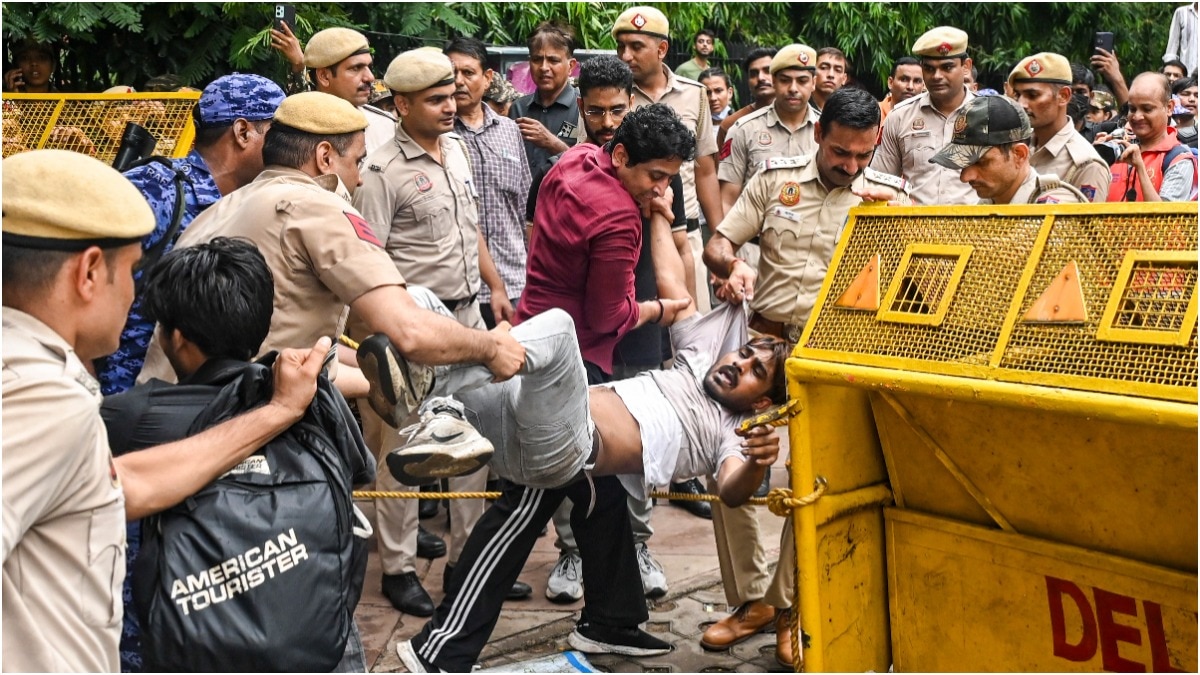
A group of 93 retired civil servants has called for an independent judicial inquiry following alleged excessive force by Delhi Police against student protesters in July.
Key Takeaways
- 93 retired civil servants demand a judicial probe into the July 20 police action.
- Allegations include the use of pellet guns, tasers, and tear gas against unarmed students.
- The group highlights violations of privacy through facial recognition technology.
- High-profile signatories include former diplomats and top bureaucrats.
A coalition of 93 retired civil servants, representing the Constitutional Conduct Group, has formally sought an independent judicial inquiry into the police action taken against student protesters in Delhi on July 20. The group alleges that security forces employed disproportionate and illegal force, including the use of pellet guns, electric batons (tasers), and tear gas, against unarmed demonstrators during the 'Sansad Chalo' march.
Why This Matters
BozokMedia analysis shows that this development signals a significant escalation in the discourse regarding civil liberties and state accountability in India. The involvement of high-ranking former officials—including former Foreign Secretary Shivshankar Menon and former Election Commissioner Ashok Lavasa—underscores the gravity of the allegations regarding the misuse of state machinery against the youth.
"These young citizens deserve empathy, dialogue, protection, and solutions, not pellets and lathis."
The group’s letter to Prime Minister Narendra Modi and Home Minister Amit Shah details harrowing accounts, including a student requiring surgery to remove pellets from their eye and neck. Furthermore, the deployment of facial recognition vans to live-scan protesters has been flagged as a direct violation of the fundamental right to privacy, potentially weaponizing surveillance technology for intimidation.
Historical Context
Student-led protests in India have historically been a cornerstone of democratic expression, often triggered by systemic issues such as examination scandals and administrative failures. The recent wave of unrest, driven by concerns over NEET and other competitive exams, highlights a growing friction between student aspirations and state management protocols.
Frequently Asked Questions
1. Who are the primary signatories of the letter?
The letter includes former diplomats like Shivshankar Menon, former LG Najeeb Jung, and former IPS/IAS officers.
2. What specific demands has the group made?
They have demanded an independent probe, the unconditional release of detained students, and compensation for the injured.