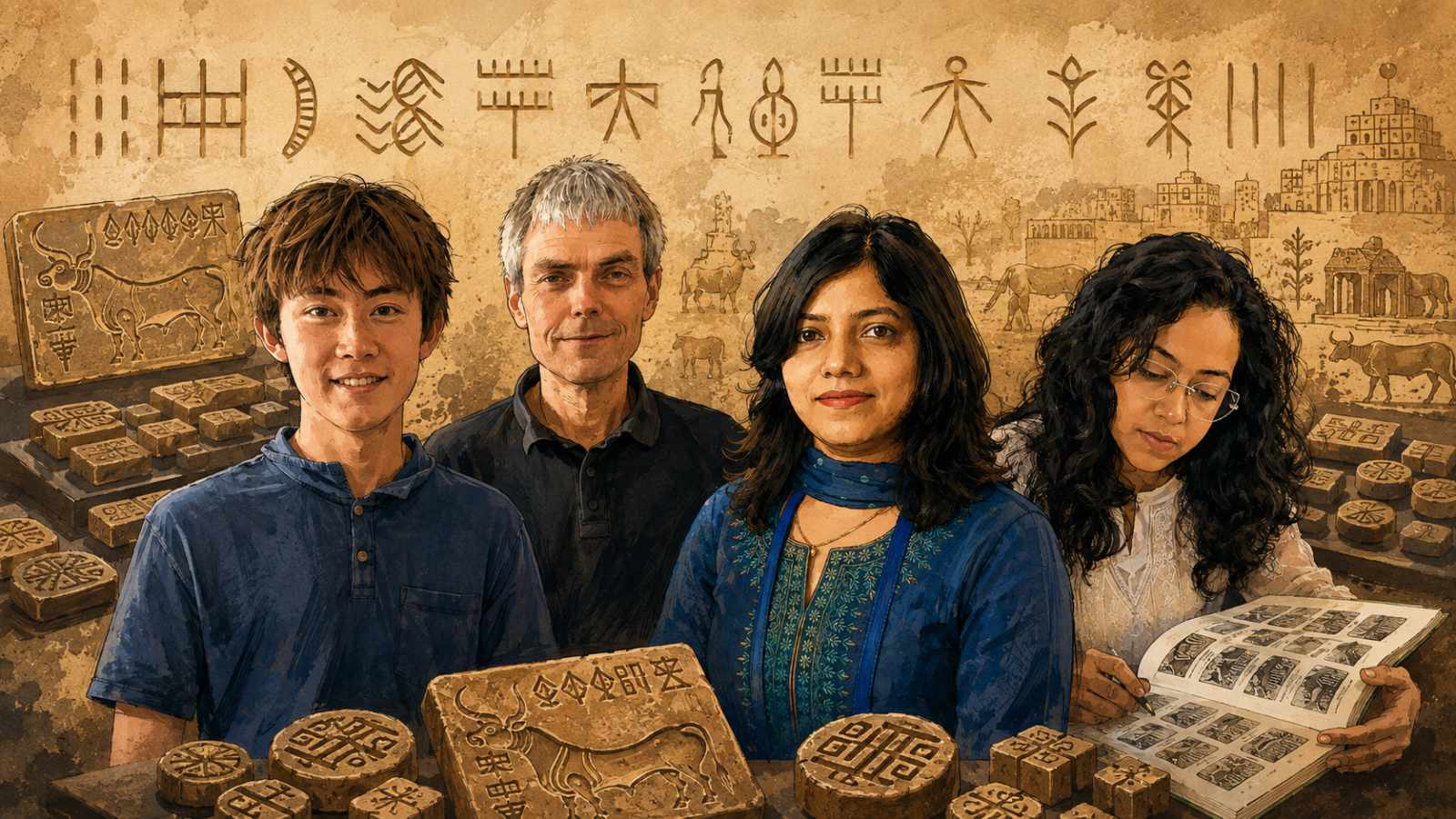
A new generation of AI experts and computer scientists is joining veteran epigraphers in a high-stakes race to decode the Indus Valley script, fueled by a massive $1 million reward.
Key Takeaways
- The Tamil Nadu government has announced a $1 million prize for deciphering the Indus script.
- A diverse group, from AI experts to 17-year-olds, is competing to crack the ancient code.
- Modern technologies like Machine Learning and Statistical Analysis are now at the forefront of this historical quest.
The race to unlock the secrets of the Indus Valley Civilization has entered a fever pitch. What was once the exclusive domain of veteran epigraphers has now become a high-tech battlefield where computer scientists, AI enthusiasts, and even young prodigies are competing to decode a 4,000-year-old script.
The catalyst for this renewed global interest was the Tamil Nadu government's announcement of a $1 million reward for anyone who successfully deciphers the script. This move followed research suggesting links between Indus artefacts and recent archaeological finds in Tamil Nadu, reigniting debates that have simmered for a century.
Why This Matters
BozokMedia analysis shows that deciphering the Indus script is not merely an academic exercise; it is a fundamental quest to understand the roots of human civilization. Cracking this code will provide unprecedented insights into the social, political, and economic structures of one of the world's oldest urban societies.
Decoding the Indus script would represent one of the greatest intellectual triumphs in the history of linguistics and archaeology.
Computer scientist Rajesh P N Rao, who has spent two decades on this mystery, has been inundated with claims ranging from the scientific to the mystical. While some claim the script represents celestial coordinates, others suggest it encodes altered states of consciousness. However, the real breakthrough may lie in Artificial Intelligence.
Historical Background
Since its discovery in 1924, the Indus script has remained one of history's most enduring enigmas. Early attempts were often clouded by the prevailing archaeological theories of the time, such as the Aryan migration theory. Today, the focus has shifted toward data-driven approaches, treating the script as a complex dataset ripe for computational analysis.
Frequently Asked Questions
Question 1: Who is offering the prize for decoding the script?
Answer: The Tamil Nadu government has announced a $1 million reward for a successful decipherment.
Question 2: How is AI being used in this process?
Answer: Researchers are using machine learning and information theory to identify patterns in the symbols that human eyes might miss.