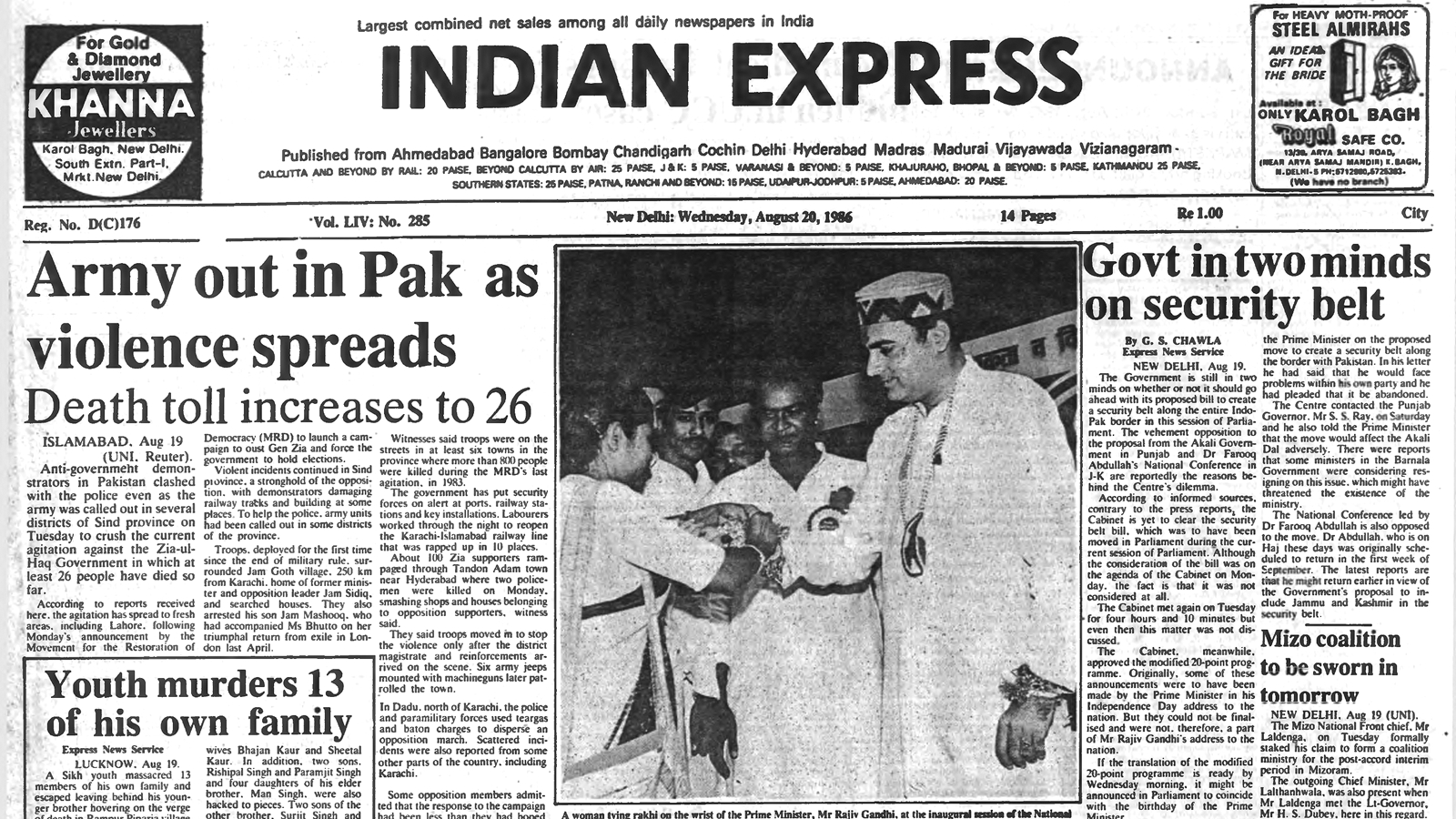
On August 20, 1986, Pakistan was engulfed in violent protests led by the MRD to oust General Zia-ul-Haq. The agitation spread from Sindh to Lahore, resulting in significant casualties and military intervention.
- Anti-government protests led by the MRD intensified against Gen. Zia-ul-Haq.
- The army was deployed in Sindh province to suppress violent demonstrations.
- At least 26 deaths were reported during the initial stages of the agitation.
Looking back at the archives of August 20, 1986, Pakistan was a nation in turmoil. The military regime of General Zia-ul-Haq faced an unprecedented challenge as anti-government demonstrators clashed violently with law enforcement agencies. The unrest, centered largely in the Sindh province, forced the government to call out the army to regain control.
The Movement for the Restoration of Democracy (MRD) had spearheaded this campaign, demanding the removal of the military dictator and the immediate holding of general elections. As the movement gained momentum, the violence spilled over from Sindh into other key regions, including Lahore. Protesters engaged in sabotage, damaging railway tracks and public buildings to disrupt state machinery.
Why This Matters
BozokMedia analysis shows that the 1986 uprisings were a defining moment in Pakistan's struggle for constitutionalism. The tension between military rule and the demand for democratic legitimacy created a volatile environment that reshaped the country's political landscape for decades to come. The deployment of the army highlighted the deep-seated fractures within the Pakistani state at the time.
The clash between military authority and democratic aspirations often leads to prolonged periods of civil instability, as seen in the 1986 Pakistani protests.
While Pakistan faced internal strife, the international landscape was also marked by tragedy. In Tehran, Iran, a devastating car bomb targeted a crowded main square during rush hour, claiming 20 lives and leaving many wounded. Simultaneously, in India, the government was debating the implementation of a 'security belt' along the India-Pakistan border, reflecting the high-stakes geopolitical climate of the mid-80s.
Historical Background
General Zia-ul-Haq came to power following a coup in 1977. His era was characterized by significant shifts in Pakistan's social and political fabric through Islamization and strict martial law. The MRD was a coalition of various political parties united by the singular goal of restoring the democratic order that had been interrupted by military intervention.
Frequently Asked Questions
Question 1: What was the primary goal of the MRD?
Answer: The Movement for the Restoration of Democracy aimed to oust General Zia-ul-Haq and force the government to hold democratic elections.
Question 2: Where was the violence most concentrated in Pakistan?
Answer: The violence was most intense in the Sindh province, which served as a stronghold for the opposition.