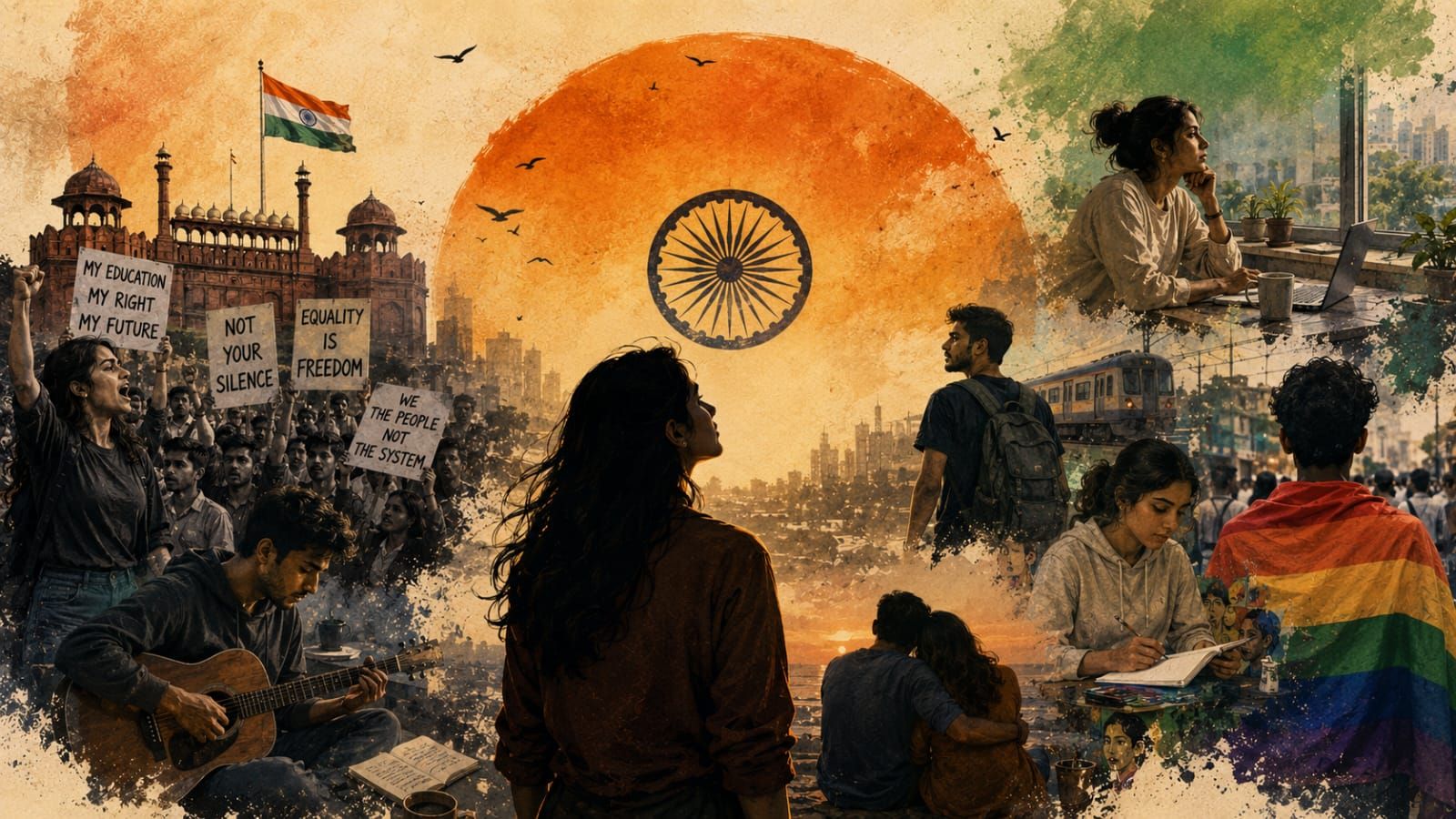
Moving beyond political sovereignty, India's Gen Z is reclaiming 'Azadi' to fight against social norms, systemic failures, and inherited identities.
Key Takeaways
- For Gen Z, 'Azadi' has transitioned from political independence to personal and social autonomy.
- Pop culture and digital connectivity are the primary drivers of this new narrative.
- The struggle is now focused on equality, mental freedom, and breaking systemic barriers.
When India gained independence in 1947, the word 'Azadi' carried the weight of breaking colonial shackles. Fast forward 79 years, and the slogan has evolved. For the current generation, known as Gen Z, freedom is no longer just about a sovereign nation; it is about the freedom to exist without the burden of inherited expectations.
From the political chants of student leaders to the lyrical expressions in films like Gully Boy, and even the recent protests regarding NEET-UG exam controversies, the essence of 'Azadi' remains constant even as its causes shift. It has become a tool for demanding accountability from institutions that fail the youth.
Why This Matters
BozokMedia analysis shows that this shift in definition indicates a maturing democracy where citizens are moving from collective survival to individual rights. The digital revolution has provided Gen Z with a global lens, allowing them to compare their local struggles with international movements, thereby elevating their standard for what a 'free life' should look like.
'Azadi is no longer a destination reached in 1947, but a continuous negotiation between the individual and the state.'
Unlike previous generations who relied on limited media pipelines, Gen Z carries an entire archive of competing narratives in their pockets. Movies like Rang De Basanti and Yuva served as early catalysts, but the smartphone has turned passive consumption into active resistance. They aren't just asking for independence; they are asking what independence was supposed to make possible.
The Evolution of Freedom
| Dimension | Independence Era | Gen Z Era |
|---|---|---|
| Primary Struggle | Colonial Rule | Social Inequality & Identity |
| Communication | Radio, Print, Speeches | Social Media, Memes, Digital Activism |
| Core Value | National Sovereignty | Individual Autonomy & Dignity |
Frequently Asked Questions (FAQs)
1. How does Gen Z view 'Azadi' differently?
They view it as freedom from caste, gender norms, and restrictive career paths, rather than just freedom from foreign rule.
2. What role does pop culture play?
Pop culture provides the emotional language and characters that make complex ideas of injustice and resistance relatable to young people.