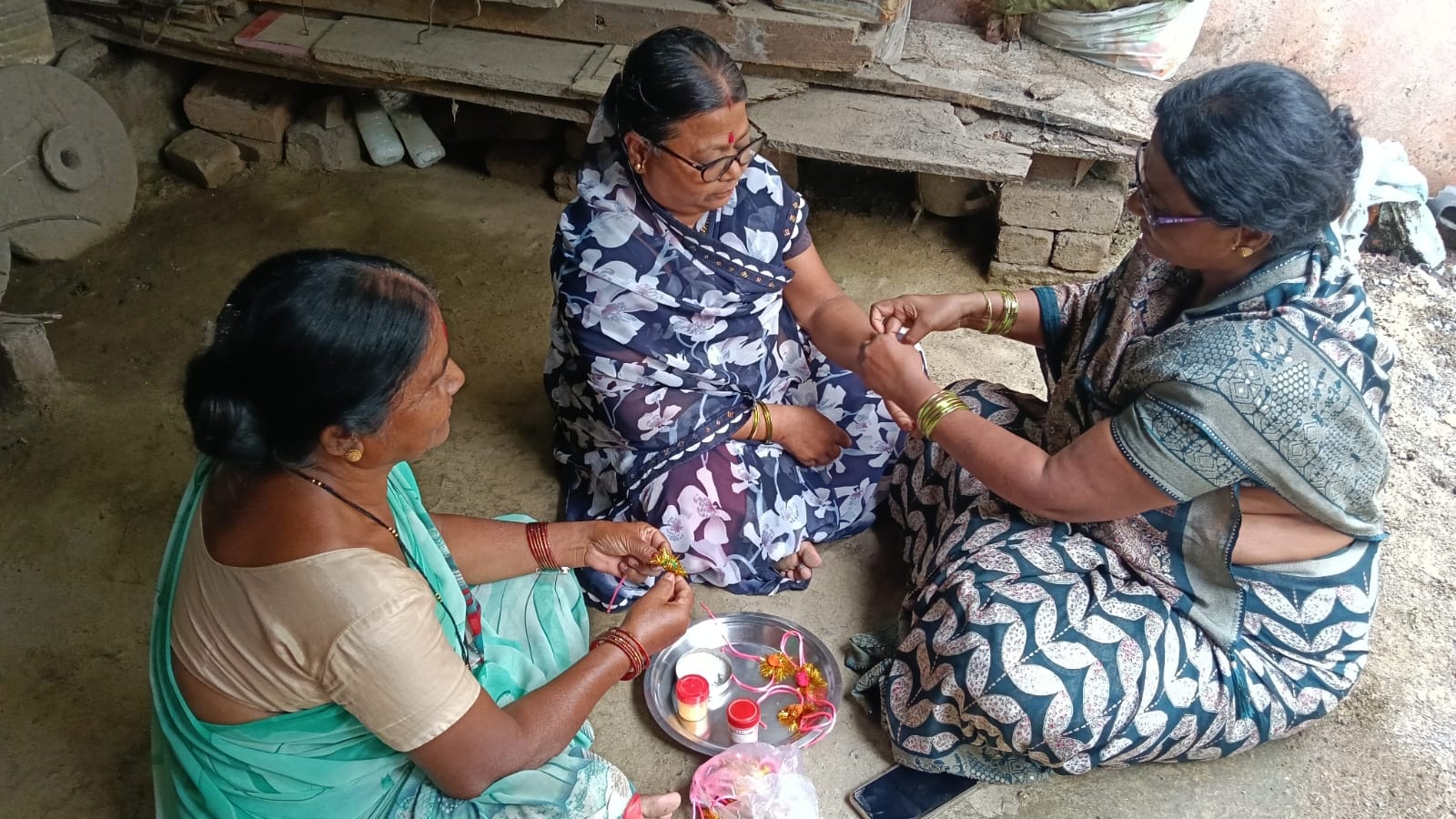
In a powerful defiance of social norms, abandoned and widowed women in Maharashtra's Marathwada region are celebrating Raksha Bandhan by tying rakhis to each other.
- Women in 40 villages across Beed, Dharashiv, Latur, and Nanded are celebrating Rakhi with each other.
- The movement provides emotional and practical support to widows, divorcees, and abandoned women.
- Led by 7 grassroots organizations, the network has grown to 300 women.
In the heart of Maharashtra’s Marathwada region, a profound social transformation is unfolding. For women who have faced the sting of widowhood, abandonment, or separation, the festival of Raksha Bandhan was once a painful reminder of exclusion. Often deemed "inauspicious" by traditionalist circles, these women were frequently barred from participating in communal festivities.
However, since 2023, a quiet revolution has been brewing. Moving away from the traditional concept of seeking protection from male relatives who may have failed them, women across 40 villages in Beed, Dharashiv, Latur, and Nanded are now tying rakhis to one another. This act symbolizes a new kind of pact: a promise of mutual survival and companionship.
Why This Matters
BozokMedia analysis shows that this movement is more than just a symbolic gesture; it is a structural response to the failure of traditional support systems. By creating a self-sustaining network, these women are bypassing the patriarchal dependency that often leaves single women vulnerable to economic and social exploitation.
It is not about replacing a brother; it is about having someone who stands with you genuinely when you have no one else.
The initiative is driven by a coalition of seven grassroots organizations, including Samata Pratishthan and the Swavalambi Social Welfare Foundation. What began as a small group of questioning individuals has blossomed into a robust network of 300 women, including divorcees and those living separately from husbands—a condition locally termed as paritakta.
Historical Background and Social Struggles
Historically, women in rural India who lose their husbands or leave abusive marriages often face severe social ostracization. They struggle not just with emotional trauma, but with basic necessities like housing and employment. In many cases, landlords refuse to rent to single women without a male guardian, a systemic barrier that this sisterhood is actively fighting against.
The impact of this bond is practical. Members of the network accompany each other during travel, assist in finding employment, and provide a safety net for those facing eviction. The movement has faced mockery from men in the villages, but the women have responded with unprecedented resilience, turning their shared pain into collective strength.
Frequently Asked Questions
1. Who initiated this movement in Marathwada?
The movement was led by seven grassroots organizations to support women facing social exclusion.
2. How has this helped women practically?
It provides a support system for finding housing, employment, and safe travel companionship.

