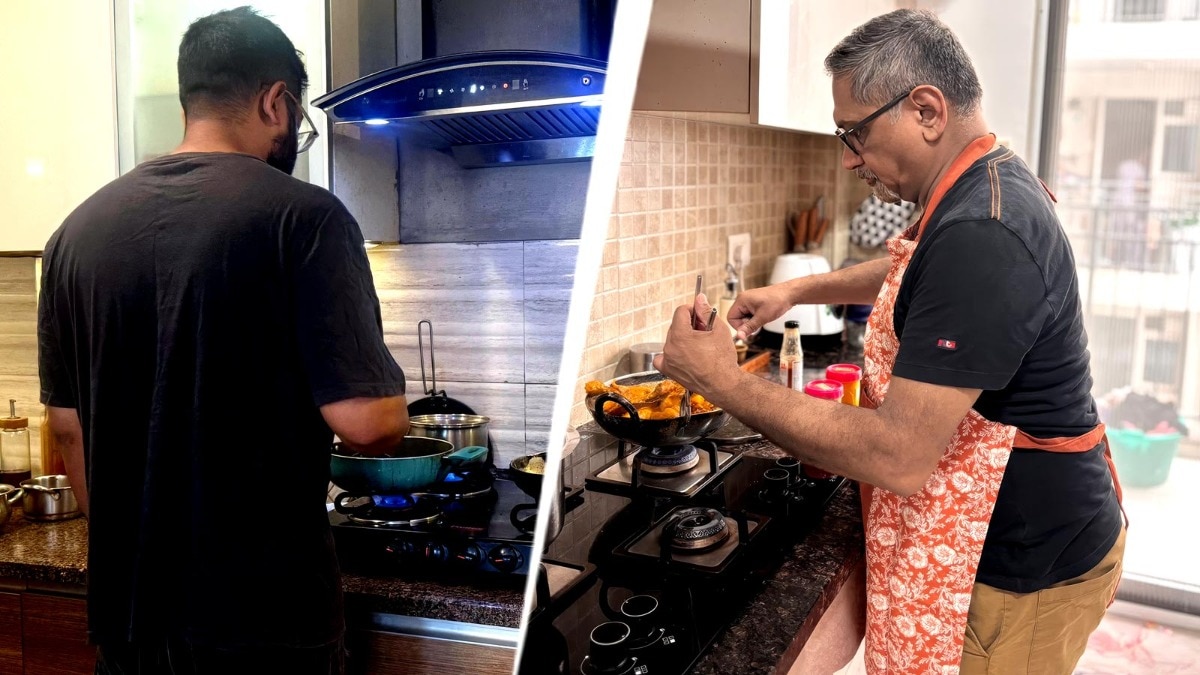
Despite the modern shift of men entering the kitchen, Indian women continue to face social scrutiny and taunts within domestic settings. This report explores the deep-seated gender biases in Indian households.
- Deep-seated gender roles persist in modern Indian kitchens.
- Men's participation in cooking is often viewed as 'help' rather than 'duty'.
- Social stigma and taunts impact women's mental well-being.
In the evolving landscape of Indian domesticity, a peculiar phenomenon has emerged. While more men are stepping into the kitchen, the transition is far from seamless. Instead of being celebrated as a step towards equality, men cooking often triggers a wave of social taunts and scrutiny directed toward the women of the house.
Traditional gender roles continue to define the boundaries of labor in Indian homes. The kitchen has long been culturally codified as a feminine domain. Consequently, when a husband cooks, it is frequently perceived through a lens of 'temporary assistance' rather than a shared responsibility, leading to a complex psychological dynamic where the woman is still held accountable for the household's culinary standards.
Why This Matters
BozokMedia analysis shows that this issue transcends the kitchen; it is a fundamental struggle for gender equity. The resistance faced when men perform domestic tasks highlights the systemic difficulty in dismantling patriarchal structures that rely on gendered labor to maintain social order.
True domestic equality is achieved when cooking is viewed as a life skill rather than a gendered obligation.
Historically, the division of labor in Indian households has been strictly binary. From agrarian roots to urban middle-class setups, the domestic sphere has been the woman's primary responsibility. This historical baggage means that any deviation by men is often met with social friction or mockery, often targeting the wife for 'failing' to manage the household traditionally.
To bridge this gap, there needs to be a fundamental shift in how domestic work is valued. Recognizing cooking as a neutral, essential skill for all genders is the first step in reducing the emotional and social burden placed on Indian women.
Frequently Asked Questions
Question 1: Why is there social resistance to men cooking?
Resistance stems from long-standing patriarchal norms that associate domestic labor exclusively with women.
Question 2: How does this affect women?
It creates an emotional burden where women feel responsible for the 'success' or 'failure' of domestic tasks performed by others.