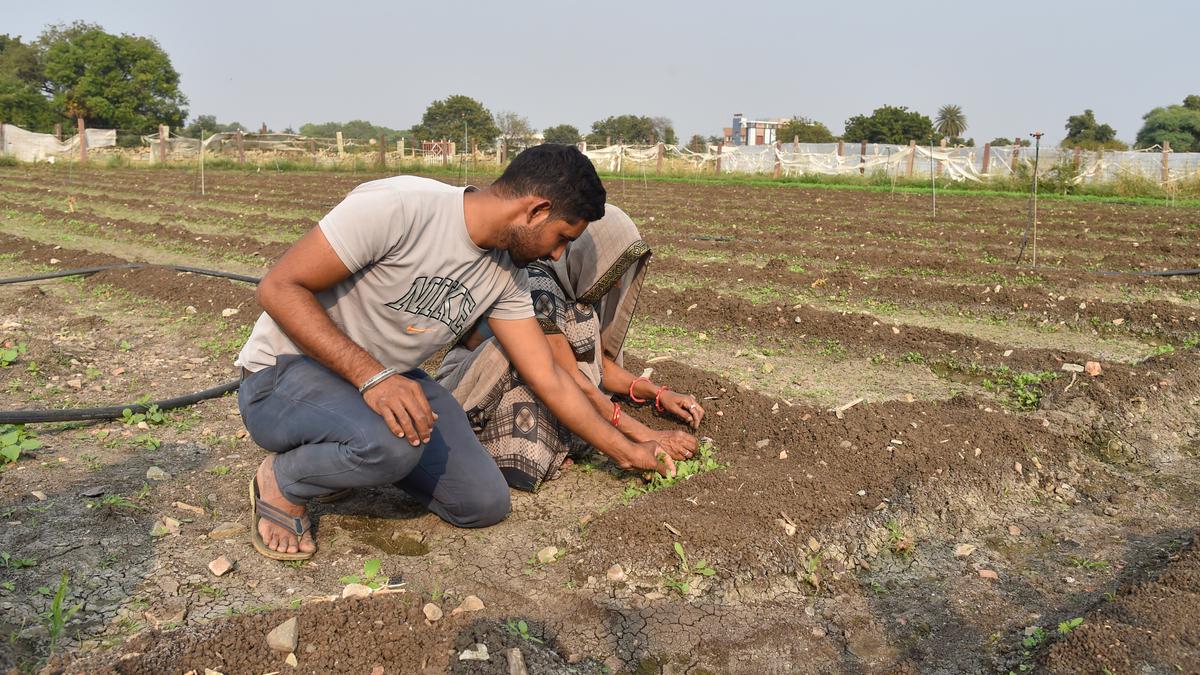
Farmers in Madhya Pradesh and Rajasthan, who produce 80% of India's opium, are protesting stagnant procurement prices and the government's move to allow private players into the sector. The shift toward Concentrate of Poppy Straw (CPS) threatens traditional livelihoods and raises security concerns.
- Three districts in MP and Rajasthan contribute 80% of India's total opium production.
- Farmers are struggling with stagnant procurement rates (₹1,200-2,000/kg) against rising input costs.
- The Union Government's 2021 policy allowing private players to produce CPS has sparked widespread anger.
- Opium cultivation, known as 'swabhiman ki kheti', is deeply tied to family legacy and social status in the Mewar region.
In the heart of the Mewar region, spanning the border of Madhya Pradesh and Rajasthan, opium cultivation is more than just agriculture; it is a legacy. For families like Sunder Bai's in the Neemuch district, the poppy crop represents 'swabhiman ki kheti' (agriculture of dignity). This age-old trade, some practiced for over 200 years, is so revered that local lore equates the care of poppy plants with the care of one's own children.
However, this dignity is currently under threat. Despite the high social status associated with holding an opium license, the economic reality is grim. Farmers report that procurement rates have remained stagnant for years, typically ranging between ₹1,200 and ₹2,000 per kilogram of opium latex, depending on morphine concentration. Meanwhile, the costs of fertilizers, labor, and pesticides have surged, squeezing profit margins to a breaking point.
BozokMedia analysis shows that the tension arises from a fundamental clash between traditional agrarian livelihoods and the government's drive for industrial modernization. By shifting from the labor-intensive 'lancing' method (extracting gum) to the Concentrate of Poppy Straw (CPS) method, the government aims to align India with global pharmaceutical standards and regain lost export markets. However, this transition opens the door to private corporations, which farmers fear will monopolize the supply chain and erode the autonomy of small-scale licensed growers.
The transition to CPS is a strategic move for global trade, but without a robust safety net for traditional farmers, it risks turning a dignified legacy into a corporate monopoly.
The regulatory landscape in India is incredibly strict. Currently, about 1 lakh farmers across 22 districts are licensed. The Central Bureau of Narcotics, under the Union Finance Ministry, manages the procurement, with the Government Opium Alkaloid Works in Neemuch serving as a critical hub since 1935. The government argues that the CPS method is less labor-intensive and will reduce the illicit market for opium gum, thereby enhancing national security.
Despite these arguments, farmers remain skeptical. They argue that privatization could lead to an increase in drug abuse and a loss of control over a substance that is highly addictive and strictly regulated. The fear is that private players may not adhere to the same stringent ethical and security standards as the state-run machinery.
| Feature | Traditional Lancing (Gum) | CPS Method (Straw) |
|---|---|---|
| Labor Intensity | Very High (Manual incising) | Lower (Industrial processing) |
| Primary Product | Opium Latex/Gum | Concentrate of Poppy Straw |
| Market Focus | Domestic/Traditional | Global Pharmaceutical Export |
| Control | Government Monopoly | Mixed (Govt + Private Players) |
Q1: Why is the government moving toward CPS?
The government believes the CPS method is more efficient, aligns with international standards, and will help India regain its share in the global pharmaceutical market while reducing illegal trade.
Q2: Which districts are the biggest producers of opium in India?
Mandsaur, Neemuch, and Chittorgarh together produce approximately 80% of India's total opium.