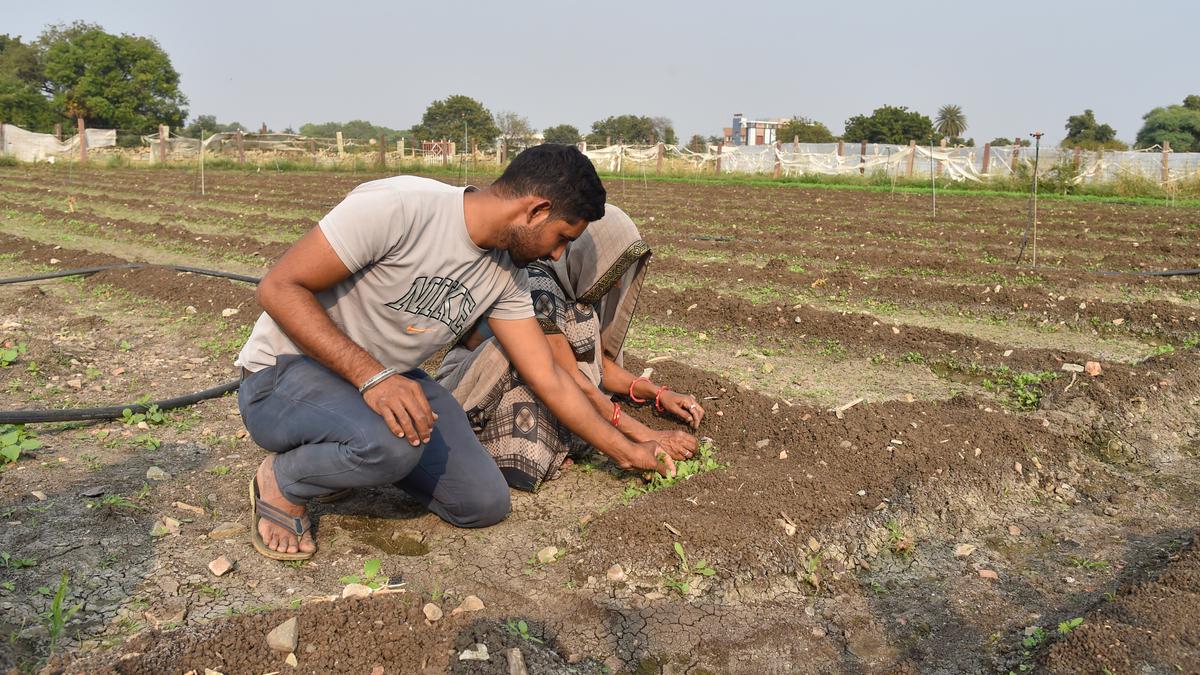
Tamil Nadu Agricultural University (TNAU), in collaboration with ICAR-Jabalpur, has initiated a comprehensive awareness program to educate farm workers and students on managing the invasive Parthenium weed. The campaign focuses on integrated control methods to safeguard crops and public health.
- TNAU and ICAR-Jabalpur organized a specialized program for Parthenium weed management.
- The campaign emphasizes cultural, chemical, and biological control strategies.
- Target audience includes farm laborers, sanitary workers, and students to ensure community-wide impact.
The Tamil Nadu Agricultural University (TNAU) in Coimbatore, sponsored by the Directorate of Weed Research, ICAR-Jabalpur, conducted a critical awareness program on Monday, August 17, focusing on the management of Parthenium, a notorious invasive weed. This initiative is a cornerstone of the 'Parthenium Awareness Week,' which commenced on Sunday under the All India Coordinated Research Programme on Weed Management.
The TNAU Department of Agronomy has designed a broad outreach strategy. Beyond farm workers, the university aims to educate school and college students, as well as sanitary workers, regarding the severe ecological and health-related ill-effects of Parthenium and the technicalities of its eradication.
Why This Matters
BozokMedia analysis shows that invasive species like Parthenium act as biological pollutants, severely reducing agricultural yields and disrupting local ecosystems. The university's move to target the 'last mile'—the farm laborers—is strategic, as these individuals are the first line of defense in weed detection and removal.
Integrated weed management is not just an agricultural necessity but a public health imperative to prevent widespread allergic reactions and crop failure.
The campaign was inaugurated by P. Rajkumar, Director (Crop Management) in-charge. Alongside faculty member R. Krishnan from the Department of Agronomy, stakeholders were briefed on the three pillars of Parthenium management: cultural, chemical, and biological control methods.
A comprehensive exhibition was organized to visually demonstrate the invasive nature of the weed. The displays highlighted the detrimental effects of Parthenium on both humans and livestock, the resulting yield losses in crops, and the latest technologies for composting the weed to turn a nuisance into a resource.
Historical Background
Parthenium hysterophorus, commonly known as 'Congress Grass' or 'Carrot Grass,' is an alien invasive species that has spread aggressively across India. Its ability to release allelopathic chemicals—which inhibit the growth of neighboring plants—makes it a formidable opponent for farmers. Over the years, Indian agricultural institutes have shifted from purely chemical eradication to Integrated Weed Management (IWM) to avoid soil degradation.
| Control Method | Approach | Effectiveness |
|---|---|---|
| Cultural | Manual removal & crop rotation | Moderate |
| Chemical | Selective herbicides | Fast but potentially toxic |
| Biological | Use of natural enemies/bio-agents | Sustainable & Long-term |
Frequently Asked Questions
Q1: Why is Parthenium considered an 'invasive' weed?
A: Because it originates from another region and spreads rapidly, outcompeting native flora and reducing biodiversity.
Q2: What is the most sustainable way to manage it?
A: Integrated Weed Management (IWM), combining biological agents with cultural practices, is considered the most sustainable approach.