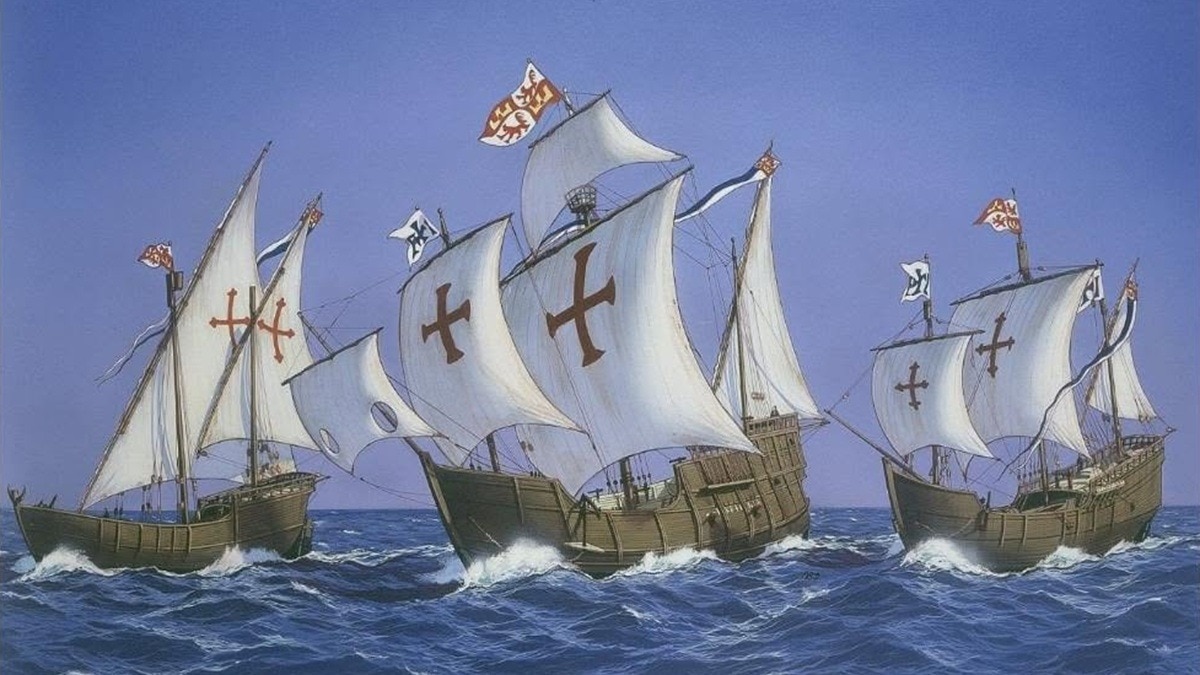
In 1492, Christopher Columbus set sail with three modest ships, confronting mutiny, hunger, and the unknown Atlantic. This article revisits the daring expedition and its lasting impact on world history.
Key Takeaways
- Columbus embarked on the Atlantic with three small vessels – Niña, Pinta, and Santa María.
- He led a crew of 90 sailors who faced mutiny, starvation, and extreme seas.
- Financial backing from Spain’s Queen Isabella and King Ferdinand turned the dream into reality.
Historical Background
On August 3 , 1492, while the Lodi dynasty ruled Delhi, European powers were still searching for a western sea route to India. Christopher Columbus championed the idea that sailing west could reach Asia, and the Spanish monarchs agreed to fund the venture.
The expedition comprised three modest caravels – Niña, Pinta, and Santa María – carrying 90 crew members, a determined captain, and an audacious vision of a “New World.”
Calm seas soon gave way to fear as sailors grappled with scarce provisions, disease, and the endless horizon. To quell mutiny, Columbus kept two logbooks, one showing a shorter distance traveled, which helped maintain morale.
On September 6, after a month’s stopover in the Canary Islands for repairs, Columbus caught the trade winds and set a 5,700‑kilometre course across the Atlantic—an astounding feat for a wind‑powered fleet.
Why This Matters
BozokMedia analysis shows that Columbus’s voyage reshaped global trade routes, colonial expansion, and the geopolitical map, laying foundations for today’s interconnected economy.
"Columbus’s daring blend of ambition and royal patronage was the catalyst that redirected world history," says historian Dr. Laura Mitchell.
Frequently Asked Questions
- Which nations financed Columbus’s 1492 expedition? The Kingdom of Spain, under Queen Isabella and King Ferdinand, provided the necessary funding.
- Which of the three ships was the largest? The Niña was the largest and most robust, while the Pinta and Santa María were smaller and faster.