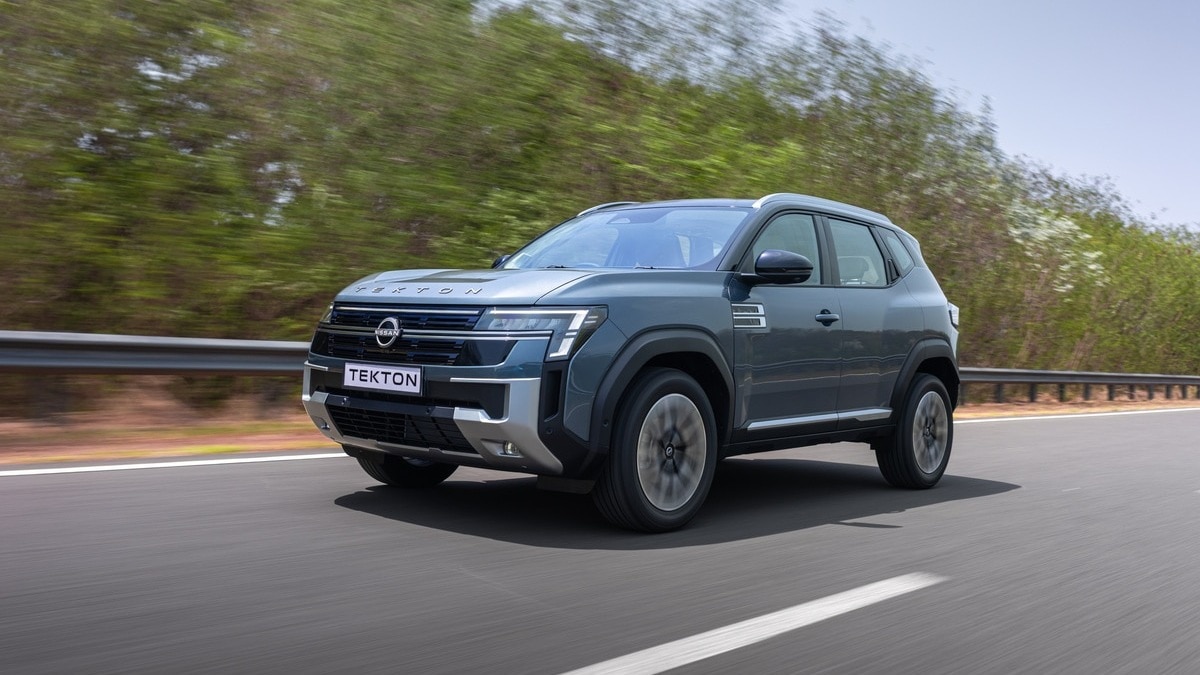
Nissan has officially disclosed fuel‑efficiency figures for its new Indian‑market SUV, the Tekton. The 1.0‑litre turbo‑petrol manual claims 19.41 km per litre, while the 1.3‑litre dual‑clutch version offers 17.8 km per litre. Prices start at ₹10.49 lakh ex‑showroom.
Nissan has unveiled the official fuel‑efficiency numbers for its freshly launched compact SUV, the Tekton, in India. Offered with two turbo‑petrol engines – a 1.0 L and a 1.3 L – the model promises a blend of mileage, power and price that targets the price‑sensitive Indian buyer.
Engine Options and Claimed Mileage
The entry‑level variant houses a 1.0 L turbo‑petrol unit delivering 100 hp and 166 Nm of torque, paired with a 6‑speed manual gearbox. Nissan claims this combination will achieve an impressive 19.41 km per litre (km/L). The higher‑output 1.3 L turbo‑petrol engine (163 hp, 280 Nm) is available with either a 6‑speed manual or a 6‑speed dual‑clutch automatic, delivering claimed mileages of 18.5 km/L (manual) and 17.8 km/L (automatic) respectively.
Pricing and Competitive Landscape
Pricing for the Tekton starts at ₹10.49 lakh ex‑showroom, with the top‑spec trim priced at ₹18.59 lakh. At this bracket, it directly competes with popular Indian offerings such as the Maruti Suzuki Grand Vitara, Viktor, Hyundai Creta, Kia Seltos, Tata Sierra, Honda Elevate, Skoda Kushaq and the Volkswagen Tiguan.
When comparing mileage, the Volkswagen Tiguan’s 1.0 L TSI manual delivers 19.98 km/L, while the Skoda Kushaq’s 1.0 L TSI posts 19.66 km/L. The Tekton’s 1.0 L figure sits close to these leaders, and its 1.3 L variant outperforms the Tata Sierra (15.3 km/L) and Kia Seltos (17.5 km/L), positioning it as a strong value proposition.
Why This Matters?
The Tekton illustrates Nissan’s strategic push to capture the Indian SUV segment by emphasizing fuel efficiency and affordability—two decisive factors for Indian consumers. Moreover, it signals a broader shift toward Japanese manufacturers leveraging shared platforms (the Tekton rides on the same underpinnings as the Renault Duster) to deliver locally relevant, environmentally conscious products.