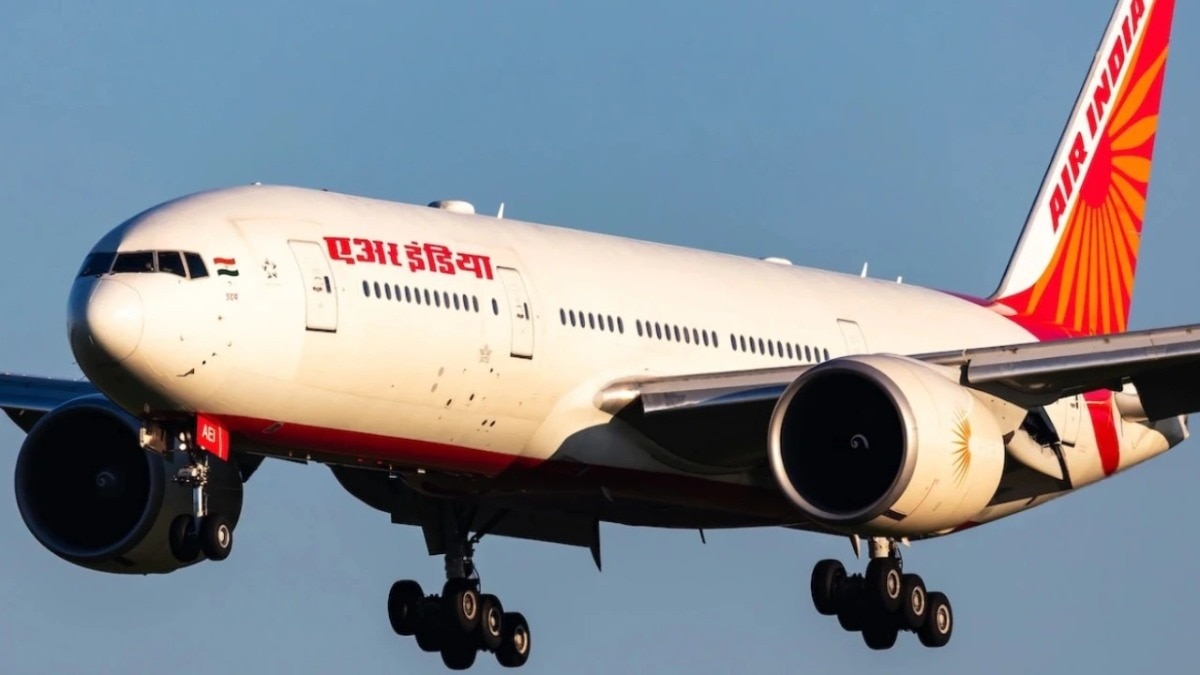
A technical investigation into Air India flight AI2379 has revealed that critical flight controls failed for 4 seconds, causing the aircraft to drop 300 feet.
Key Takeaways
- Airbus investigation confirms all three hydraulic systems failed simultaneously for 4 seconds.
- The aircraft experienced a sudden altitude drop of approximately 300 feet.
- Critical components like elevators, ailerons, and spoilers lost functionality.
- A faulty hydraulic pressure sensor is suspected as the potential cause.
New Delhi: A major technical revelation has emerged regarding the terrifying turbulence experienced on Air India flight AI2379 from Phuket to Delhi on August 4. Preliminary findings from Airbus, based on Digital Flight Data Recorder (DFDR) readings, indicate that the aircraft's essential flight controls were non-functional for approximately 4 seconds.
According to the investigation, the A320neo's elevators—responsible for pitch control—and ailerons—responsible for roll—lost all connectivity. Simultaneously, the spoilers also ceased to function. This catastrophic event occurred when all three hydraulic systems failed at once, rendering the pilot's manual inputs ineffective during the critical window.
Why This Matters
BozokMedia analysis shows that a triple hydraulic failure is an extremely rare and high-risk aviation phenomenon. This incident highlights the razor-thin margin for error in modern aviation. When the co-pilot attempted a nose-down input to prevent a potential stall, the lack of hydraulic power meant the command was not executed immediately, leading to a sudden 300-foot descent that injured several passengers and crew members.
The simultaneous failure of multiple hydraulic systems represents one of the most challenging scenarios a flight crew can encounter.
The aircraft managed to stabilize once the hydraulic systems regained pressure, allowing the crew to navigate the plane safely to Delhi. The investigation is currently being spearheaded by the Aircraft Accident Investigation Bureau (AAIB) with technical support from Airbus and France's BEA.
Historical Background
In aviation history, hydraulic failures have been among the most feared technical malfunctions. While modern aircraft are designed with significant redundancy, the simultaneous failure of all primary hydraulic circuits is a scenario that investigators treat with the highest level of scrutiny to ensure such a lapse never recurs.
Frequently Asked Questions
Q1: What caused the Air India flight to drop suddenly?
Ans: A temporary failure of all three hydraulic systems led to a loss of control, causing a 300-foot altitude drop.
Q2: Is the aircraft safe to fly now?
Ans: While the specific aircraft is under investigation, the findings are being used to prevent similar technical glitches across the fleet.