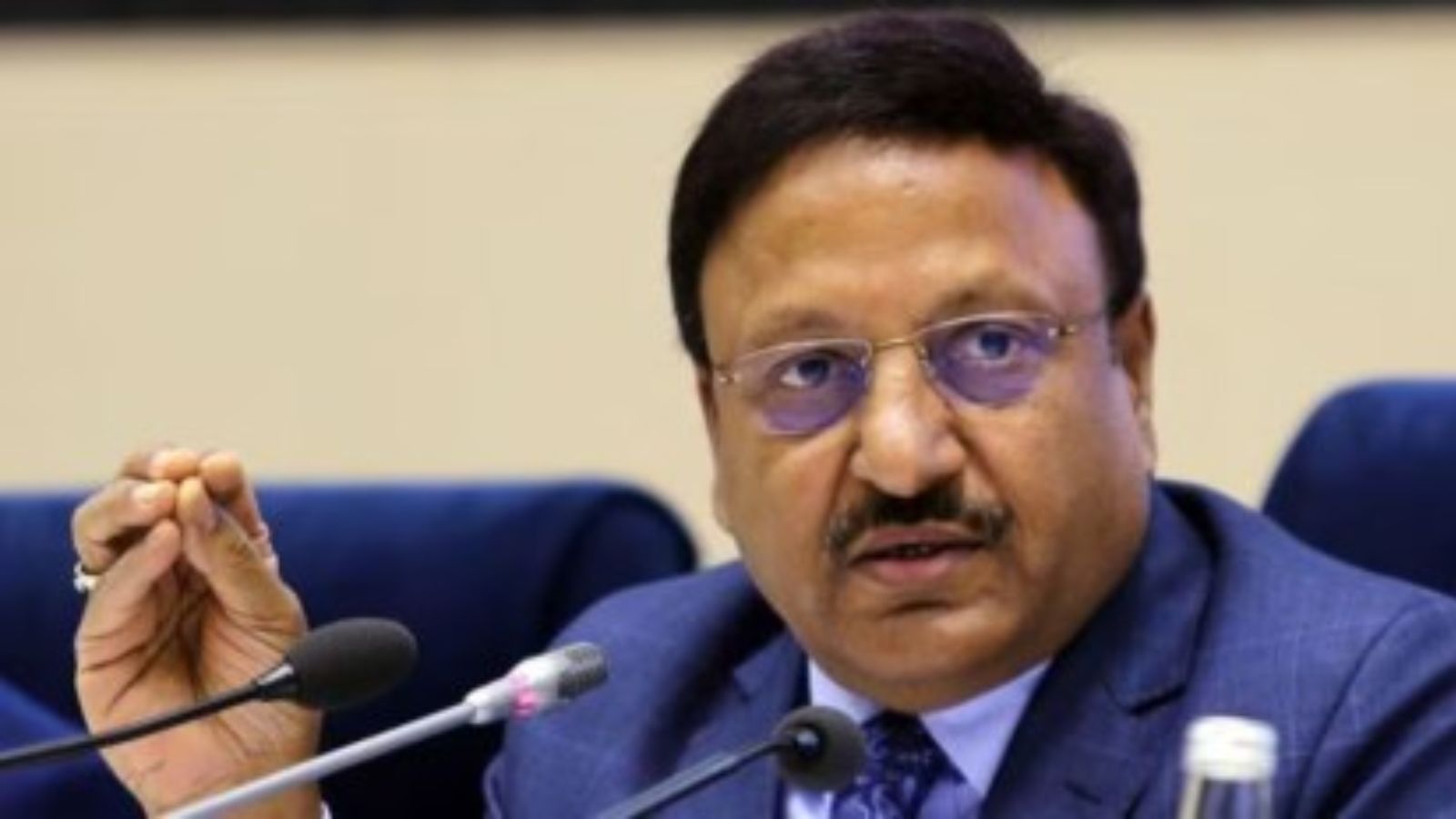
Former Chief Election Commissioner Rajiv Kumar has been appointed as the Part-Time Chairman of HDFC Bank for a three-year term following RBI approval.
Key Takeaways
- Rajiv Kumar appointed as Part-Time Chairman of HDFC Bank for a 3-year term.
- The appointment received official nod from the Reserve Bank of India (RBI).
- Kumar is a former IAS officer and former Finance Secretary of India.
- He succeeds Atanu Chakraborty, who resigned citing ethical concerns.
MUMBAI: In a significant leadership transition for India's private banking sector, the Reserve Bank of India (RBI) has officially approved the appointment of Rajiv Kumar as the Part-Time Chairman of HDFC Bank. The appointment, effective from July 15, 2026, will span a duration of three years.
A Profile of Administrative Excellence
At 66, Rajiv Kumar brings a wealth of governance experience to the banking giant. A distinguished 1984-batch IAS officer, Kumar previously served as the Finance Secretary to the Government of India, a role that provided him with profound insights into the nation's fiscal architecture. His subsequent tenure as the Chief Election Commissioner (2022–2025) further solidified his reputation as a steward of institutional integrity. His transition from public service to corporate governance is expected to bring a disciplined regulatory approach to HDFC Bank.
Regulatory Framework and Succession
According to a regulatory filing by the bank, the appointment has been executed under Section 10B(1A)(i) of the Banking Regulation Act, 1949. Kumar steps into the role following the departure of Atanu Chakraborty, who resigned on March 18. Notably, Chakraborty’s resignation was marked by a cryptic statement regarding certain internal bank practices that were not in alignment with his personal ethics, a development that has kept industry analysts closely watching the bank's internal culture.
Stabilizing the Board
To ensure continuity during this transition, Keki Mistry, who has been serving as the interim Part-time Chairman, will remain on the board as a Non-Executive Non-Independent Director. The arrival of a veteran like Kumar is seen as a strategic move to bolster investor confidence and strengthen the bank's relationship with regulators, ensuring that HDFC Bank maintains its trajectory as a cornerstone of the Indian financial ecosystem.