The Federal Reserve has placed three Indian‑origin economists on high‑profile task forces, signalling that talent outweighs tribal politics. The move underscores the growing influence of Indian‑American professionals amid rising anti‑immigrant rhetoric.
Key Takeaways
- Fed names three Indian‑origin experts to senior panels
- Raghuram Rajan, Raj Chetty and Asha Sharma bring diverse expertise to monetary policy
- The appointments prioritize merit over the prevailing MAGA‑style immigration backlash
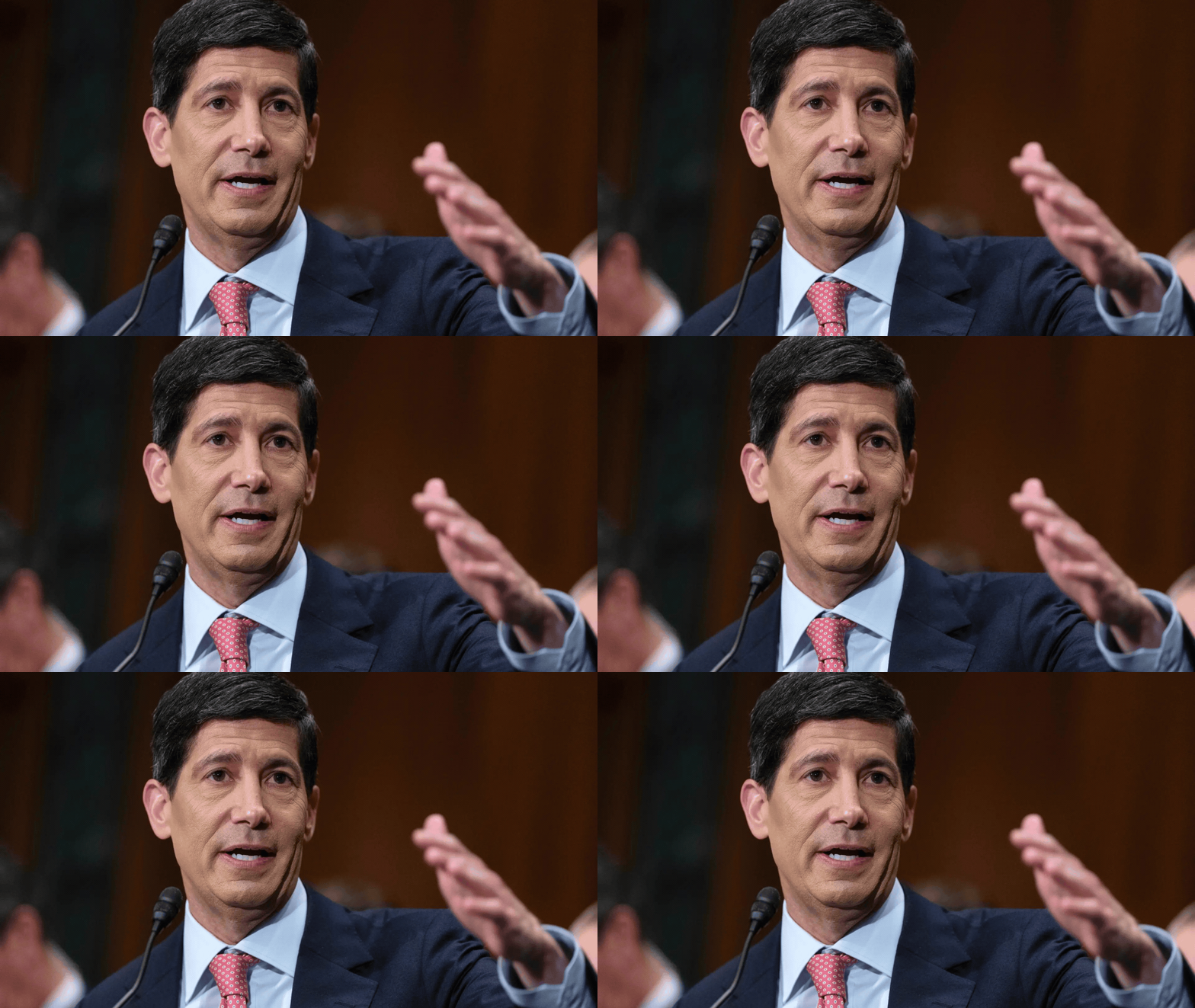
Washington – In a clear departure from the current anti‑immigrant chorus, the U.S. Federal Reserve announced a reshuffle of its five high‑powered task forces, appointing three Indian‑American leaders to guide the next wave of monetary‑policy reforms. Fed Chairman Kevin Warsh described the changes as “transformational,” aimed at positioning the central bank for a rapidly evolving global economy.
Who Was Appointed
Former RBI Governor Raghuram Rajan will co‑chair the Balance Sheet Policy task force. Rajan, now the Katherine Dusak Miller Distinguished Service Professor of Finance at the University of Chicago Booth School, warned about sub‑prime lending risks long before the 2008 crisis, and his experience adds a rare central‑banking perspective.
Harvard’s Raj Chetty, the William A. Ackman Professor of Public Economics, joins the Liquidity Dependence task force alongside former Fed governor Jeremy Stein, Walmart ex‑CEO Doug McMillon and Chicago economist Kevin Murphy. Chetty’s groundbreaking work on social mobility and inequality will shape the panel’s assessment of how market liquidity dependence could fuel future shocks.
Silicon Valley Insight
Leading the Productivity and Employment task force is Asha Sharma, chief executive of Microsoft’s Xbox division. Born to Indian immigrants in Wisconsin, Sharma’s career spans Meta, Instacart and Home Depot, giving her a front‑row seat to the AI‑driven productivity dilemmas that modern economies face. She will collaborate with venture capitalist Marc Andreessen and Stanford economist Chad Jones.
Political Context and Broader Implications
These appointments arrive at a time when MAGA‑style rhetoric has turned immigration into a cultural battleground. Indian‑Americans, who comprise just over one percent of the U.S. population, are disproportionately represented in finance, technology, medicine and academia—a testament to decades of high‑skill immigration through elite universities and H‑1B visas.
By selecting experts based on merit rather than birthplace, the Fed sends a powerful rebuttal to critics who claim immigrants “take jobs” or “dilute culture.” In safeguarding the world’s largest economy, the central bank appears far more concerned with keeping inflation low, productivity high and financial crises at bay than with any identity‑politics narrative.