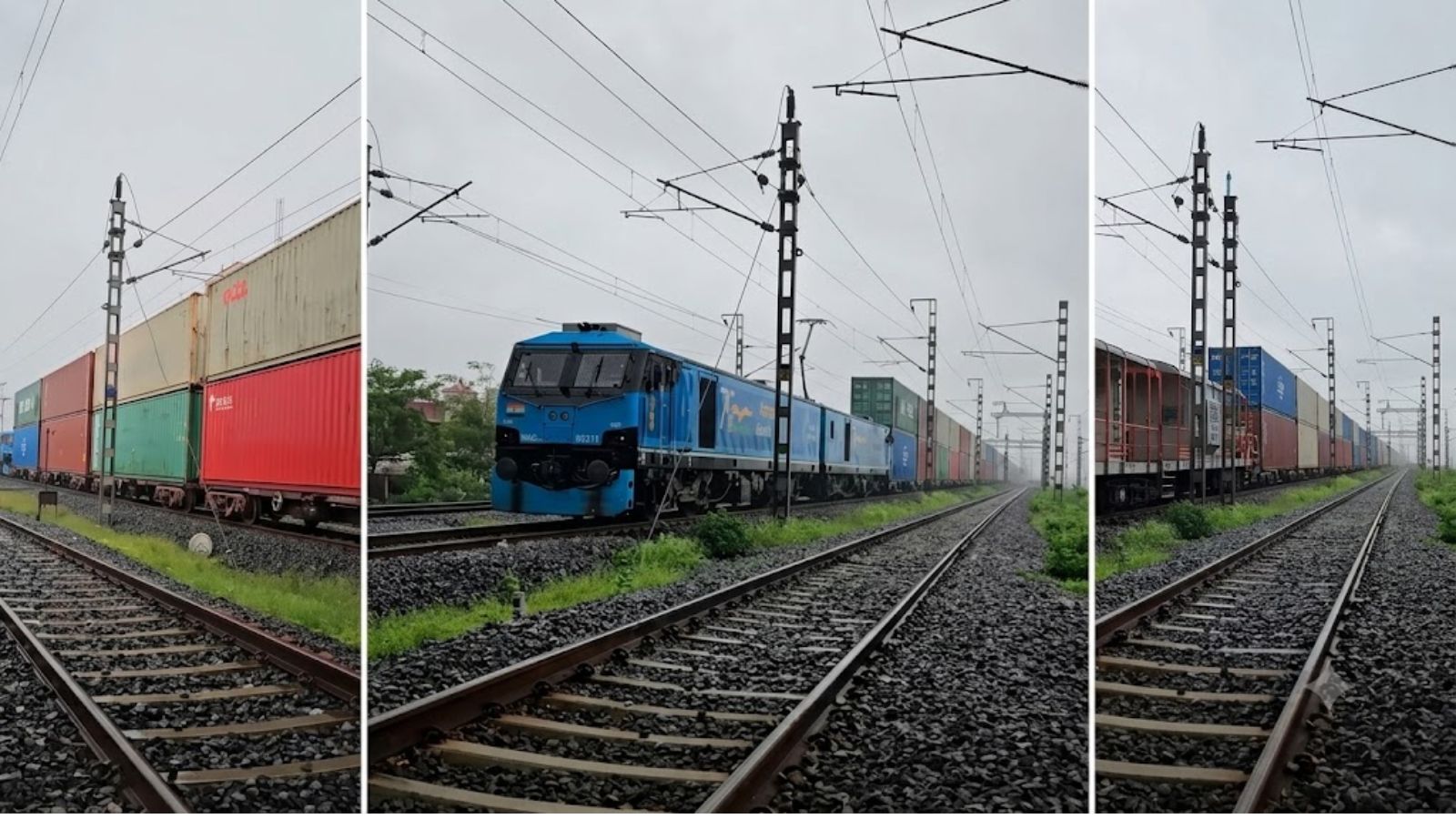
In a landmark achievement for logistics, Indian Railways has successfully operated its first 1.3-km long double-stack container train on the Western Dedicated Freight Corridor (WDFC).
- Indian Railways operated its first 1.3-km long double-stack container train.
- The train traveled 422 km from JNPT, Mumbai to Varnama, Vadodara.
- Total capacity reached 360 TEUs using two combined double-stack rakes.
- Operation aims to boost freight capacity and reduce road congestion.
Indian Railways has achieved a monumental milestone in the logistics sector by operating its first 1.3-km long double-stack container train. This historic run took place on the Western Dedicated Freight Corridor (WDFC), marking a significant leap in the country's freight handling capabilities and supply chain efficiency.
The massive long-haul train departed from the Jawaharlal Nehru Port (JNPT) near Mumbai at 7 PM on August 21, 2026. It covered a distance of approximately 422 km to reach the CONCOR’s GCT terminal in Varnama, located in the Vadodara Division. The operation was a feat of engineering and coordination, involving the coupling of two double-stack rakes to form a single, continuous long-haul formation.
Technical Breakdown of the Operation
The operation was split into two distinct segments joined together. The leading rake, traveling from JNPT to Vadodara, was hauled by locomotive 60311 with a total tonnage of 1,817 tonnes. The trailing rake was powered by locomotive 24690, carrying a load of 2,105 tonnes. Together, these two rakes carried a staggering total of 360 TEUs (Twenty-foot Equivalent Units), showcasing the immense power of the WDFC infrastructure.
Why This Matters
BozokMedia analysis shows that this operational shift is critical for India's economic competitiveness. By moving more containers in a single movement, the railways can significantly reduce terminal congestion at major ports like JNPT. Furthermore, it optimizes the use of existing railway routes, allowing for more frequent and efficient freight movement without disrupting passenger services.
This breakthrough in long-haul operations is set to drastically lower logistics costs and enhance India's position in the global supply chain.
Beyond efficiency, the environmental impact is profound. Since the train was electrically hauled, it offers a sustainable alternative to diesel-powered road transport. A single long-haul double-stack train can replace hundreds of heavy-duty trucks, leading to a massive reduction in diesel consumption, road congestion, and overall carbon emissions.
Historical Background
The development of Dedicated Freight Corridors (DFCs) has been a cornerstone of India's infrastructure strategy for years. The WDFC is specifically designed to cater to heavy-haul freight, allowing for higher speeds and larger loads. The transition to double-stacking containers on these corridors represents the culmination of advanced engineering aimed at modernizing the national transporter.
Frequently Asked Questions
Question 1: What is the route of this new long-haul train?
Answer: The train runs from JNPT (Mumbai) to Varnama (Vadodara) on the WDFC.
Question 2: How does this benefit the environment?
Answer: It uses electric locomotives and reduces the number of diesel trucks needed on highways, cutting down emissions.