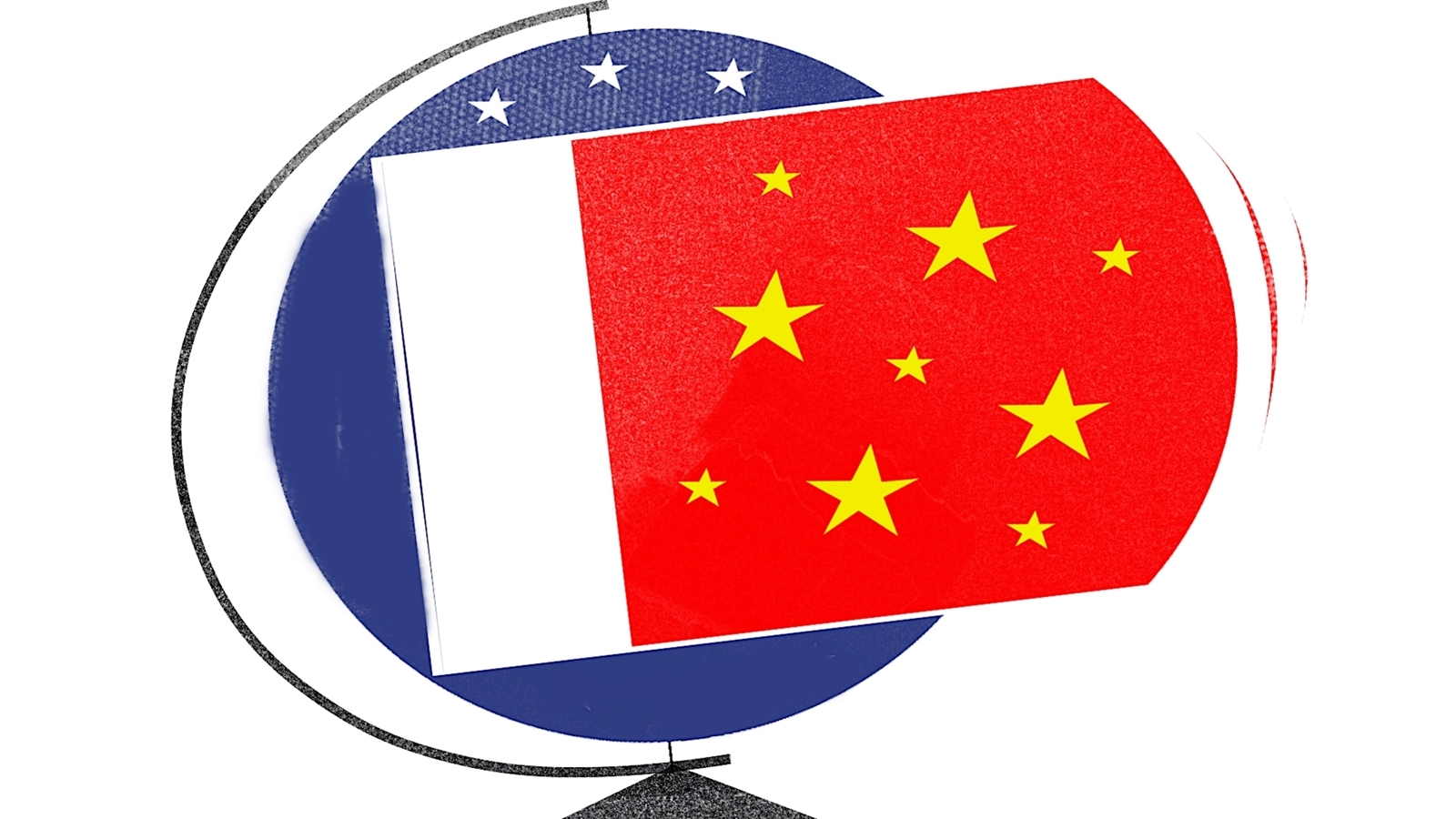
China's state-subsidized manufacturing surge is creating a global imbalance, threatening domestic industries in developing nations and creating strategic vulnerabilities.
- China holds a massive $1.2 trillion trade surplus and controls 30% of global manufacturing.
- State-backed subsidies allow Chinese firms to engage in aggressive price wars regardless of profit margins.
- China dominates critical EV supply chains, including 80% of battery manufacturing.
- Developing nations face a 'late industrialization dilemma' due to dependence on cheap Chinese imports.
The global community is increasingly sounding the alarm regarding Chinese industrial overcapacity. As the world's largest trade-surplus economy, boasting a staggering value of $1.2 trillion, China accounts for approximately 30% of the total global manufacturing output. This dominance is not merely a product of efficiency but is largely fueled by aggressive government subsidies and a state-directed financial system that provides incredibly cheap credit to domestic firms.
This state-supported ecosystem allows Chinese enterprises to expand their market share without the traditional constraints of profitability. The result is a self-defeating 'race to the bottom,' where zero-sum price wars are waged both domestically and internationally, driving margins to razor-thin or even negative levels to undercut global competitors.
Why This Matters
BozokMedia analysis shows that China’s rise has created a form of "absolute advantage" that goes beyond simple cost-cutting. It encompasses massive scale, sophisticated supplier networks, and advanced technological capabilities. This creates a dual-edged sword for the global economy. While low-cost goods aid industrial transformation in developing nations, they simultaneously stifle the growth of local manufacturing capabilities.
The core issue is not whether Chinese imports are competitive, but whether global dependence on them thwarts the ability of other nations to build their own industrial value chains.
Furthermore, China is fundamentally reshaping the geography of global value chains. In the critical sector of Electric Vehicles (EVs), China has secured a stranglehold on key nodes: controlling 65% of lithium refining, 70% of cobalt refining, and over 80% of battery manufacturing. This dominance creates a strategic paradox where the most efficient supplier also becomes the greatest single point of failure for global production networks.
For India, the implications are particularly acute. China accounts for roughly 17% of India's imports, including vital components for the solar, telecom, and pharmaceutical (API) sectors. India's push for self-reliance through PLI schemes is constantly challenged by the pincer dilemma of Chinese export curbs and WTO disputes regarding local content rules.
Frequently Asked Questions
1. What is 'Industrial Overcapacity'?
It refers to a situation where a country produces significantly more goods than the global market demands, often driven by subsidies, leading to dumped, low-priced goods in international markets.
2. How can the world address this issue?
Experts suggest a globally coordinated approach, similar to the 1985 Plaza Accord, to rebalance the Chinese economy in partnership with the US and other major economies.
| Sector | China's Dominance | Strategic Risk |
|---|---|---|
| Lithium Refining | 65% | High |
| Cobalt Refining | 70% | High |
| Battery Manufacturing | 80%+ | Critical |