To combat the rising menace of counterfeit handlooms, the Maharashtra government is introducing a barcoding system for the legendary Paithani saris. This initiative will provide consumers with instant verification of fabric, zari quality, and weaver details.
- A barcoding system is being introduced to prevent imitation Paithani saris.
- Scanning the barcode will reveal fabric details, thread quality, production time, and weaver identity.
- The move aims to protect traditional handloom weavers from powerloom competitors.
- Paithani saris have held a Geographical Indication (GI) tag since 2010.
In a decisive move to safeguard the heritage of the famed Paithani sari, the Maharashtra government is set to implement a sophisticated barcoding system. This initiative is designed to provide relief to traditional weavers and ensure that consumers receive authentic, high-quality handloom products rather than cheap imitations.
For years, the market has been plagued by counterfeit products. Powerloom-made saris and semi-silk fabrics are frequently passed off as genuine handwoven Paithanis. This deception not only cheats customers but also severely undermines the livelihoods of master weavers in regions like Paithan and Yeola. Maharashtra Textile Minister Sanjay Savkare confirmed that the software required for this verification process is already prepared.
Why This Matters
BozokMedia analysis shows that for luxury heritage goods, authenticity is the cornerstone of market value. By digitizing the 'identity' of a sari, the government is creating a trust-based ecosystem. The barcode will act as a digital certificate, embedding critical data such as the type of mulberry silk used, the authenticity of the gold and silver zari, and even the name of the artisan who spent weeks crafting the piece.
Integrating digital traceability into traditional weaving is a masterstroke that bridges ancient artistry with modern consumer security.
The historical significance of the Paithani cannot be overstated. Originating from the town of Paithan—once the capital of the Satavahana dynasty—these textiles were once exported as far as the Roman Empire. The tradition has survived through various dynasties, including the Marathas and Peshwas, maintaining its status as a symbol of royal elegance.
Distinguishing Authenticity
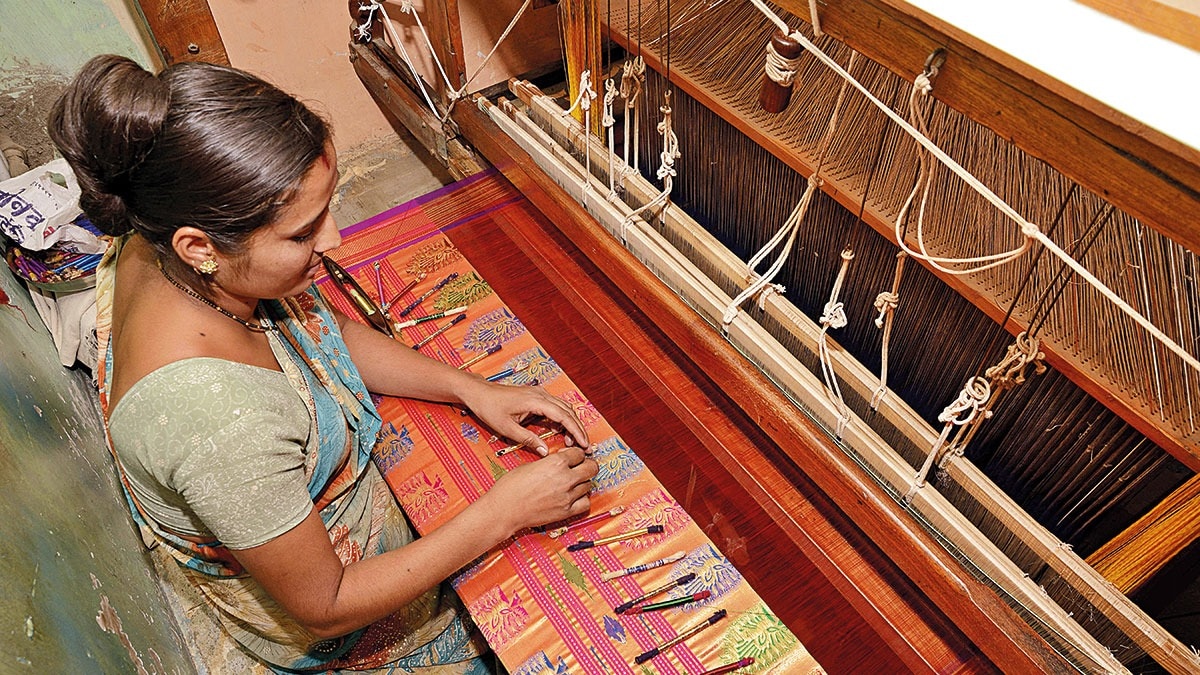
Authentic Paithanis are characterized by their unique tapestry weaving method, where the front and back of the sari appear nearly identical. They feature intricate motifs like the 'Asawali' and peacock designs, rendered in pure silk and metallic threads.
| Feature | Authentic Paithani (Handloom) | Imitation (Powerloom) |
|---|---|---|
| Fabric | Pure Mulberry Silk | Semi-silk or Synthetic |
| Zari Work | Gold/Silver coated silk threads | Imitation metallic threads |
| Weaving Method | Traditional Handloom | Mechanical Powerloom |
The state's department of textiles will oversee a verification process before any barcode is affixed to a product. Furthermore, weavers will be encouraged to incorporate a unique signature logo into the weave itself, adding an extra layer of physical authentication.
Frequently Asked Questions
1. How does the barcoding system help the consumer?
It allows consumers to instantly verify the fabric, thread quality, and the artisan's identity, ensuring they are not buying a powerloom imitation.
2. Where are the most famous Paithani saris produced?
The primary production hubs are Paithan in Chhatrapati Sambhajinagar and Yeola in the Nashik district.