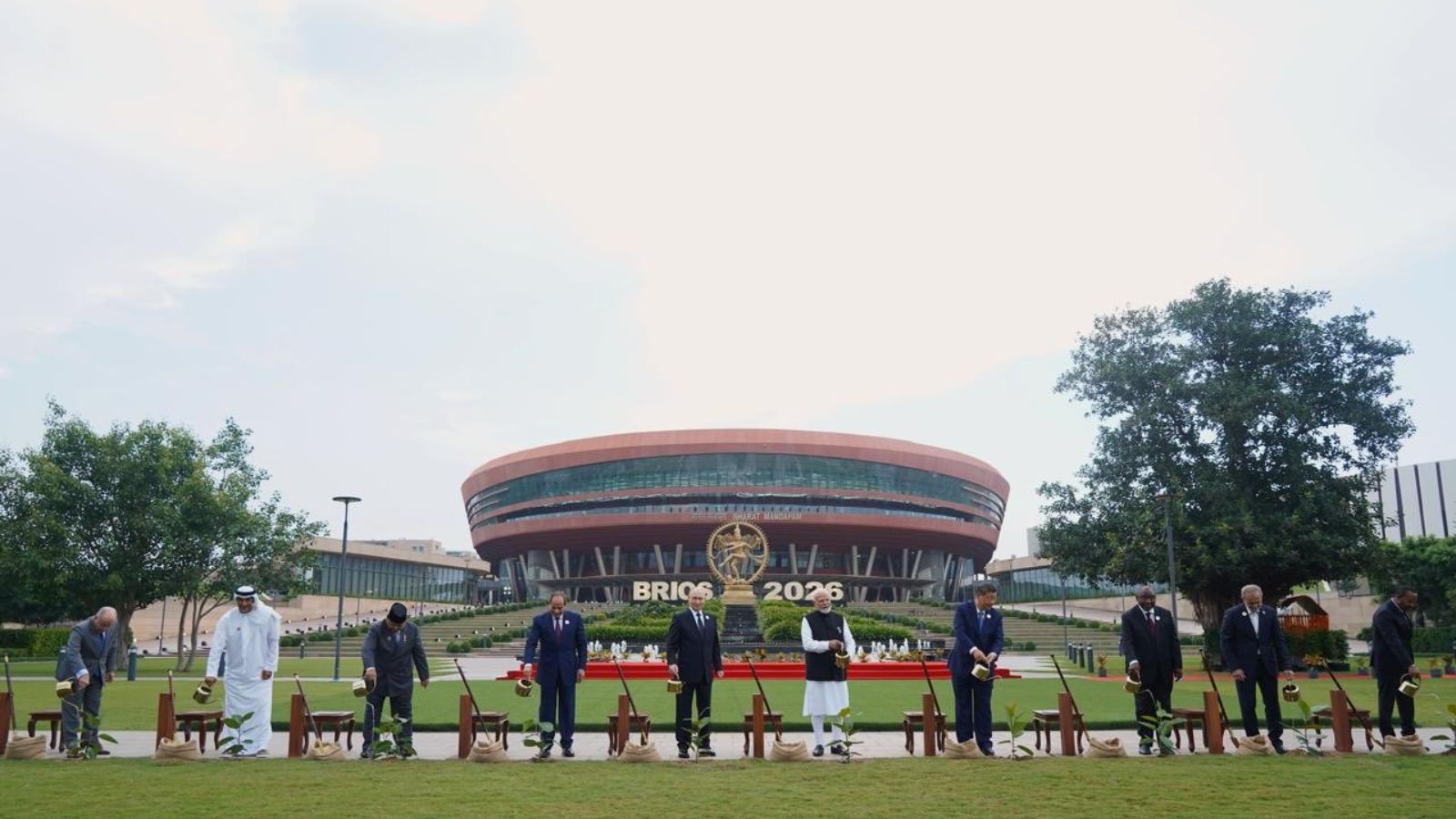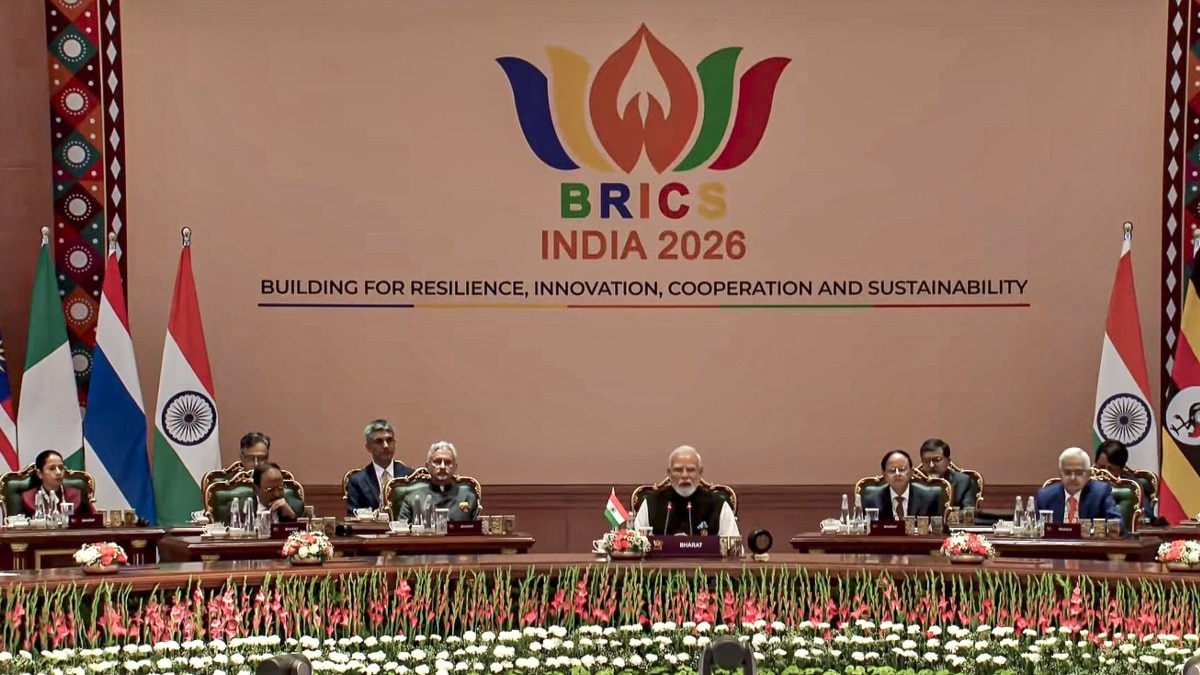
At the BRICS summit in New Delhi, member nations collectively condemned arbitrary tariffs and unilateral economic sanctions. The 'Delhi Declaration' emphasizes the need for fair global trade and greater representation for the Global South.
- BRICS members criticized unilateral tariffs and non-tariff barriers as obstacles to global trade.
- PM Modi advocated for the empowerment of the 'Global South' in international decision-making.
- The summit called for the restoration of the WTO's dispute settlement mechanism.
- The declaration directly addressed concerns over economic sanctions and trade wars.
In a significant move toward reshaping global economic order, the BRICS nations have come together at the summit held in Bharat Mandapam, New Delhi, to issue a powerful stance against arbitrary tariffs. The 'Delhi Declaration' highlights a growing consensus among member nations that unilateral trade barriers and non-tariff restrictions are detrimental to the stability of the global supply chain.
Empowering the Global South
Prime Minister Narendra Modi presented a strategic roadmap for the future of BRICS, focusing on the necessity of inclusive global governance. Addressing the summit, PM Modi noted that the current global power structure resembles a 'pyramid,' where a handful of nations at the apex dictate terms to the rest of the world. He emphasized that the Global South must have a seat at the table, ensuring that their interests are respected in global decision-making processes.
The era of a pyramid-shaped global power structure must end to allow for truly equitable governance.
A Direct Challenge to Unilateralism
The summit's declaration comes at a time of heightened trade tensions, specifically addressing the tariffs imposed by the United States on various nations, including China and India. BRICS members expressed deep concern over unilateral economic and secondary sanctions, labeling them as violations of international law that threaten food security, public health, and human rights. The group has formally called for the complete restoration of the World Trade Organization (WTO) dispute settlement mechanism, including the appointment of new appellate body members.
Why This Matters
BozokMedia analysis shows that this unified front by BRICS represents a significant shift from reactive diplomacy to proactive policy-making. By challenging the dominance of unilateral sanctions, BRICS is attempting to create a more multipolar economic environment. This could potentially lead to a restructuring of global trade routes and a reduction in the efficacy of Western-led economic coercion.
Historical Background
Originally formed to foster cooperation among emerging economies like Brazil, Russia, India, China, and South Africa, BRICS has evolved into a formidable geopolitical bloc. With the recent expansion and the increasing influence of its members, the group is now a central player in discussions regarding the reform of global financial institutions and international law.
Frequently Asked Questions
1. What is the main objective of the Delhi Declaration?
The declaration aims to promote fair trade, oppose unilateral tariffs, and ensure the Global South has a voice in global governance.
2. Why did BRICS mention the WTO?
BRICS members want the WTO to have a functional and two-tier dispute settlement mechanism to resolve trade conflicts fairly.