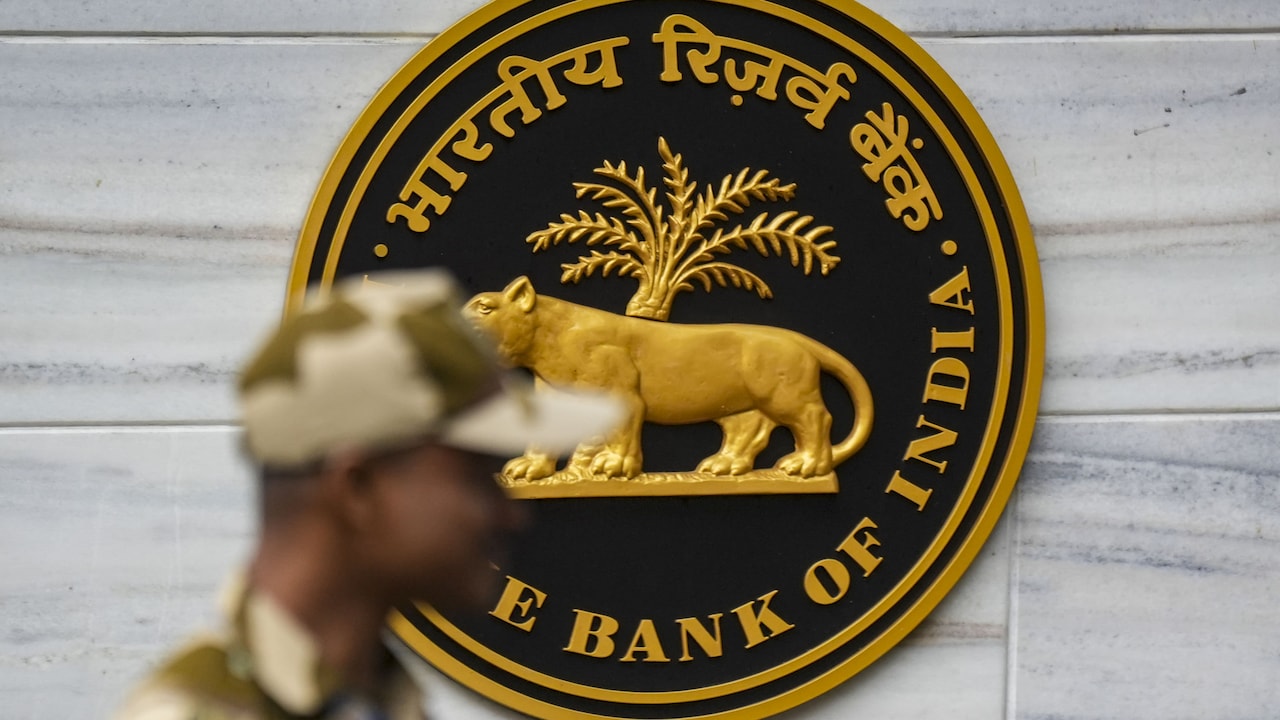
The Reserve Bank of India (RBI) has officially rejected Tata Sons' application to surrender its Non-Banking Financial Company (NBFC) license. Consequently, the central bank has directed the conglomerate's holding company to proceed with an immediate public listing, setting the stage for a historic market debut.
- The RBI has rejected Tata Sons' bid to surrender its NBFC license to avoid a mandatory public listing.
- Tata Sons remains classified as an 'Upper Layer' NBFC (NBFC-UL), requiring it to list on public exchanges.
- This decision could trigger one of India's largest-ever IPOs and unlock massive value for Tata Group firms.
In a major regulatory development that has sent shockwaves through India's corporate corridors, the Reserve Bank of India (RBI) has rejected a request by Tata Sons, the holding company of the multi-billion dollar Tata Group, to avoid a mandatory public listing. According to sources close to the development, the central bank turned down Tata Sons' application to surrender its Non-Banking Financial Company (NBFC) license, effectively forcing the conglomerate to prepare for an Initial Public Offering (IPO).
Under the RBI's Scale Based Regulation (SBR) framework introduced in late 2021, large and systematically important NBFCs classified under the "Upper Layer" (NBFC-UL) are legally mandated to list on public stock exchanges within three years of their classification. Tata Sons was placed on this list in September 2022, giving it a deadline of September 2025 to complete its public listing. The holding company had sought various exemptions, including restructuring its debt to get de-classified, but the regulator has held its ground.
Historical Background and the Listing Conflict
Established as a private holding company, Tata Sons has historically operated away from the intense public scrutiny that listed companies face. This structure allowed the Tata Group to maintain stable control over its vast empire, which spans from software (TCS) and steel to automobiles (Tata Motors) and consumer goods. The tight control of Tata Sons, primarily held by philanthropic trusts, has been central to the group's corporate identity for over a century.
However, the RBI's 2021 regulatory overhaul aimed to prevent systemic financial risks in the shadow banking sector following the collapse of major financial institutions like IL&FS. The central bank argued that large holding companies like Tata Sons, which hold significant debt and equity exposures across multiple sectors, pose systemic risks and must adhere to the highest standards of transparency and public accountability.
Why This Matters
BozokMedia analysis shows that the listing of Tata Sons will be a watershed moment for the Indian capital markets, potentially representing the largest IPO in the nation's history. With Tata Sons' valuation estimated between $110 billion and $150 billion, a public listing will not only provide unprecedented transparency but also trigger a massive re-rating of several listed Tata Group companies—such as Tata Chemicals, Tata Motors, and Tata Power—which hold direct equity stakes in the parent entity.
The RBI's uncompromising stance sends a powerful signal to India Inc: systemic financial stability and regulatory compliance supersede corporate legacy and prestige, regardless of the conglomerate's size.
With the central bank's rejection, Tata Sons is left with very limited options. The conglomerate can either pursue a complex legal challenge in the courts or accelerate its restructuring process to meet the September 2025 listing deadline. Financial analysts suggest that a public listing, while challenging for the group's traditional governance model, would ultimately enhance corporate governance and unlock phenomenal wealth for public shareholders.
| Parameter | Private Holding Structure | Publicly Listed Structure |
|---|---|---|
| Regulatory Oversight | Lower, limited to private disclosures and internal audits | Extremely high, subject to SEBI, RBI, and public shareholder scrutiny |
| Ownership Transparency | Confined strictly to Tata Trusts and major group companies | Open to public, retail, and global institutional investors |
| Value Unlocking | Difficult to value, highly illiquid holdings | Direct market-driven valuation with high liquidity |
Frequently Asked Questions
1. Why did the RBI deny Tata Sons' exemption request?
The RBI denied the request to maintain regulatory uniformity and ensure that systematically important financial entities remain transparent and publicly accountable under the Scale Based Regulation (SBR) framework.
2. How will the listing affect other Tata Group companies?
Listed Tata entities like Tata Chemicals, Tata Power, and Tata Motors, which own stakes in Tata Sons, will see their asset values rise significantly, leading to a major boost in their market valuations.