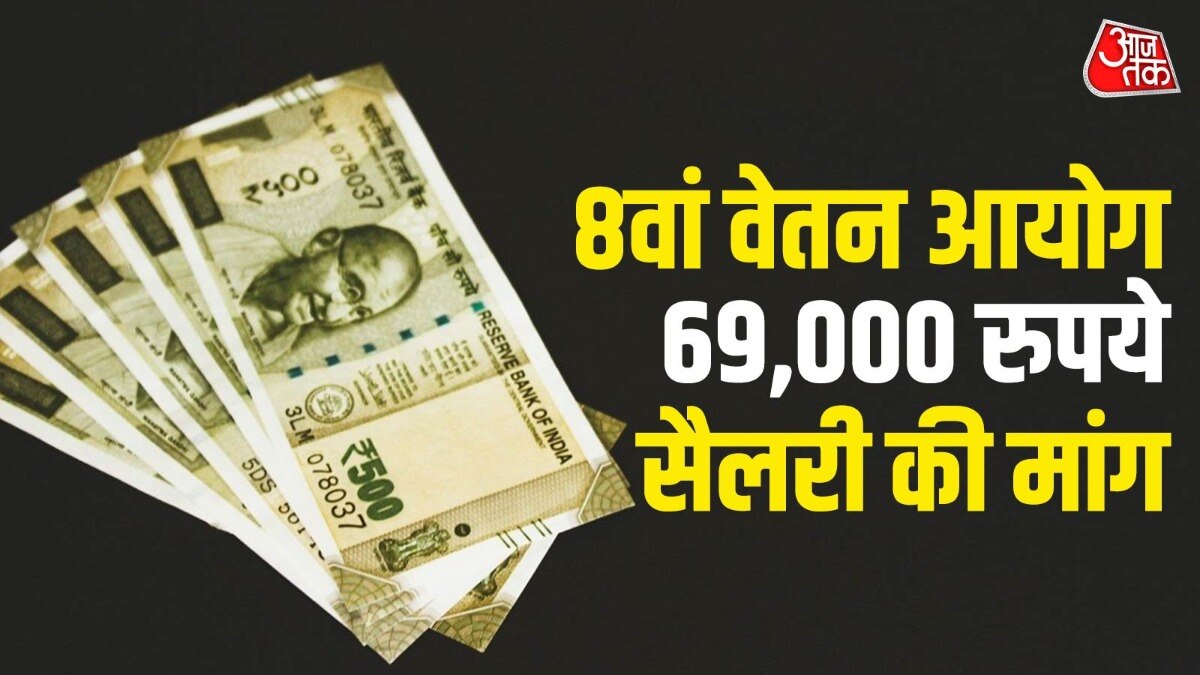
Central employees and pensioners have proposed a massive hike in minimum basic pay to ₹69,000, driven by a demand for a 3.83 fitment factor in the upcoming 8th Pay Commission.
- Employee unions have demanded a 3.83 fitment factor.
- The proposal seeks to raise minimum basic pay from ₹18,000 to ₹69,000.
- The commission's report is expected around May-June 2027.
Expectations are soaring among Central Government Employees and pensioners regarding the 8th Pay Commission. During recent consultative meetings in Chennai, various employee and pensioner associations submitted a significant proposal aimed at drastically restructuring the minimum wage framework. The core of the demand lies in increasing the minimum basic pay from the current ₹18,000 to a staggering ₹69,000.
The Mathematics of the Fitment Factor
The proposed surge is mathematically rooted in the Fitment Factor. According to the All India Federation of Pensioners Association and other prominent unions, applying a fitment factor of 3.83 would elevate the current minimum basic pay of ₹18,000 (set during the 7th Pay Commission) to approximately ₹69,000. This demand is a response to the cumulative impact of inflation and the rising cost of living over the years.
Why This Matters
BozokMedia analysis shows that this development is a critical indicator of the growing economic pressure on the middle-class workforce. If the government accepts a higher fitment factor, it will not only impact the monthly salaries of millions but also significantly increase the government's long-term pension liabilities and overall fiscal expenditure.
The demand for a higher fitment factor is a strategic attempt by unions to bridge the widening gap between nominal wages and real purchasing power.
Different organizations have presented varying perspectives. While some advocate for the 3.83 factor, the BPMS has gone further, proposing a 4x fitment factor to push the minimum wage to ₹72,000. Meanwhile, the Indian Railway Technical Supervisors Association has suggested a tiered approach, proposing a range between 2.92 and 4.38 to account for different job levels.
Historical Context: 7th vs. 8th Pay Commission Demands
A comparison with previous cycles reveals a recurring pattern of disparity between union demands and government approvals. During the 7th Pay Commission deliberations, unions had pushed for a 3.71 fitment factor, but the government eventually settled on a 2.57 fitment factor.
| Feature | 7th Pay Commission (Actual) | 8th Pay Commission (Proposed Demand) |
|---|---|---|
| Minimum Basic Pay | ₹18,000 | ₹69,000 |
| Fitment Factor | 2.57 | 3.83 |
The 8th Pay Commission was formally constituted on November 3, 2025, under the chairmanship of Justice Ranjana Prakash Desai. The commission has been allotted 18 months to submit its findings. Based on the current timeline, the final report and subsequent implementation are expected around May-June 2027.
Frequently Asked Questions
1. Is the ₹69,000 basic pay officially confirmed?
No, this is currently a proposal submitted by employee and pensioner unions. The final amount will be decided by the Pay Commission and the Government of India.
2. When will the 8th Pay Commission report be released?
The report is anticipated to be submitted by mid-2027.