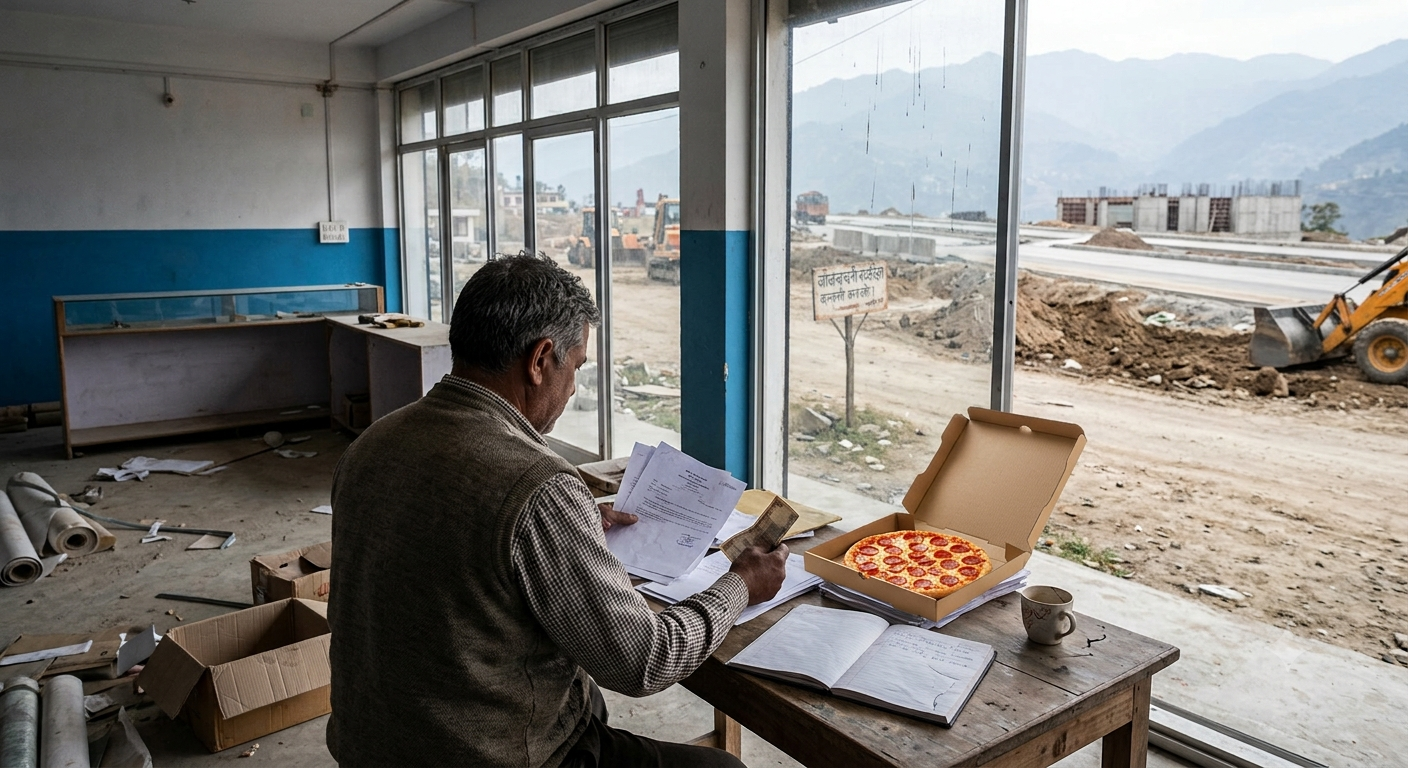
The Kangra District Consumer Commission has directed a pizza franchisor to refund ₹3 lakh plus interest and compensation to a client after the NHAI acquired the proposed outlet location.
Key Takeaways
- The proposed pizza outlet site was acquired by NHAI for the expansion of National Highway 154.
- The Commission ruled that retaining the booking amount constitutes 'unjust enrichment.'
- The franchisor must pay ₹3 lakh refund with 9% interest, plus ₹30,000 in compensation.
The Kangra District Consumer Disputes Redressal Commission has delivered a landmark judgment, ordering a pizza chain franchisor to pay ₹3.37 lakh in refunds and compensation to a franchisee. The dispute arose after the National Highways Authority of India (NHAI) acquired the premises intended for the new pizza outlet for a highway expansion project.
The Breakdown of the Dispute
The complainant, Sudhir Kumar, a resident of Kangra, sought self-employment by acquiring a pizza franchise in August 2024. After signing a 'Letter of Intent,' he deposited ₹3 lakh as booking money in three installments for a shop in Shahpur. However, within weeks, the National Highway 154 four-laning project led to the acquisition of the site, making the business setup impossible. Despite multiple requests via email and WhatsApp, the franchisor refused to return the funds.
Why This Matters: BozokMedia Analysis
BozokMedia analysis shows that this case serves as a critical warning to franchisors who attempt to exploit contractual loopholes when external factors, such as government land acquisition, render a contract void. It reinforces the protection of individual entrepreneurs against predatory corporate practices.
"When a contract becomes impossible to perform, any benefit received under it must be restored to the aggrieved party."
The Commission, led by President Hemanshu Mishra, applied the principles of the Indian Contract Act, 1872. Under Sections 56 and 65, the commission noted that once a contract becomes impossible to fulfill, it becomes void. Since the companies provided no machinery, branding, or services, retaining the money was deemed an 'unfair trade practice.'
Historical Context: The Indian Contract Act
The Indian Contract Act, 1872 governs all commercial agreements in India. The 'Doctrine of Frustration' (Section 56) specifically addresses situations where unforeseen events make the performance of a contract impossible, thereby releasing parties from their obligations.
Frequently Asked Questions
1. Why did the court rule against the pizza company?
The court ruled that since the company provided no services or setup, keeping the money after the site became unavailable was 'unjust enrichment.'
2. What was the total amount awarded to the consumer?
The consumer was awarded a ₹3 lakh refund with 9% annual interest, ₹30,000 in compensation, and ₹7,500 for litigation costs.
