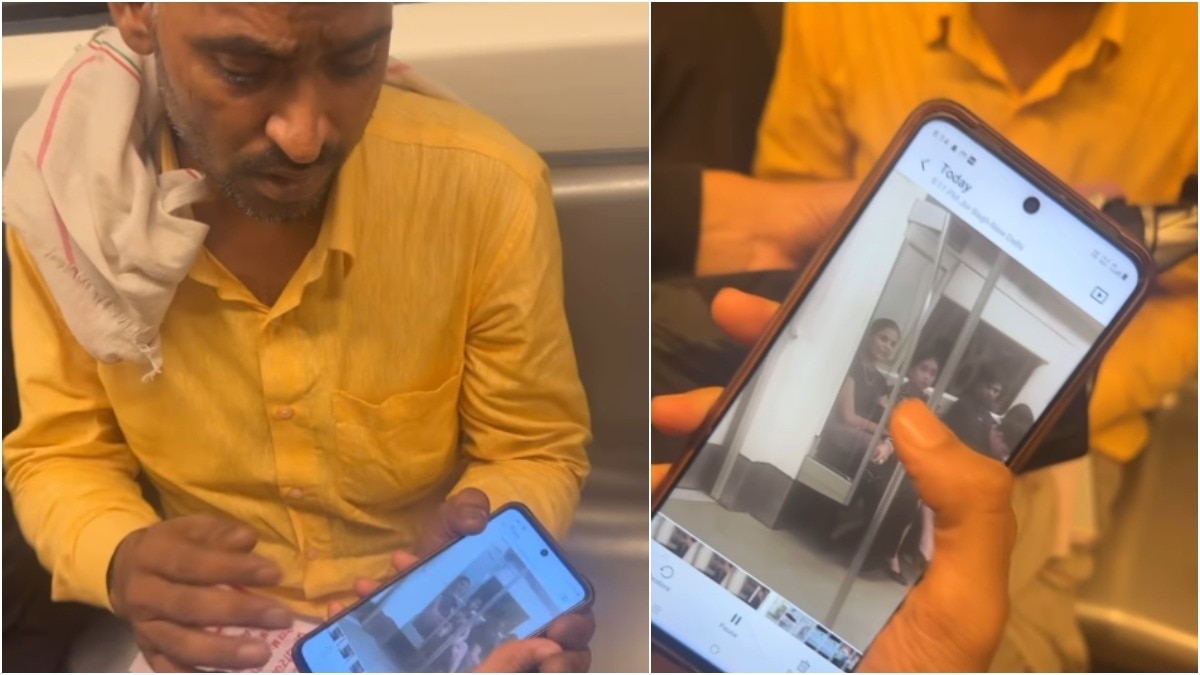
Two women traveling on the Delhi Metro confronted a middle-aged man after catching him secretly photographing them. The incident has sparked a massive debate regarding women's privacy and the silence of bystanders.
Key Takeaways
- A man was caught secretly filming and photographing women on the Delhi Metro.
- The accused attempted to hide evidence by deleting photos, which were later found in the recycle bin.
- The incident highlighted the 'bystander effect' as commuters failed to intervene initially.
- Victims emphasized that their clothing or behavior is never an excuse for harassment.
Public safety and privacy concerns have resurfaced following a distressing incident on the Delhi Metro. Two female commuters confronted a middle-aged man after discovering he was secretly capturing their images without consent while they were traveling towards Green Park.
According to an Instagram post by a commuter named Praveenya, the incident occurred near the Lok Nayak Bhawan Metro station. The women noticed the man staring at them persistently, which eventually led to the discovery that he was using his smartphone to take unauthorized photos.
Why This Matters
BozokMedia analysis shows that this incident transcends individual harassment; it highlights a systemic issue of digital voyeurism in public spaces. The confrontation also brought to light the critical issue of bystander apathy, where witnesses often choose to remain silent during moments of discomfort or crime.
The shift from physical harassment to digital voyeurism presents a complex challenge for urban security frameworks.
During the confrontation, the man attempted to deceive the women by deleting the photos in front of them. However, the victims managed to recover the evidence by checking the phone's recycle bin. This act of defiance has resonated with thousands online, fueling discussions about the responsibility of commuters to protect one another.
Historical Background
While the Delhi Metro has implemented various safety measures, including women-only coaches and increased surveillance, instances of non-physical harassment—such as invasive photography—continue to rise. This reflects a growing trend where technology is used as a tool for harassment in crowded public transit systems.
Frequently Asked Questions
Q1: What should one do if they encounter such harassment in the Metro?
A: Immediately alert the metro staff, use the emergency alarm, or report the incident to the CISF (Central Industrial Security Force) personnel present at the station.
Q2: Is taking photos of strangers in public a crime?
A: While laws vary, capturing images that violate an individual's privacy or are used for harassment can lead to legal action under privacy and harassment laws.