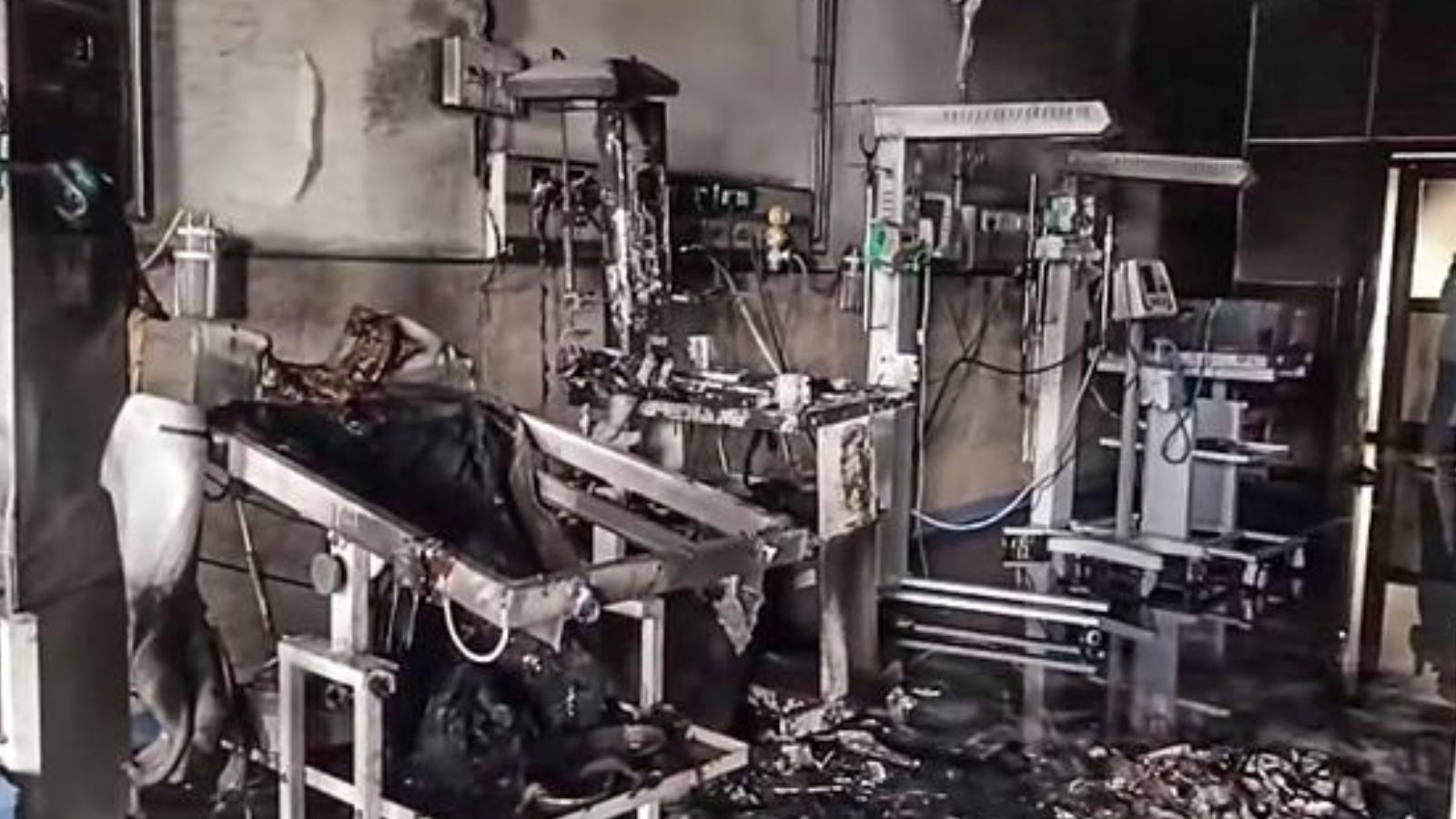
A devastating fire in the Neonatal Intensive Care Unit (NICU) of a government hospital in Maharashtra's Amravati district has claimed the lives of three premature newborns. The fire, reportedly caused by a technical fault in a thermal unit, has sparked intense scrutiny over hospital safety standards.
- Three premature newborns lost their lives in a tragic fire at the Amravati District Women's Hospital.
- The blaze was triggered by a technical malfunction in a thermal incubator unit within the NICU.
- Maharashtra CM Devendra Fadnavis has ordered a high-level probe and announced Rs 5 lakh compensation for the victims' families.
In a heartbreaking incident that highlights the persistent challenges of infrastructure safety in public healthcare, three premature newborns were killed after a fire broke out at the Neonatal Intensive Care Unit (NICU) of the government-run District Women’s Hospital in Maharashtra’s Amravati district. The incident occurred in the early hours of Monday, sending shockwaves through the local community and prompting immediate government intervention.
According to hospital officials, the fire started at approximately 3:30 AM in one of the rooms of the NICU, which was housing nine infants at the time. Preliminary investigations suggest that a technical malfunction in a thermal unit—used to keep premature babies warm—sparked the blaze. Although hospital staff and attendants acted swiftly to evacuate all nine babies from the smoke-filled room, three of the infants, who were already in critical condition and undergoing treatment for jaundice, unfortunately succumbed.
Investigation and Safety Norm Audits Underway
Amravati Deputy Commissioner of Police (DCP) Shyam Ghuge confirmed that the fire was confined to a single room of the NICU and was brought under control within 30 minutes by emergency responders. "There was a technical fault in the thermal unit, following which the fire broke out. The attendants immediately evacuated the nine babies from the room, of whom three tragically died," Ghuge stated. He added that a comprehensive forensic and technical investigation is being launched to determine if the hospital was compliant with mandatory fire-safety norms.
The probe will focus heavily on the maintenance records of the medical equipment in the NICU. Medical electronics, particularly those operating continuously like neonatal incubators, require rigorous periodic servicing to prevent electrical short circuits and overheating, which are common catalysts for such tragedies.
Why This Matters
BozokMedia analysis shows that hospital fires, particularly in vulnerable zones like NICUs and ICUs, represent a critical failure of institutional safety nets. Public healthcare facilities in developing regions often grapple with high patient loads and strained maintenance budgets, making regular safety audits a matter of life and death. This tragedy underscores the urgent need for automated fire suppression systems in critical care units across the nation.
"Neonatal care units require the highest standard of fail-safe electrical infrastructure, as premature infants are entirely dependent on life-support systems and cannot survive even brief disruptions in their environment."
Historical Background of Hospital Fires in India
This tragic event in Amravati is not an isolated incident. Over the past decade, India has witnessed several devastating hospital fires, often attributed to faulty wiring, overloaded electrical grids, or lack of functional fire-fighting equipment. A similar tragedy occurred in January 2021 at the Bhandara District General Hospital in Maharashtra, where ten infants lost their lives in an NICU fire, sparking nationwide outrage and promises of systemic reforms. Despite subsequent safety mandates issued by the central and state governments, implementation at the grassroots level remains inconsistent.
Safety Protocol Comparison
| Safety Parameter | Standard Protocol Requirement | Observed Gaps in Public Facilities |
|---|---|---|
| Fire Audits | Bi-annual external safety audits | Delayed or superficial inspections |
| Equipment Maintenance | Monthly calibration of thermal units | Irregular servicing due to staff shortage |
| Staff Training | Quarterly mock drills for evacuation | Lack of hands-on training for night shifts |
Frequently Asked Questions
Q1: What caused the fire at the Amravati hospital?
A1: Preliminary reports indicate that the fire was caused by a technical fault in a thermal incubator unit within the Neonatal Intensive Care Unit (NICU).
Q2: What action has the Maharashtra government taken?
A2: Chief Minister Devendra Fadnavis has ordered a high-level inquiry, directed the Health Minister and Secretary to visit the site immediately, and announced a financial assistance of Rs 5 lakh for the families of the deceased infants.