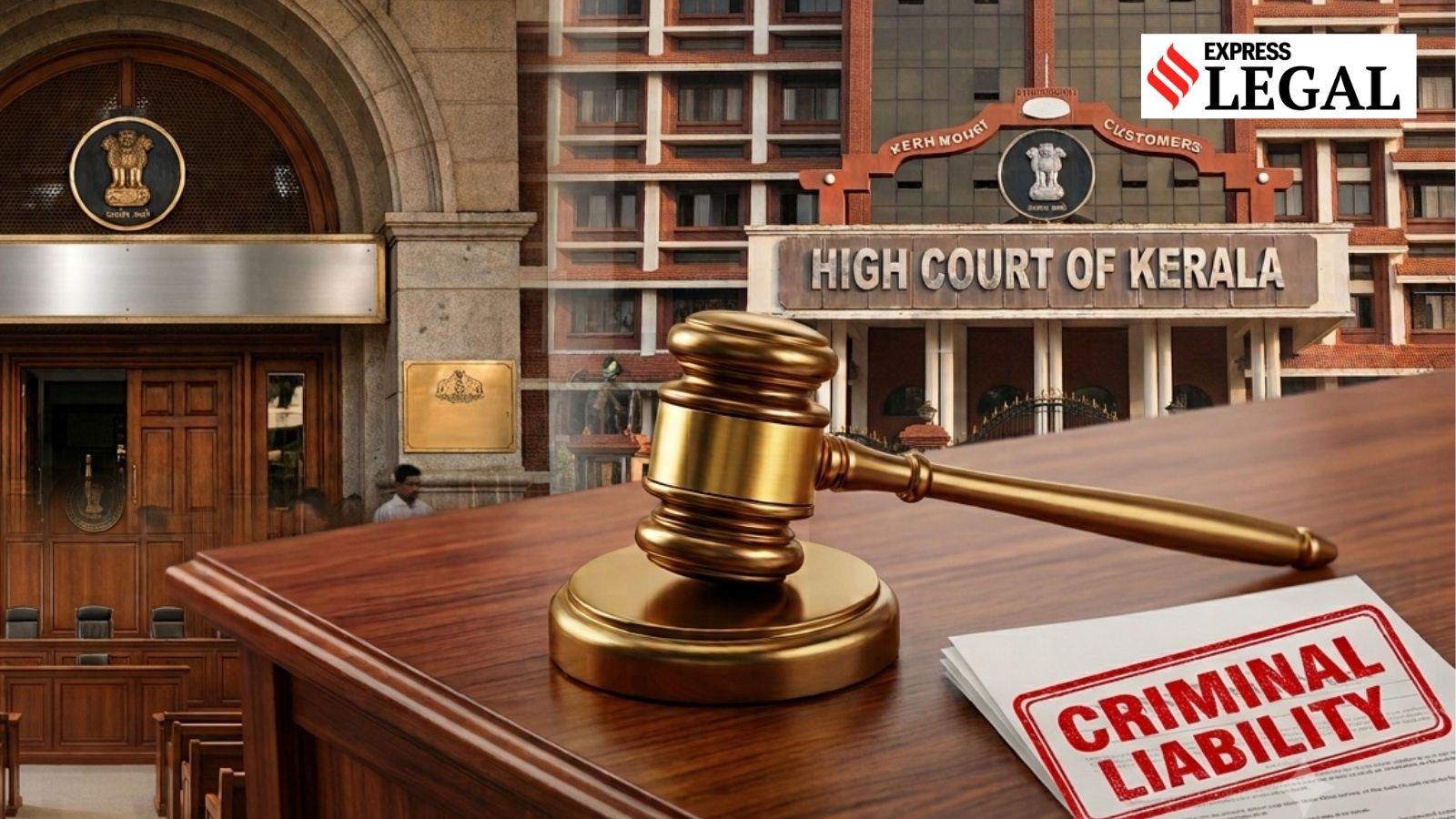
In a landmark judgment, the Kerala High Court has ruled that customers visiting brothels can be prosecuted under the Immoral Traffic (Prevention) Act, as their demand fuels commercial sexual exploitation.
- Kerala HC rules that customers are active participants in commercial sexual exploitation.
- The court rejected the immunity of customers under the Immoral Traffic (Prevention) Act, 1956.
- The ruling emphasizes that demand is as critical as supply in sustaining brothels.
The Kerala High Court recently delivered a pivotal ruling stating that a customer who visits a brothel for sexual activity can be implicated as an accused under the Immoral Traffic (Prevention) Act (ITPA), 1956. The court observed that there is no legal justification to immunize one of the essential participants in a prohibited activity from criminal liability.
A division bench comprising Justices Raja Vijayaraghavan V and K V Jayakumar was addressing a reference regarding whether customers could be prosecuted. The court noted that activities in a brothel constitute commercial sexual exploitation, which is sustained by two indispensable components: the organizer who profits and the customer who avails the services for consideration.
Why This Matters
BozokMedia analysis shows that this judgment shifts the legal focus from the 'provider' to the 'consumer'. By targeting the demand side of the equation, the court is attempting to dismantle the economic foundation of the sex trade. This creates a significant legal precedent that could lead to a surge in prosecutions of clients, potentially acting as a deterrent against the patronage of brothels.
"If penal consequences are confined only to the brothel keeper while excluding the person whose demand fuels the activity, the legislative object of suppressing exploitation would stand diluted."
The court highlighted that sex workers are often coerced, induced, or compelled into prostitution by traffickers or brothel owners. Consequently, the customer is not disconnected from this exploitative cycle but is, in fact, the one who sustains and perpetuates the enterprise by creating the demand.
The bench further clarified that a customer who voluntarily enters a brothel and pays for services becomes an active participant in a commercial transaction. The court held that any interpretation of the law that weakens the efficacy of beneficial social legislation should be avoided.
Frequently Asked Questions
Q1: Can a customer be arrested just for visiting a brothel?
A: According to the Kerala HC, customers visiting for sexual activity for consideration can be proceeded against under the provisions of the ITPA.
Q2: Why was this reference brought to the High Court?
A: The reference was necessary because different single judges of the court had given conflicting decisions on whether customers could be prosecuted.