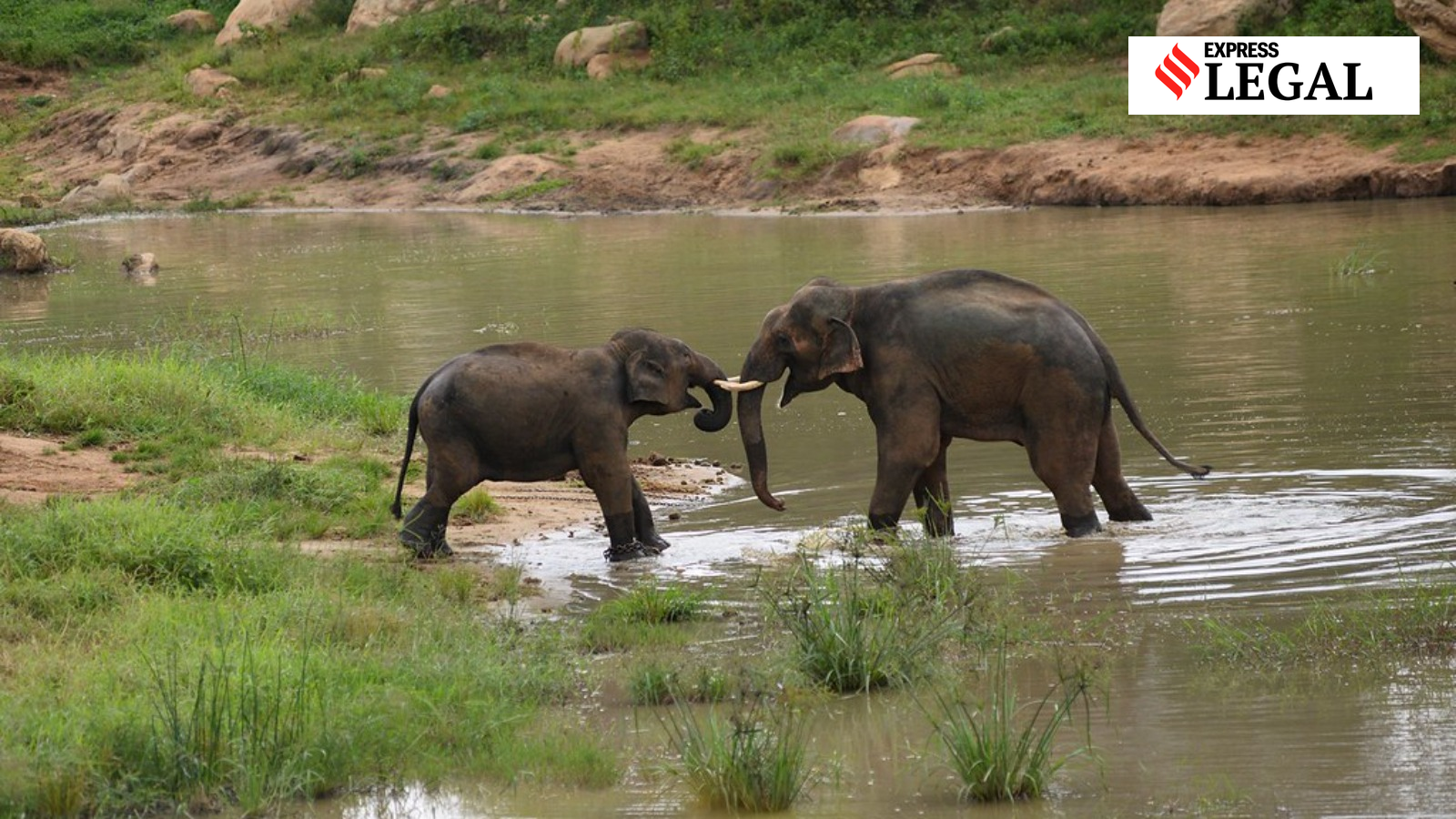
In a landmark judgment, the Kerala High Court has declared the state government the 'deemed owner' of wildlife, making it legally responsible for compensating citizens harmed by wild animals.
- The Kerala High Court ruled that the state is the custodian and deemed owner of wildlife.
- Animal attacks are viewed as a failure of the State to protect the Right to Life under Article 21.
- Compensation is a right for citizens regardless of whether specific government schemes exist.
The Kerala High Court has delivered a pivotal judgment redefining the relationship between the state, wildlife management, and citizen safety. Justice Mohammed Nias C P asserted that the state government cannot evade liability for harm caused by wild animals, as it holds the constitutional mandate to act as the custodian of wildlife while simultaneously protecting the fundamental rights of its citizens.
The case originated from a tragic incident on April 27, 2001, where a man was killed by a wild elephant while traveling on a panchayat road in Wayanad. The victim's family sought compensation, alleging that the Forest Department's negligence in preventing animals from straying into human habitations led to the fatality. While the government had initially paid ₹20,000, the family pursued further damages in a civil suit.
Why This Matters
BozokMedia analysis shows that this ruling shifts the burden of risk from the individual citizen to the state. By linking wildlife management to Article 21 (Right to Life), the court has elevated animal-human conflict from a mere administrative issue to a constitutional violation. This sets a powerful legal precedent that could lead to a surge in compensation claims across other Indian states facing similar wildlife conflicts.
"The worth of a human life cannot be reduced to a figure that fails to adequately recognise the magnitude of the loss."
The Forest Department attempted to argue that wild elephants are not under the direct control of officers and that the victim may have been negligent. However, the court rejected these claims, noting that the incident occurred on a residential panchayat road rather than inside a deep forest. The court highlighted a critical failure in infrastructure, noting the absence of forest fencing or trenches along the boundaries to prevent animals from trespassing into human areas.
The court further clarified that the State's duty to protect forests under the Directive Principles of State Policy does not override its primary obligation to ensure the safety of its people. The ruling emphasizes that if precautionary measures had been implemented by the Forest Department, the tragedy could have been averted.
| Argument by Forest Dept | Verdict by Kerala High Court |
|---|---|
| Animals are not under human control | State is the 'deemed owner' and custodian |
| Victim was negligent/intoxicated | Incident occurred on a public panchayat road |
| Compensation was exorbitant | Compensation must be just, fair, and reasonable |
Frequently Asked Questions
1. Does the state have to pay even if there is no specific government scheme for compensation?
Yes, the court ruled that citizens are entitled to claim compensation for damage caused by wild animals regardless of existing government orders or schemes.
2. Which constitutional article was cited in this judgment?
The court cited Article 21 of the Constitution of India, which guarantees the Right to Life and Personal Liberty.