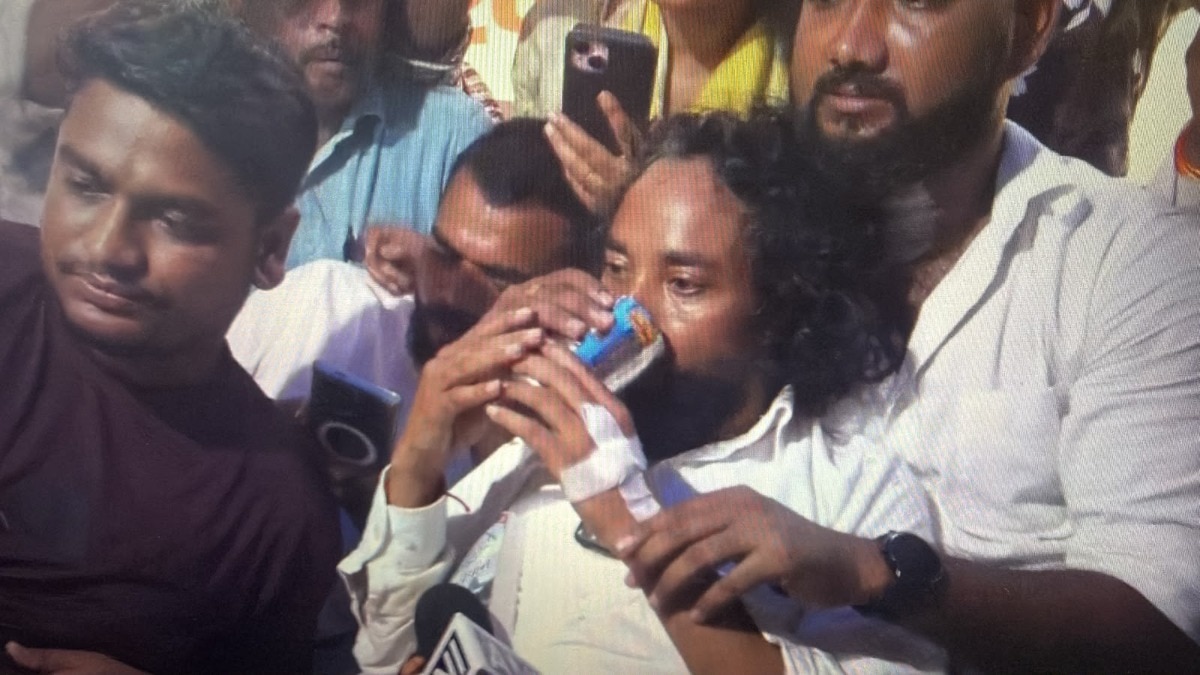
Student leader Devendra Mahto has announced the end of his hunger strike following Chief Minister Hemant Soren's decision to scrap all TDPL-related examinations. However, Mahto continues to demand a foolproof system to prevent future paper leaks and recruitment scams.
- Jharkhand Government cancels all exams and results conducted via TDPL, including JPSC CGL.
- Student leader Devendra Mahto ends hunger strike but demands systemic reforms.
- CM Hemant Soren orders a comprehensive probe into irregularities and corruption.
In a significant victory for student activists in Jharkhand, the state government has officially decided to cancel the JPSC CGL examinations and all other recruitment processes managed by TDPL. This decision comes after intense pressure and a hunger strike led by prominent student leader Devendra Nath Mahto, who has been campaigning against irregularities in the state's examination system.
Chief Minister Hemant Soren stated that the decision to scrap all TDPL-related activities—including conducted exams, declared results, and the selection of candidates—was taken after a thorough review of the discrepancies. The government aims to purge the recruitment process of corruption and ensure that only deserving candidates secure government employment.
Why This Matters
BozokMedia analysis shows that this move is not merely an administrative correction but a political necessity for the Soren administration. By cancelling these exams, the government is attempting to restore public trust in the state's recruitment machinery, which has been plagued by allegations of paper leaks and 'recommendation-based' hiring (parvi). This sets a precedent for accountability in state-level competitive exams.
The cancellation of exams is a temporary fix; the real challenge lies in building a digitally secure, transparent infrastructure that eliminates human interference in paper distribution.
While Devendra Mahto expressed his gratitude to the government and the police administration for listening to the students' grievances, he remained cautious. Speaking to the media, Mahto emphasized that he has seen numerous investigations by the CBI and CID lead nowhere in the past. He is now demanding a formal guarantee from the state government that a robust, leak-proof system will be implemented for future recruitments.
The current situation reflects a broader crisis of confidence among the youth of Jharkhand. The demand for transparency is no longer just about one exam, but about the entire ecosystem of government hiring. Mahto has stated that students will fully cooperate with the ongoing investigations to help identify the kingpins of the recruitment mafias.
Historical Background: For several years, Jharkhand has struggled with the stability of its recruitment boards. Frequent delays, court interventions, and allegations of systemic corruption have left thousands of aspirants in limbo, leading to recurring protests and a growing sense of disillusionment among the state's educated youth.
Frequently Asked Questions
Q1: Which exams were cancelled by the Jharkhand government?
All examinations conducted through TDPL, specifically including the JPSC CGL, have been cancelled, along with their results and selections.
Q2: What is Devendra Mahto's primary demand now?
While he has ended his strike, he demands a guaranteed, transparent system that prevents future paper leaks and eliminates the influence of political patronage in hiring.