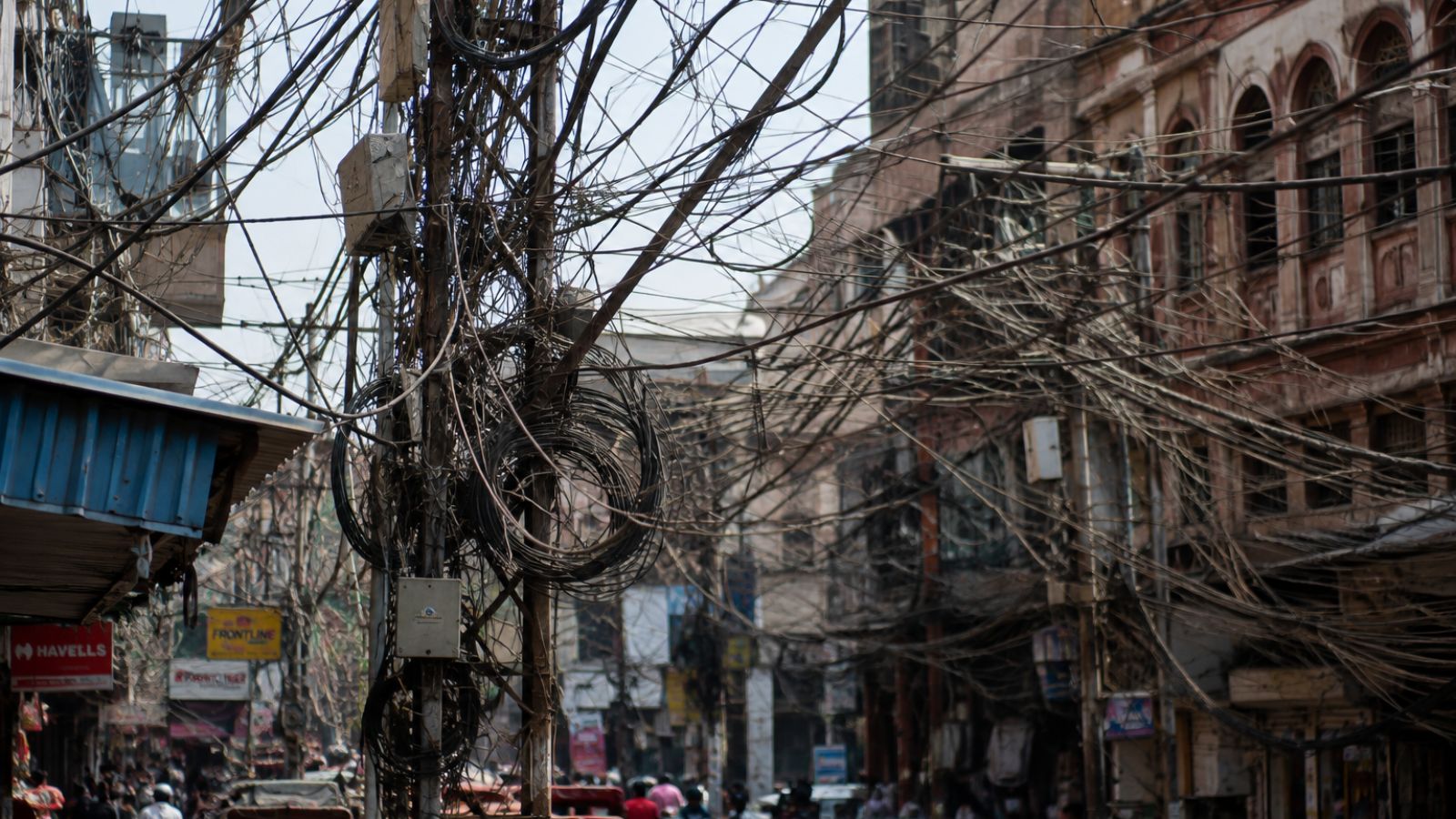
The Delhi government is forming a high-level committee to resolve coordination issues and tackle the dense web of overhead wires in Chandni Chowk. The project aims to move utilities underground using advanced technology.
Key Takeaways
- A high-level committee will be established to coordinate underground cabling in Chandni Chowk.
- Project delays occurred due to a much denser utility network than initially surveyed.
- The government plans to build 'utility ducts' instead of just burying wires.
- Trenchless technology will be utilized to minimize disruption to local businesses.
The ambitious plan to move overhead electricity and telecom cables underground in Chandni Chowk has encountered significant hurdles. To overcome coordination challenges between multiple agencies, Power Minister Ashish Sood announced that the Power Department will establish a high-level committee within the next few days. This committee will be led by the Additional Chief Secretary (Power) and will include members from the MCD, PWD, Delhi Jal Board, IGL, and various telecom agencies.
The project, which was intended to begin with pilot stretches at More Sarai Road and Esplanade Road, faced setbacks after field surveys revealed a utility network far more complex than anticipated. The dense layering of sewer lines, water pipes, electricity cables, and gas pipelines has made the task of digging through narrow lanes extremely difficult without disrupting the livelihoods of local traders.
Why This Matters
BozokMedia analysis shows that the core issue in Delhi's Walled City is not just the presence of wires, but the lack of integrated infrastructure. Simply burying cables without a dedicated system leads to repetitive road digging for every minor repair. The shift toward building structured 'utility ducts' represents a critical move toward long-term urban resilience and modernization.
Modernizing historic hubs like Chandni Chowk requires a shift from reactive repairs to proactive, integrated utility management.
Following instructions from Chief Minister Rekha Gupta, the project scope has evolved. Rather than just hiding wires, the government aims to create a permanent utility duct system. To prevent massive traffic jams and business losses, officials are looking to implement trenchless technology, which allows for underground work without extensive excavation of the road surface.
Frequently Asked Questions
1. Why was the Chandni Chowk pilot project delayed?
The delay was caused by the discovery of an unexpectedly dense network of underground utilities, requiring better coordination between various government departments.
2. How will the government protect local businesses during construction?
The government plans to use trenchless technology and a coordinated schedule managed by a high-level committee to minimize road closures and disruptions.