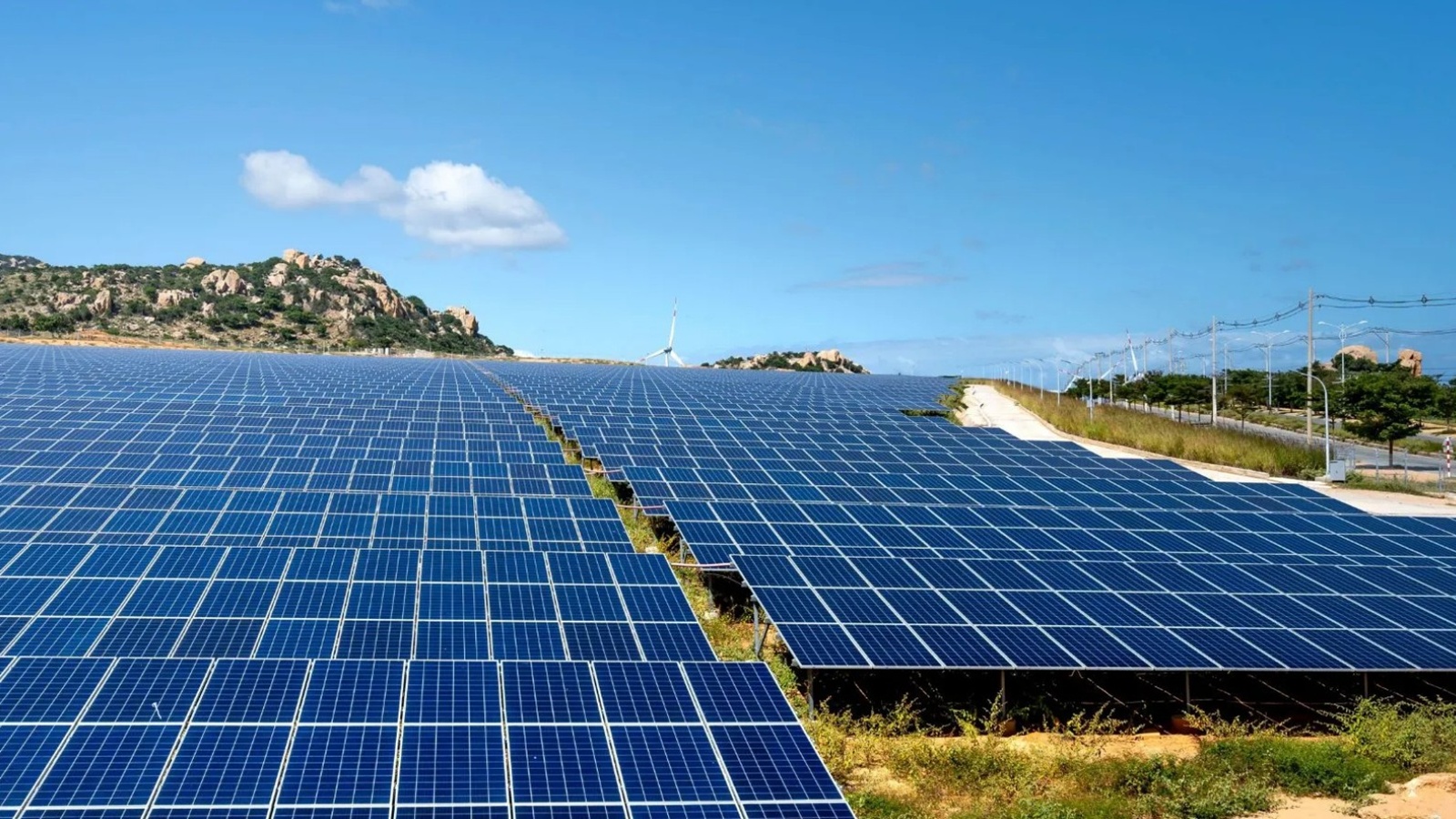
The Delhi government has announced an amended solar policy allowing households consuming up to 400 units to install 3 kW rooftop solar systems with zero upfront costs and five years of free maintenance.
- Zero upfront cost for 3 kW rooftop solar systems for households consuming up to 400 units monthly.
- Dual subsidy model: ₹78,000 from the Central Government and ₹78,000 from the Delhi Government.
- Mandatory 5-year operation and maintenance (O&M) by vendors at no cost to consumers.
- Target to add 500 MW of additional rooftop solar capacity by March 2027.
In a major move to accelerate the transition to renewable energy, the Delhi government has announced an amended Solar Policy aimed at making rooftop solar panels highly affordable for residents. Chief Minister Rekha Gupta unveiled the plan on Tuesday, focusing on removing the primary barrier to solar adoption: the high initial installation cost.
Under the new provisions, eligible domestic consumers with an average monthly electricity consumption of up to 400 units can receive rooftop solar systems of up to 3 kW without any upfront payment. This is a significant shift from previous models where consumers had to bear substantial initial expenses, which could reach up to ₹2 lakh for larger installations.
Why This Matters
BozokMedia analysis shows that by addressing the 'capital constraint' issue, the Delhi government is effectively democratizing solar energy. Moving subsidies from a reimbursement model to an upfront model significantly lowers the entry barrier for middle-income families, potentially leading to a massive surge in urban renewable energy adoption.
By shifting from a reimbursement-based incentive to an upfront subsidy model, Delhi is tackling the single biggest hurdle in residential solar adoption.
The financial structure of this initiative is robust. The Central government's ₹78,000 subsidy will be matched by an equal ₹78,000 capital subsidy from the Delhi government. Furthermore, the state government will cover any remaining difference between the total subsidy and the actual tendered cost of the solar plant, ensuring the consumer pays nothing at the start.
To ensure long-term efficiency, the government has mandated that the installed systems must be operated and maintained by the respective vendors for a period of five years at no extra cost. "People found it difficult to make such a huge payment upfront... Now for five years, our vendor will operate and maintain it," stated CM Rekha Gupta. After this period, consumers can opt for maintenance through electricity distribution companies (Discoms).
The implementation will follow a utility-led aggregation model. Indraprastha Power Generation Company Limited (IPGCL) will be responsible for selecting vendors through competitive bidding and managing the entire process, including installation and grievance redressal.
Frequently Asked Questions
Question 1: Who is eligible for the zero upfront cost scheme?
Answer: Domestic consumers with an average monthly electricity consumption of up to 400 units are eligible for a 3 kW system.
Question 2: Will I still get my current electricity subsidies?
Answer: Yes, eligible consumers will continue to receive existing subsidies (free up to 200 units and 50% subsidy for 201-400 units) while being able to export surplus power to the grid.