The removal of invasive 'Vilayati Keekar' in Delhi's Central Ridge has been paused following a contempt of court petition. The High Court has sought responses from top officials regarding alleged violations of previous environmental protection orders.
- The High Court has demanded a response from the Forest Department regarding the removal of invasive species.
- A contempt petition was filed by activist Lt Col (Retd) Sarvadaman Singh Oberoi.
- The Delhi Eco-restoration Plan 2026-30 aims to plant 1 crore indigenous trees.
- The current pause threatens the monsoon planting window for 14 lakh saplings.
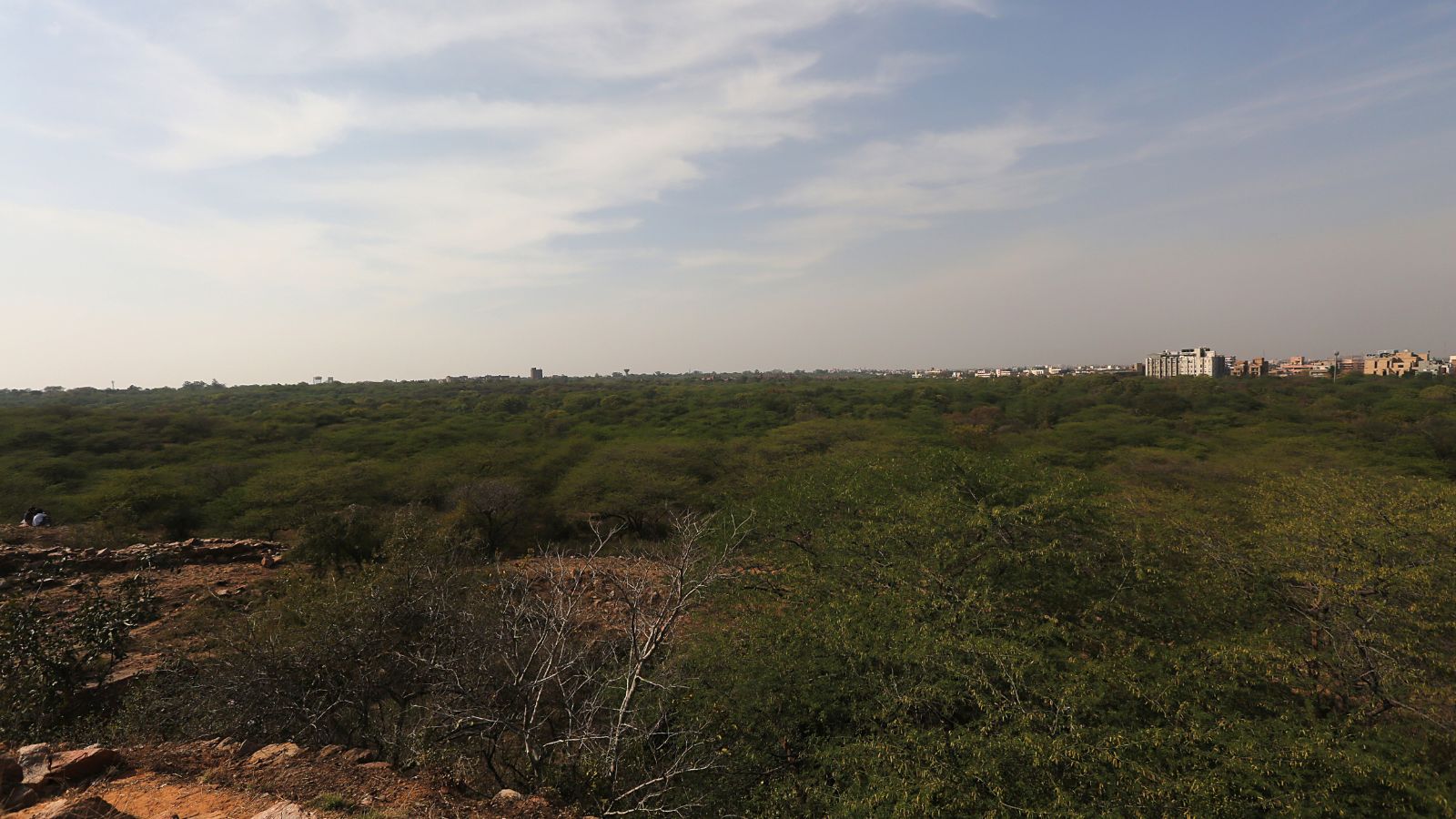
The Central Ridge, often referred to as the 'green lungs' of the national capital, has become the epicenter of a legal battle. Efforts by the Delhi government's Forest Department to clear invasive Prosopis juliflora (locally known as Vilayati Keekar) under the Centre-approved Delhi Eco-restoration Plan 2026-30 have come to a standstill. This follows a contempt petition filed in the Delhi High Court on September 1, alleging that the department's methods violate previous judicial mandates.
The controversy was ignited by Lt Col (Retd) Sarvadaman Singh Oberoi, Managing Trustee of the Aravalli Bachao Citizens Movement. In his petition, Oberoi alleged that during visits in June and July, he observed heavy machinery being used, trees being felled, and large pits being dug in ecologically sensitive areas. He presented photographic evidence suggesting that the clearing process might exceed the scope of mere vegetation management and move toward unauthorized land alteration.
Why This Matters
BozokMedia analysis shows that this dispute highlights the critical friction between ecological restoration and judicial oversight. While removing invasive species is vital for biodiversity, the process must strictly adhere to court orders that prohibit any form of concretization or park-like development in the Ridge. The outcome of this case will set a precedent for how urban forest restoration is conducted in India.
The tension between rapid ecological restoration and strict legal compliance defines the future of Delhi's urban forestry.
In its defense, the Forest Department maintains that the activities are part of a scientifically backed plan prepared by the Forest Research Institute, Dehradun. Officials stated that pruning alone is insufficient to control Vilayati Keekar due to its rapid regeneration; therefore, removing the root stock is necessary to allow indigenous species to thrive. They emphasized that no concretization or construction is involved in the current plan.
The High Court has issued notices to senior officials, including Chief Secretary Rajeev Verma and the Principal Chief Conservator of Forests. The matter is scheduled for a hearing on September 24. The legal delay poses a significant risk to the current plantation season, as the department aims to plant 14 lakh saplings before the dry season sets in.
Frequently Asked Questions
1. Why is the Forest Department removing the trees?
They are removing invasive 'Vilayati Keekar' to make space for indigenous plants as part of a massive eco-restoration project.
2. What is the main allegation in the contempt petition?
The petitioner alleges that the department is using heavy machinery and violating previous court orders that protect the Ridge from land clearing and construction.