Does America provide free meals in schools just like India? Explore the fundamental differences between India's Mid-Day Meal and the US National School Lunch Program.
Key Takeaways
- The US National School Lunch Program (NSLP) began in 1946, whereas India's national program started in 1995.
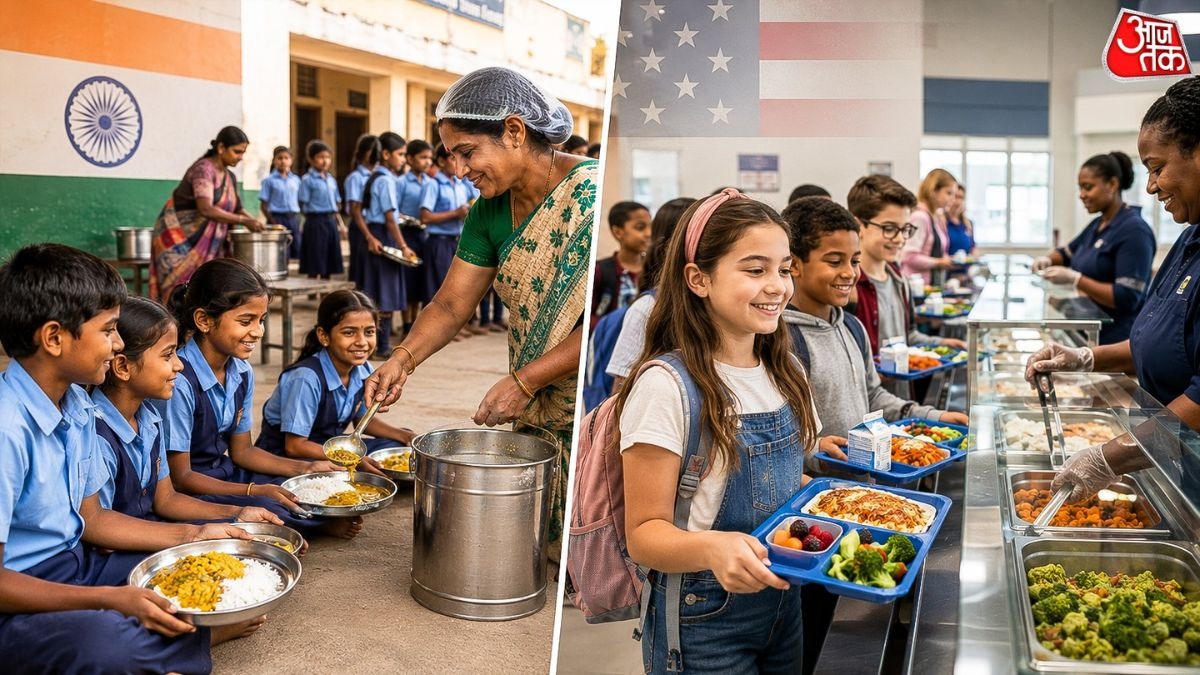
- India follows a fixed menu cooked meal system, while the US utilizes a cafeteria-style choice system.
- US programs extend to certain private schools, while India focuses primarily on government-aided institutions.
Whenever the conversation turns to child nutrition and education, India's Mid-Day Meal Scheme (now known as PM POSHAN) inevitably takes center stage. However, many are surprised to learn that the United States, one of the world's most developed nations, also maintains a robust school meal system. While the intent is similar, the execution and structural frameworks differ significantly.
Historical Background: Two Eras of Nutrition
The history of school meals in the US is much older. The National School Lunch Program (NSLP) was established in 1946 to ensure that children from economically disadvantaged backgrounds received adequate nutrition. In contrast, India implemented its national-level Mid-Day Meal scheme in 1995, aiming to tackle widespread malnutrition and improve school enrollment.
Why This Matters
BozokMedia analysis shows that school meal programs are more than just feeding initiatives; they are vital socio-economic tools. In India, the program acts as a driver for school attendance and a combatant against malnutrition, whereas in the US, it serves as a nutritional foundation to support cognitive development and student health.
Food security in schools is not just about calories; it is a fundamental prerequisite for ensuring the right to education.
A major distinction lies in the delivery method. The US system is largely cafeteria-based, allowing students to choose from various options such as fruits, milk, salads, or sandwiches. Conversely, the Indian model provides a pre-determined, cooked meal to all eligible students to ensure standardized nutritional intake across the board.
| Feature | India (PM POSHAN) | USA (NSLP) |
|---|---|---|
| System Model | Fixed menu cooked meals | Cafeteria-style selection |
| School Type | Primarily Government schools | Government and some Private schools |
| Primary Goal | Reduce malnutrition & increase attendance | Ensure nutrition & support health |
| Inception | 1995 | 1946 |
Frequently Asked Questions
1. Do private schools in the US offer free meals?
Yes, some private schools participate in government programs like the NSLP to provide free or reduced-cost meals to eligible students.
2. What is the current name of the Mid-Day Meal in India?
The Mid-Day Meal scheme has been rebranded and expanded as the PM POSHAN scheme.